
XingAI Cook How-To — From My Fridge
A Simple Breakfast for One — Ready in 7 Minutes
Today's decision, made for you: don't shop for breakfast — open the fridge. Two eggs, a slice of sourdough, a handful of cherry tomatoes and one coffee stick are already a real breakfast for one, on the table in about seven minutes.
The sourdough gets toasted twice — oven first, then seared in the pan. That's when the flavor wakes up.
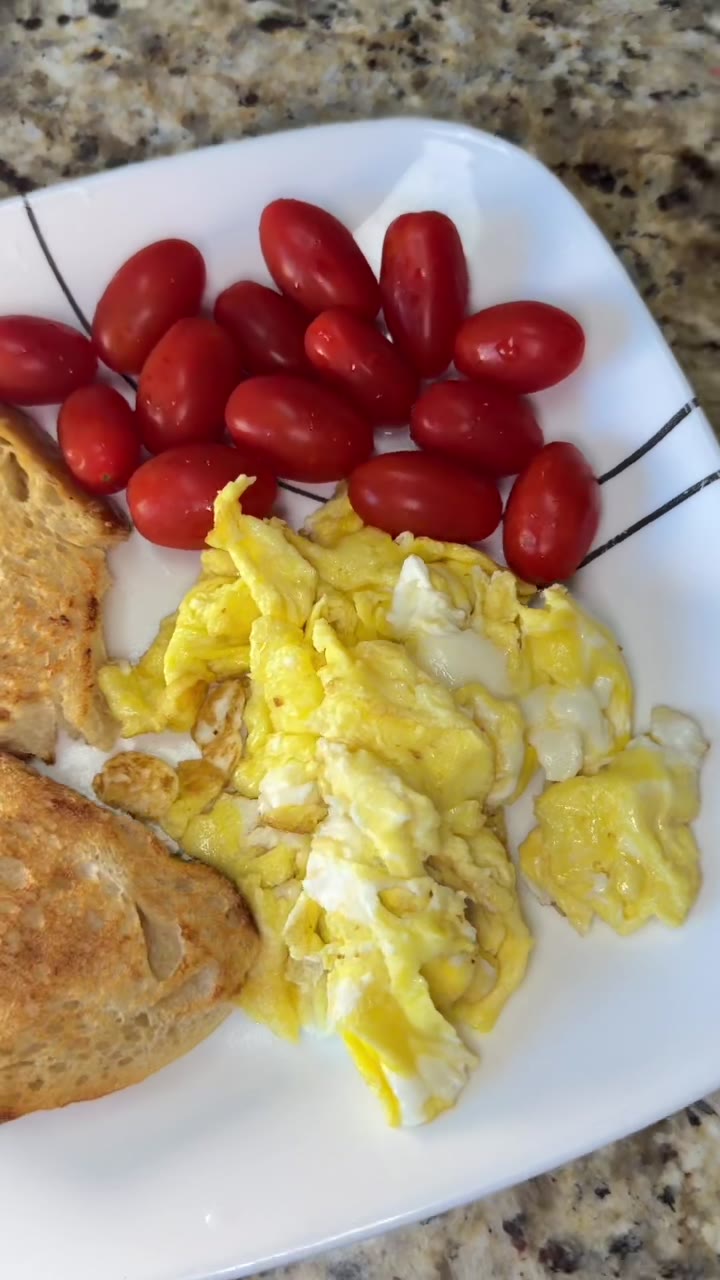
A quiet Wednesday morning, one person, one pan. This is the breakfast I make for myself at home, from whatever the fridge already holds: soft scrambled eggs, cherry tomatoes as they are, a slice of sourdough toasted twice, and a simple cup of coffee.
Nothing here was bought for the occasion. The eggs, the bread and the tomatoes came straight out of my fridge; the coffee is the stick I always keep. From the first move to the first bite takes five to seven minutes — the whole method is below, in exactly the order I do it.
Watch the full lesson: My Simple Breakfast at Home 🍳 Tomato Eggs, Toasted Buns & a Lemon Salad
What you need
- 2 eggs
- 1 slice of sourdough bread
- A handful of cherry tomatoes
- 1 stick of Maxim instant coffee
- A pinch of salt
- A little oil for the pan
- A pan, a small bowl, and chopsticks
The morning, step by step
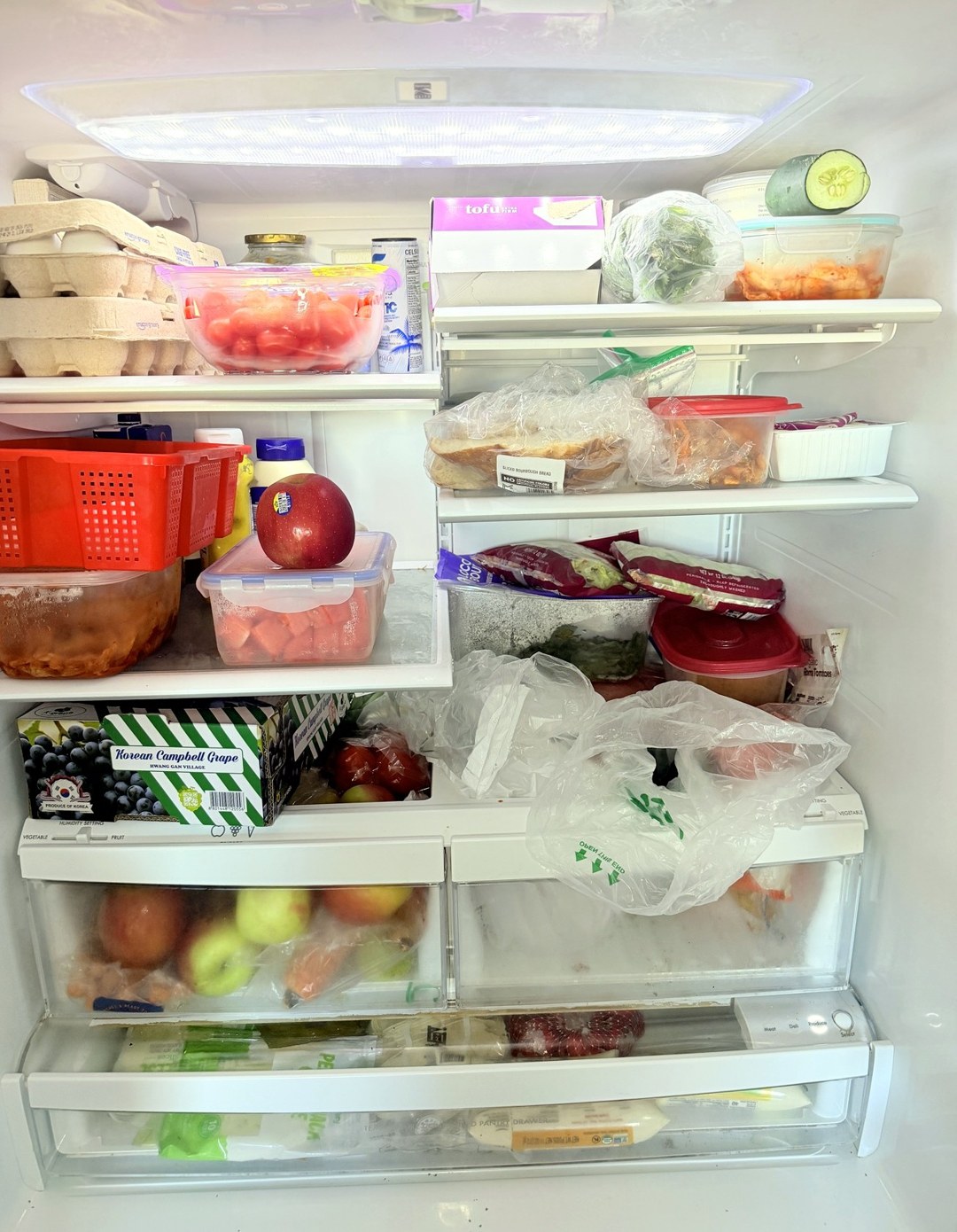
1. Start in the fridge
Everything in this breakfast came out of this fridge — the eggs from the top shelf, the sourdough from its bag, the tomatoes from their box. No shopping, nothing planned the night before; the fridge decided the menu, and the menu was enough.
Why: a good breakfast for one starts with what is already home. Deciding from the fridge settles the morning's first question — and nothing goes to waste.
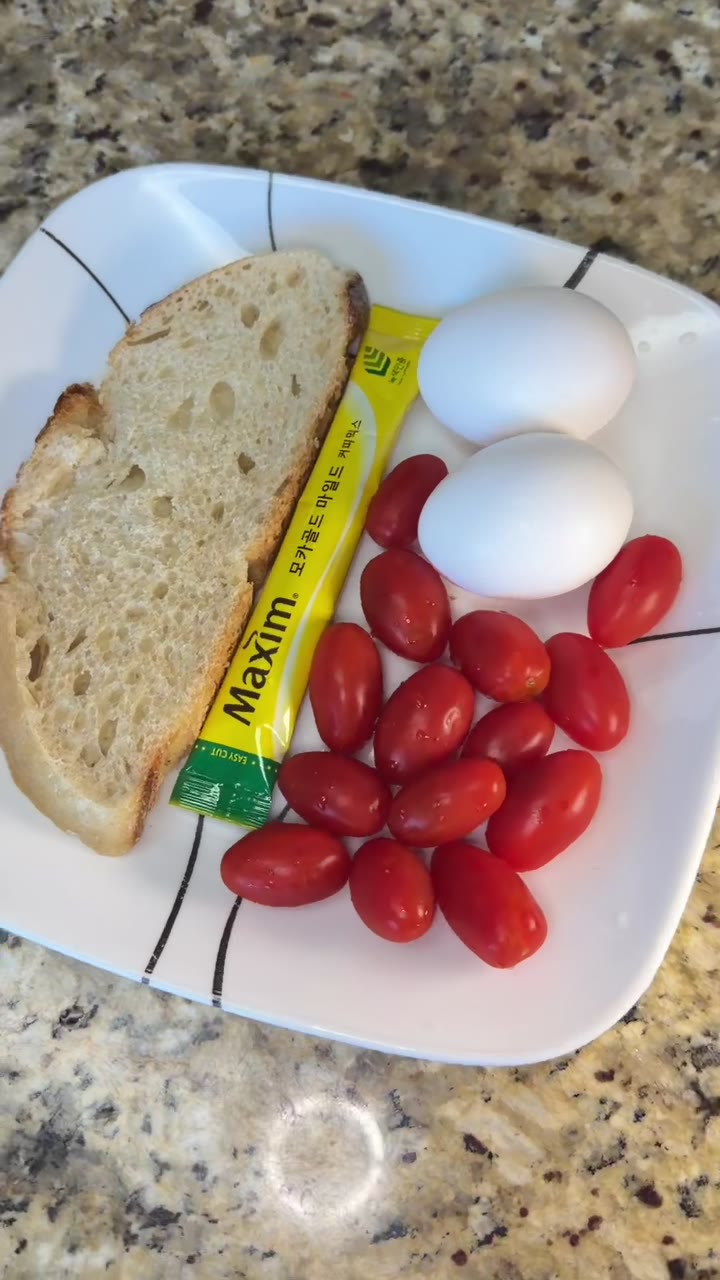
2. Lay it all out on one plate
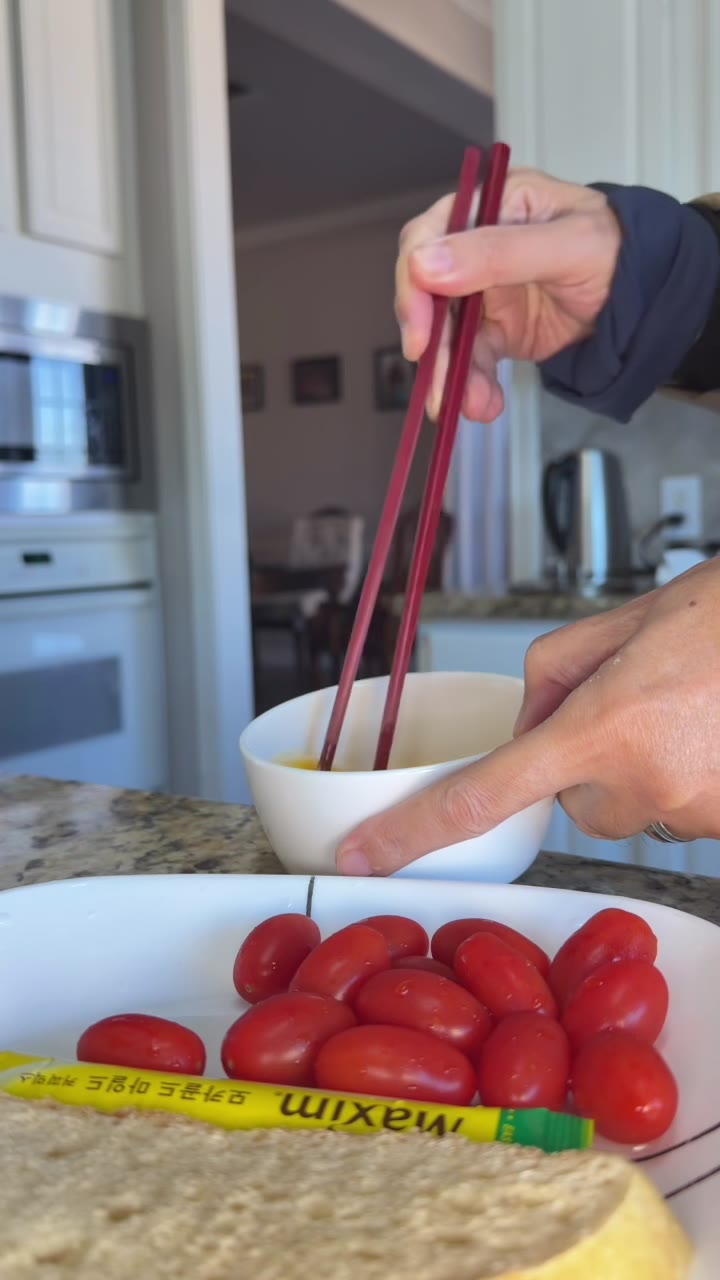
Before anything heats up, everything lands on one small plate: the sourdough, the two eggs, the cherry tomatoes and the coffee stick. When it all fits on one plate, the meal is the right size — and nothing gets forgotten halfway through.
Why: cooking for one is easier when the whole meal is visible at a glance. One plate out of the fridge, one plate onto the table.
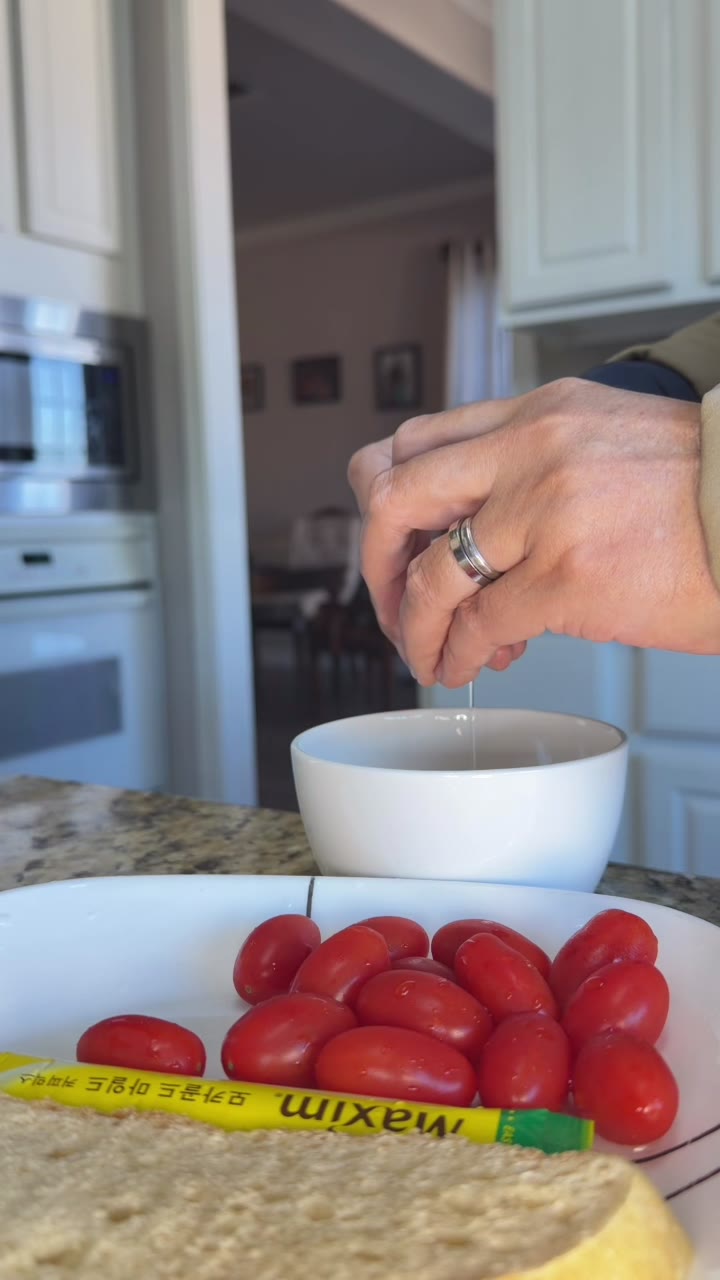
3. Crack the eggs first
The eggs are beaten before anything else happens. Crack the two eggs into a bowl, one at a time — this is the first job of the morning, done while the kitchen is still quiet.
Why: eggs cook fast once they land in the pan. Beaten and ready ahead, they go in at the right second instead of the pan waiting on them.
4. A pinch of salt, then whisk
Add a pinch of salt and whisk with chopsticks until the yolks and whites come together into one even gold. Chopsticks are what I always use at home — they beat the eggs gently and become the cooking tool later.
Why: salt in the bowl seasons every bite evenly, and a gentle whisk keeps the eggs soft instead of foamy.
5. Heat the pan — then the oil
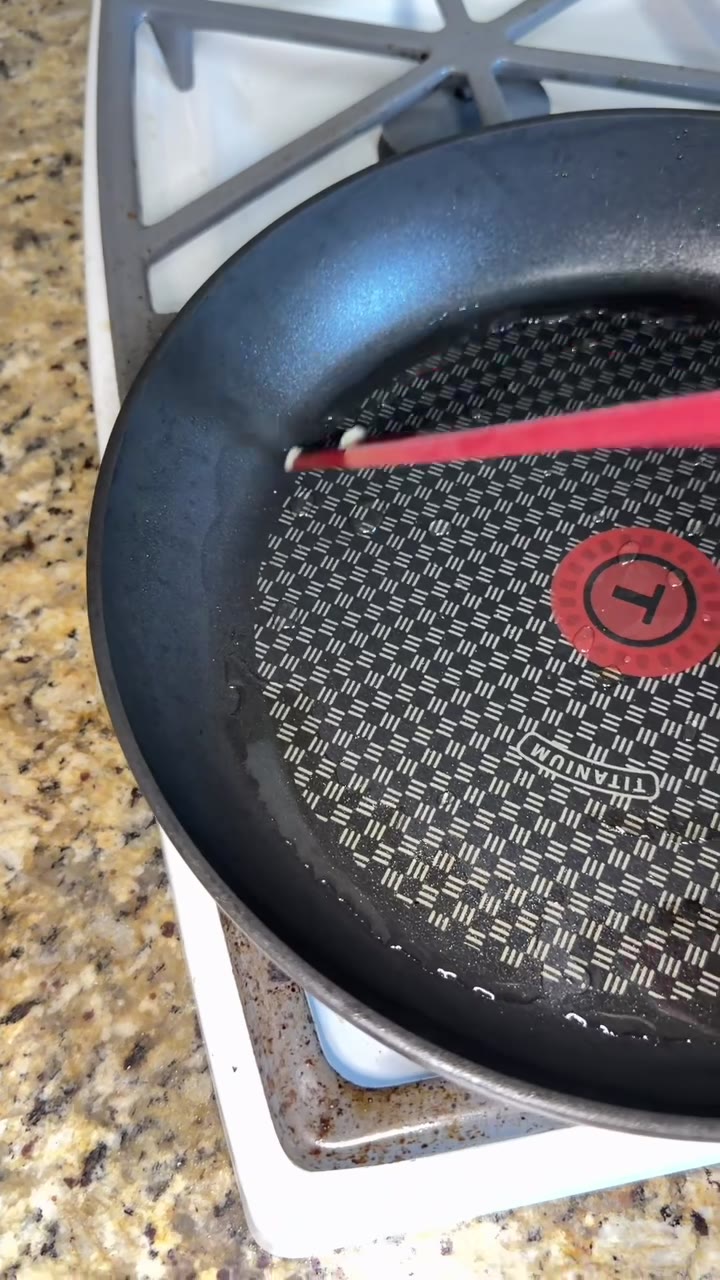
The pan goes on the heat empty and gets about three minutes to come up to temperature. Only then does the oil go in: a hot pan, cool oil, so the eggs meet a surface that is ready for them.
Why: oil in a cold pan heats unevenly and the eggs grab and stick. Pan first, oil second — the order is the technique.
6. While the pan heats: the first toast, and the kettle on
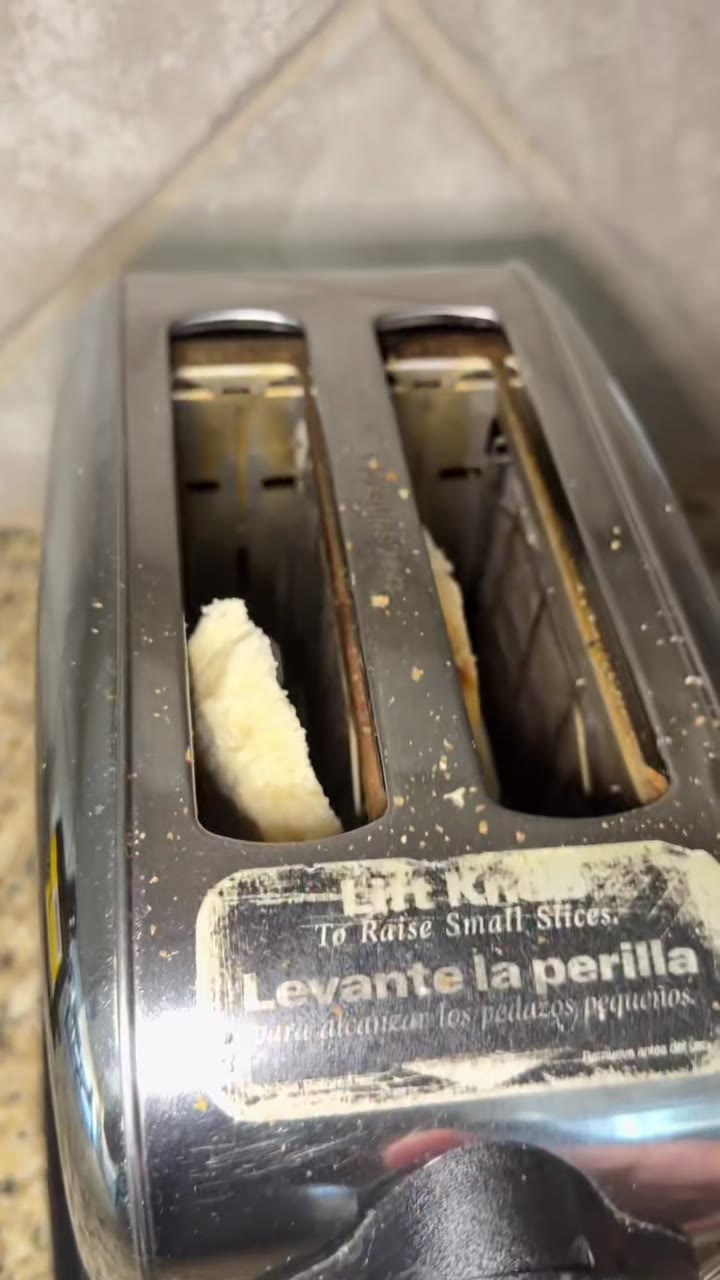
No standing around while the pan heats. The sourdough gets its first toast now — I put it in the oven for a bit — and the kettle goes on for the coffee; the water takes about five minutes to boil, running in parallel with everything else.
Why: the minutes overlap on purpose. By the time the eggs are done, the toast is toasted and the water is boiled — nothing waits on anything.
7. Eggs in — watch the edges
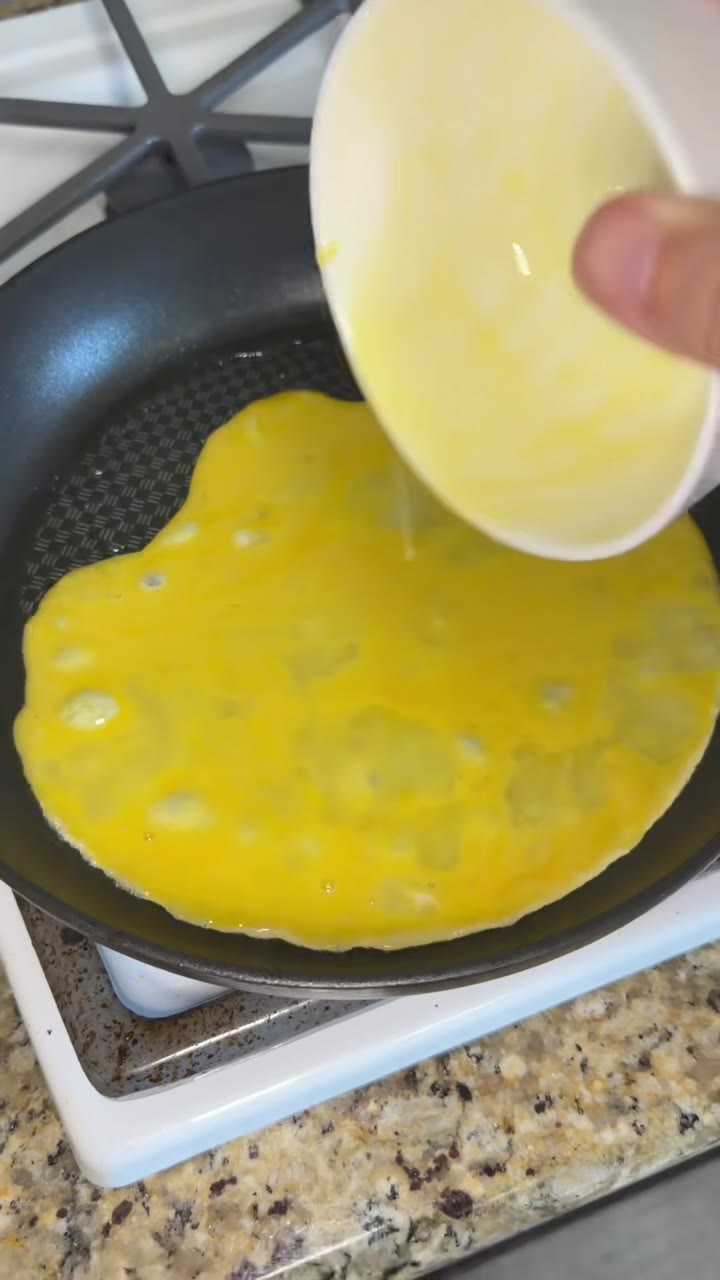
Pour the eggs into the hot, oiled pan and let them be. Watch the edges: when they start to set and turn opaque, the eggs are ready to move — not before.
Why: the edges tell the truth about the pan. Moving too early tears them; waiting for the set gives golden spots without drying the middle.
8. Soft folds
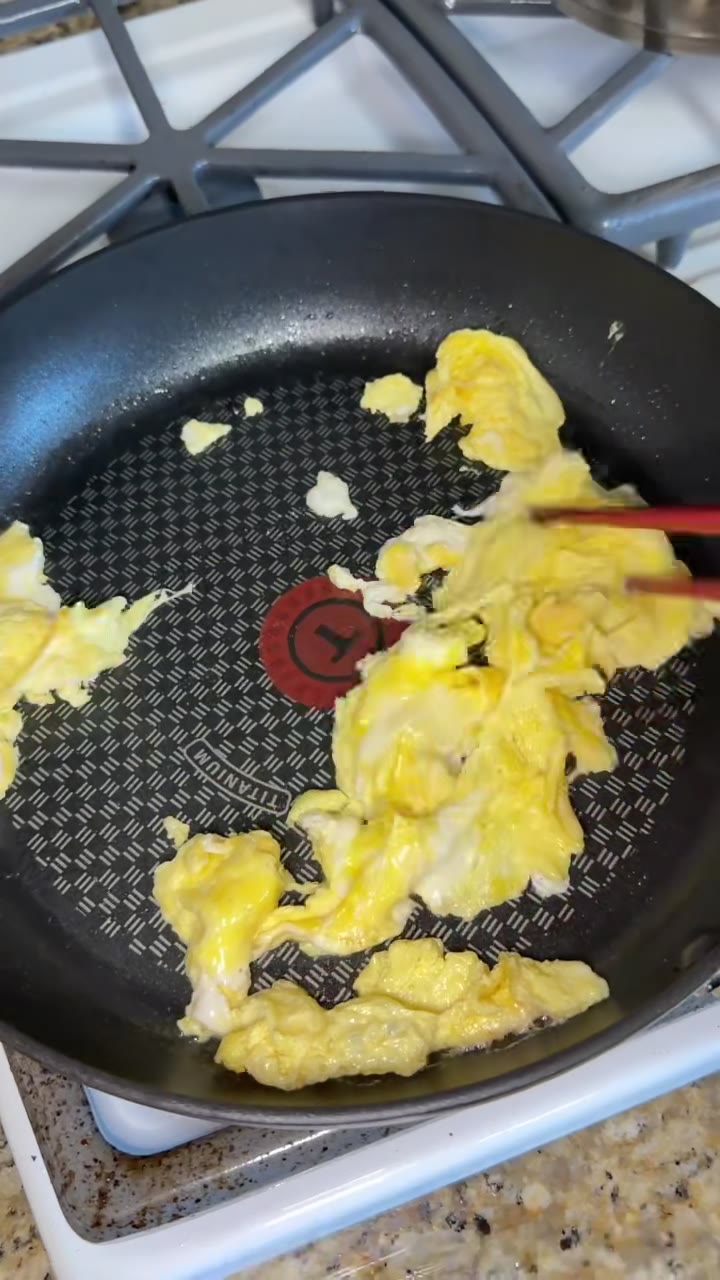
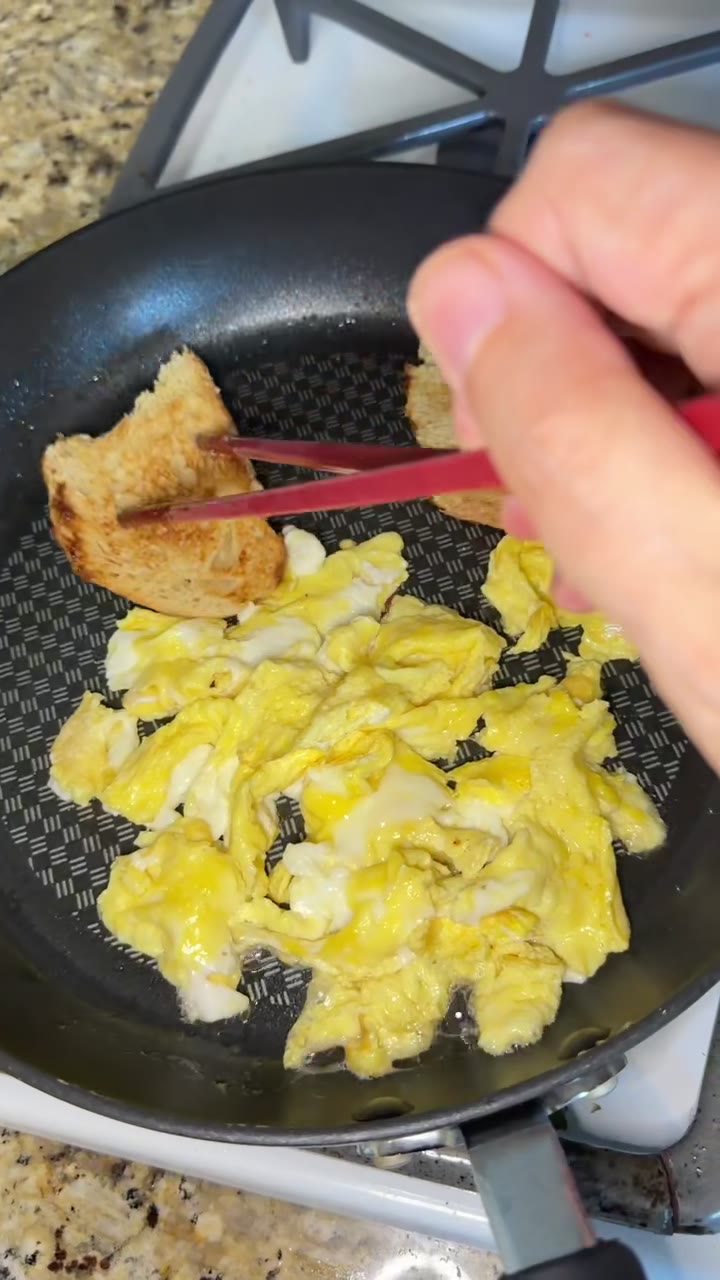
Fold the eggs slowly with the chopsticks — big, soft folds — and take the pan off the heat while they still look a little glossy. They finish in their own warmth on the way to the plate.
Why: eggs keep cooking after the heat is off. Off the stove early, they arrive soft; left in the pan, they arrive rubbery.
9. The second toast: sear the sourdough in the pan
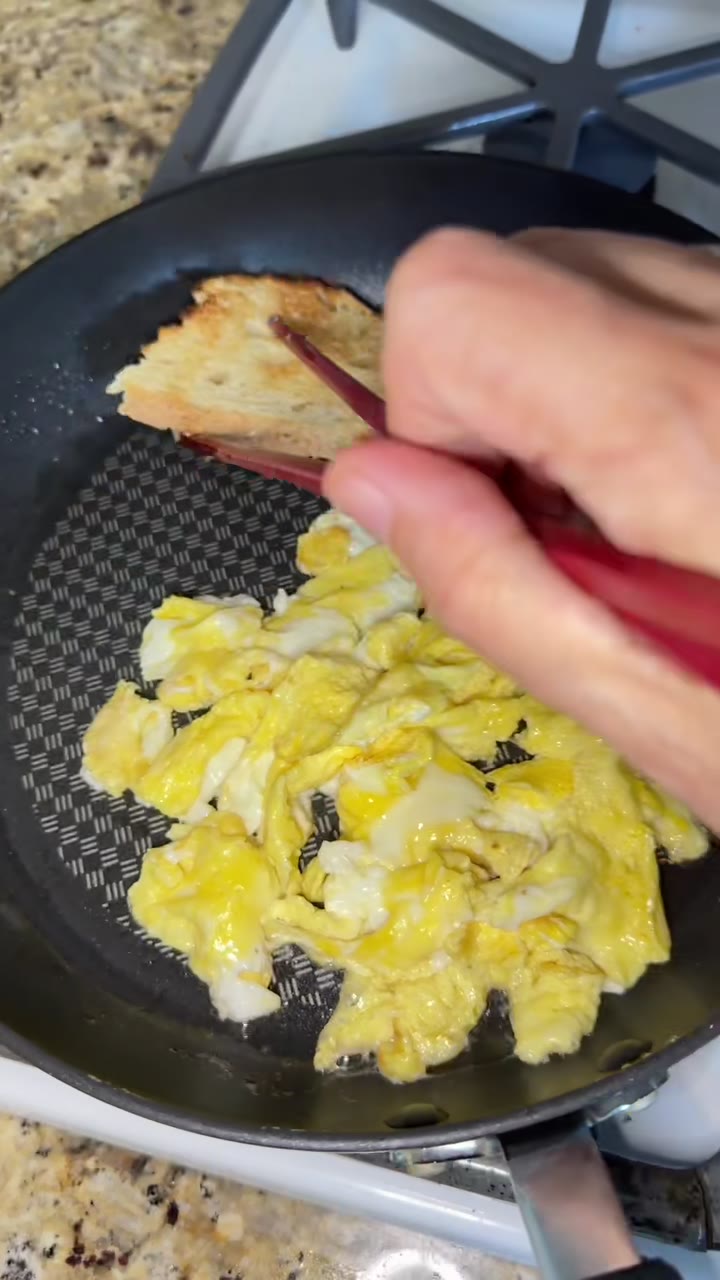
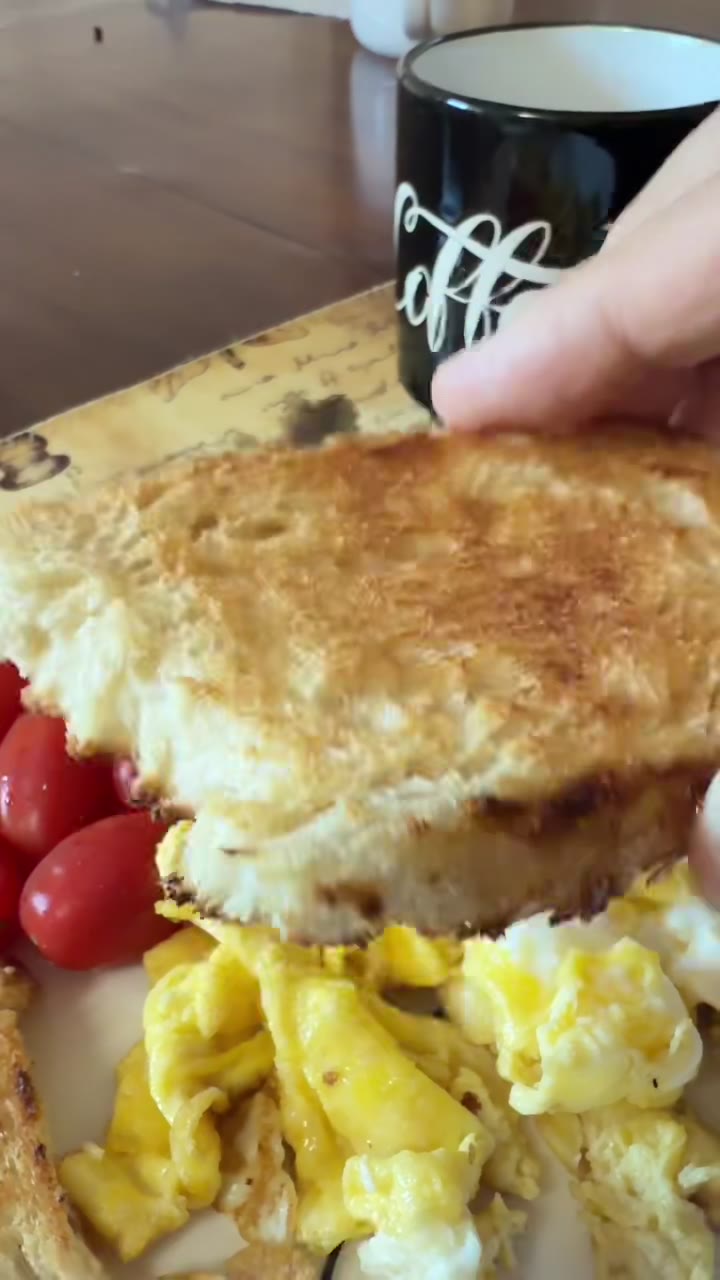
Now the step this breakfast is known for in my kitchen: the oven-toasted sourdough goes into the pan and gets seared there, crisping in the heat the eggs just left. The first toast dried it; this second one is where the flavor comes out.
Why: the oven alone gives a pale, even toast. The pan gives a crisp, golden face — toasted twice is not a garnish, it is the recipe.
10. Coffee — one stick of Maxim
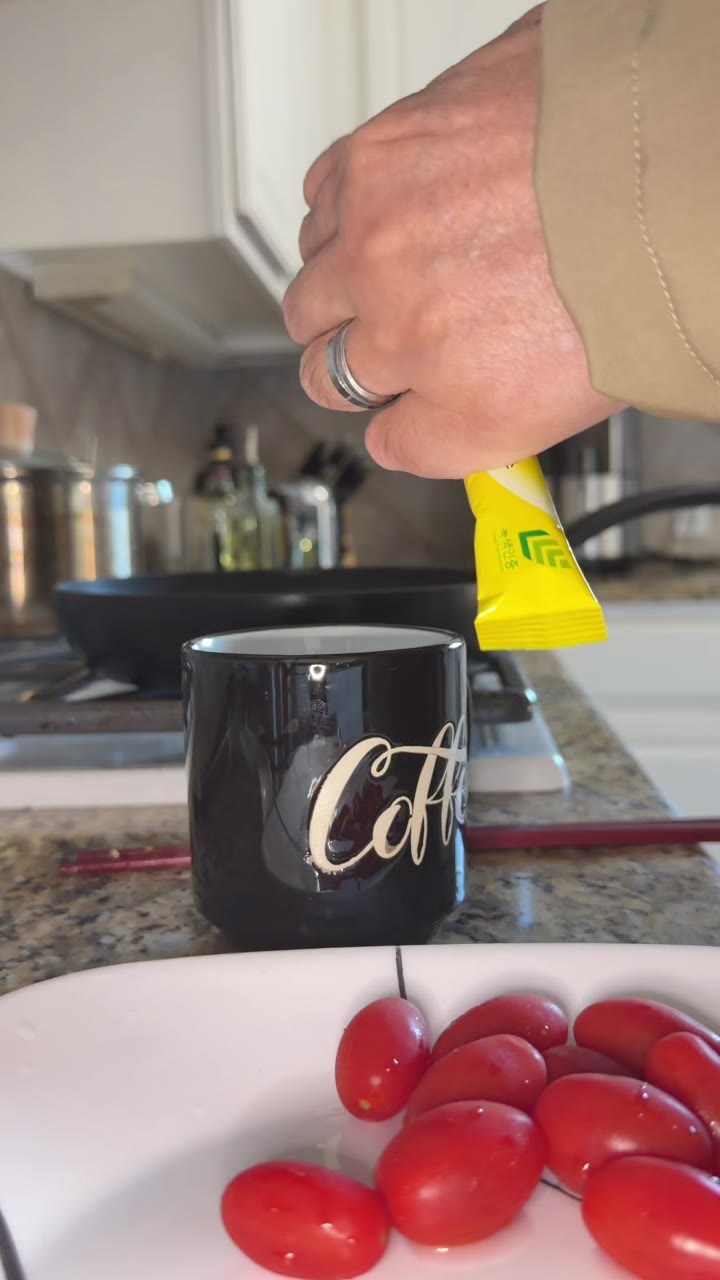
The kettle has boiled by now. One stick of Maxim in the mug, hot water over it, done. It is the Korean instant I like — the sugar is not over the top, just a little sweetness, which is how I like to start a morning.
Why: a simple breakfast needs no coffee ceremony. One stick, hot water, and it is exactly the cup I wanted.
11. Plate it — the tomatoes as they are
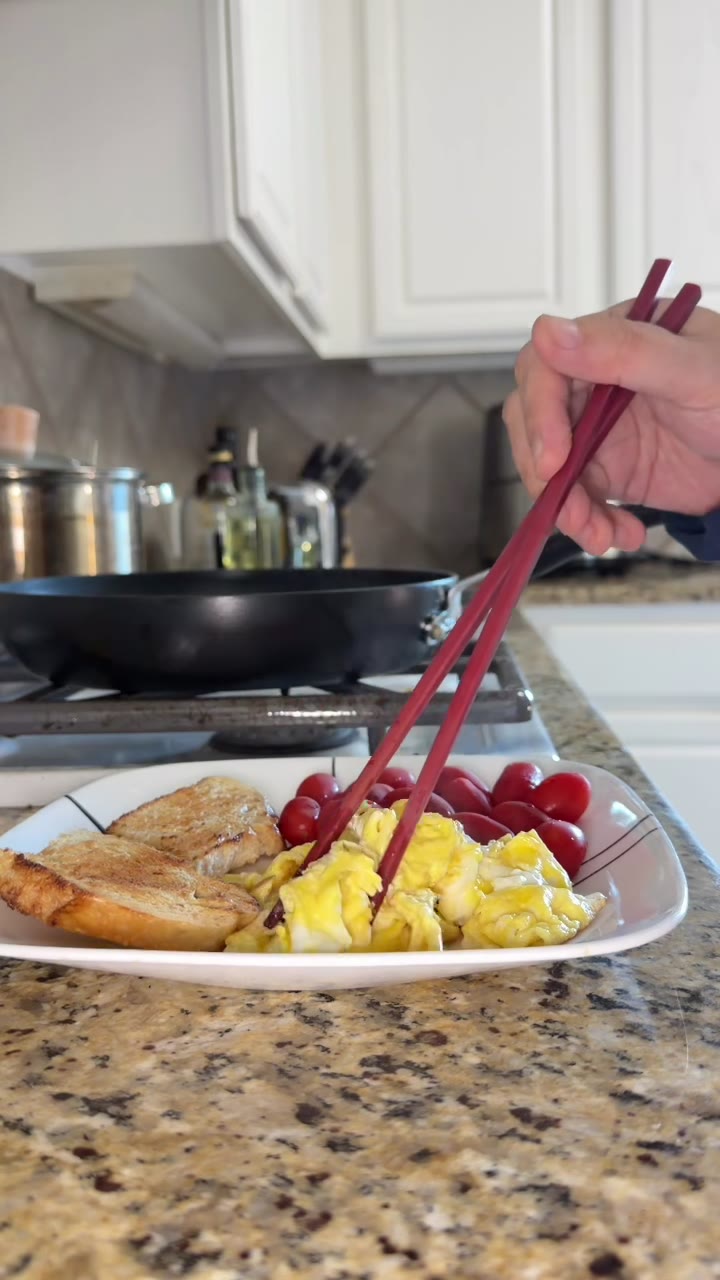
Eggs and toast onto the plate, and the cherry tomatoes land as they are — nothing done to them at all. They were ready before I started; the plate just makes room for them.
Why: not everything on a plate needs cooking. The tomatoes bring the fresh bite the warm food asks for, exactly as they came out of the fridge.
12. Eat it while it's warm
Sit down and eat while the eggs are still soft and the toast is still crisp. Five to seven minutes after opening the fridge, breakfast is in front of you — made by hand, for one, and worth a quiet thank-you.
Why: this food has a short peak. The whole point of a seven-minute breakfast is eating it in its best minute.
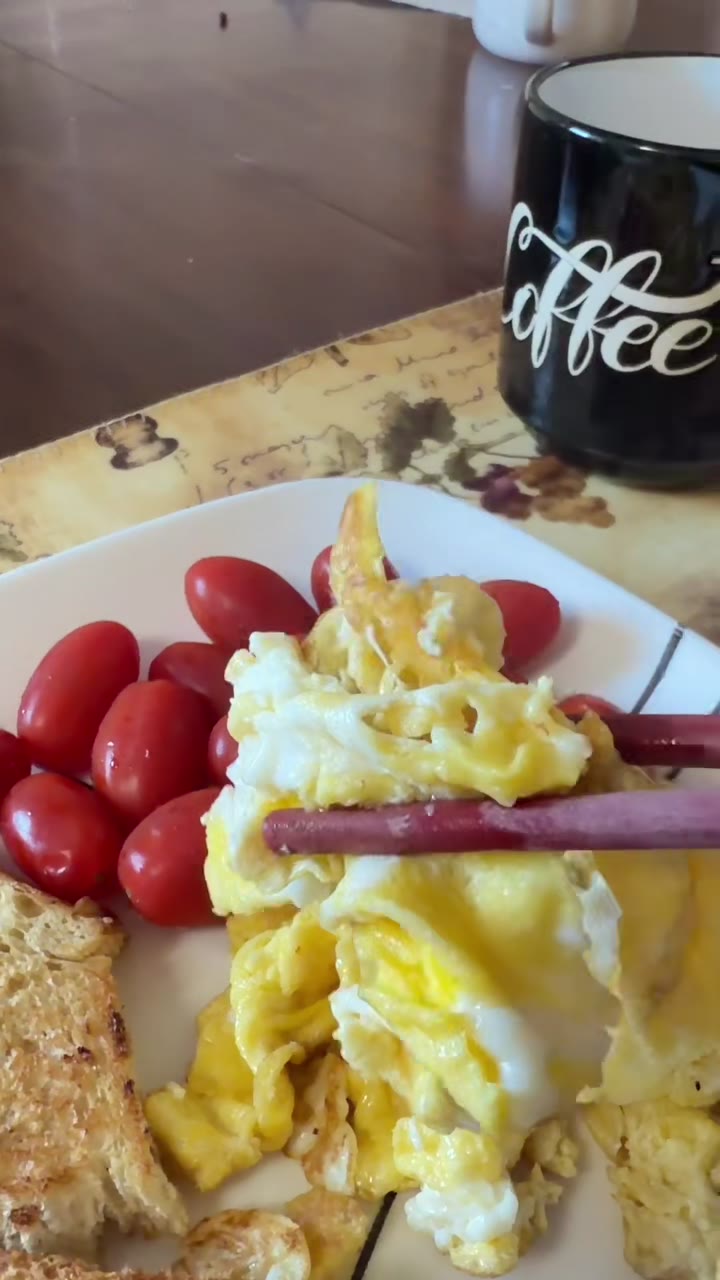
From my fridge — the whole idea
This page is the XingAI Cook idea cooked down to one plate: you don't decide breakfast from a shopping list, you decide it from the fridge you already have. Eggs, a slice of bread, tomatoes, a coffee stick — most home fridges are holding a breakfast right now; they just haven't been asked. One person, one pan, seven minutes: that is the whole recipe, and it works with whatever your fridge is holding this week.
Toasted twice: oven first, then the pan
Of everything on this plate, the sourdough is the part with a real method. First it goes into the oven for a bit — that dries the slice and starts the flavor. Then, while the eggs are finishing, it goes into the hot pan and sears — and that second heat is where the flavor really wakes up: a crisp, golden face the oven alone never gives. It is one of the two things that make this breakfast taste right (the soft eggs are the other). The film of this breakfast takes the video slot at the top of this page when it premieres; the steps above are the complete method either way.
Where this breakfast goes wrong
✕ Eggs left in the pan too long
They keep cooking in the pan's heat even off the stove. Plate them while they still shine a little, or the soft folds turn to rubber in the minute they sit.
✕ Toast toasted only once
Oven-only toast stays pale and soft in the center. The pan sear is not a flourish — it is the step that makes the bread taste like anything at all.
✕ Oil into a cold pan
The oil heats unevenly, the eggs spread and stick, and the golden edges never happen. Pan hot first — about three minutes — then the oil, then the eggs.
Questions, answered
How long does it really take?
Five to seven minutes from opening the fridge to the first bite — the cook's own count. The pan heats for about three of those minutes and the kettle boils in parallel, so the steps overlap instead of queuing up.
Why toast the bread twice?
The oven toast dries the slice and starts the flavor; searing it in the pan afterwards gives it a crisp, golden face. It is the house way with sourdough, and the difference is in the eating, not the clock.
What coffee is that?
One stick of Maxim, the Korean instant coffee — the cook's standing choice. Not especially sweet, just a little sweetness to start the morning, made with water from the kettle that boiled while everything else was cooking.
Do the cherry tomatoes get cooked?
No — they go on the plate as they are. They are the fresh, cool bite next to the warm eggs and toast, and the plate is better for having one thing on it that nobody cooked.
Can I make it for two?
Double the eggs and the toast, and cook the eggs in a wider pan or two batches — everything else on this page stays the same. The method is written for one because that is how it was made.
Sources and related reading
That is the whole of it: a fridge opened, a pan heated, bread toasted twice, and one person fed well in about seven minutes. Simple food, made slowly enough to enjoy making it. Thank God for a quiet morning and a warm plate. — XingAI Cook: Never Wonder What's For Dinner.
Cooking ideas, not nutrition or medical advice. Check allergens and cook meat and eggs to safe temperatures.