
XingAI Cook How-To — Ramen Battle, Station No. 2
How to Cook Neoguri Stir-Fry Seafood Ramen at Home
Tonight's decision, made for you: one pack of Nongshim Neoguri Stir-Fry Seafood, cooked the house way — noodles loosened at three minutes, one more minute after, the oil pack in the bin, all the seasoning in, Spam and onions riding along — a deep-seafood bowl that looks like a fire and eats like the coast.
The seasoning goes in red and comes out gentle: this bowl's loudest flavor is the sea, not the chili.
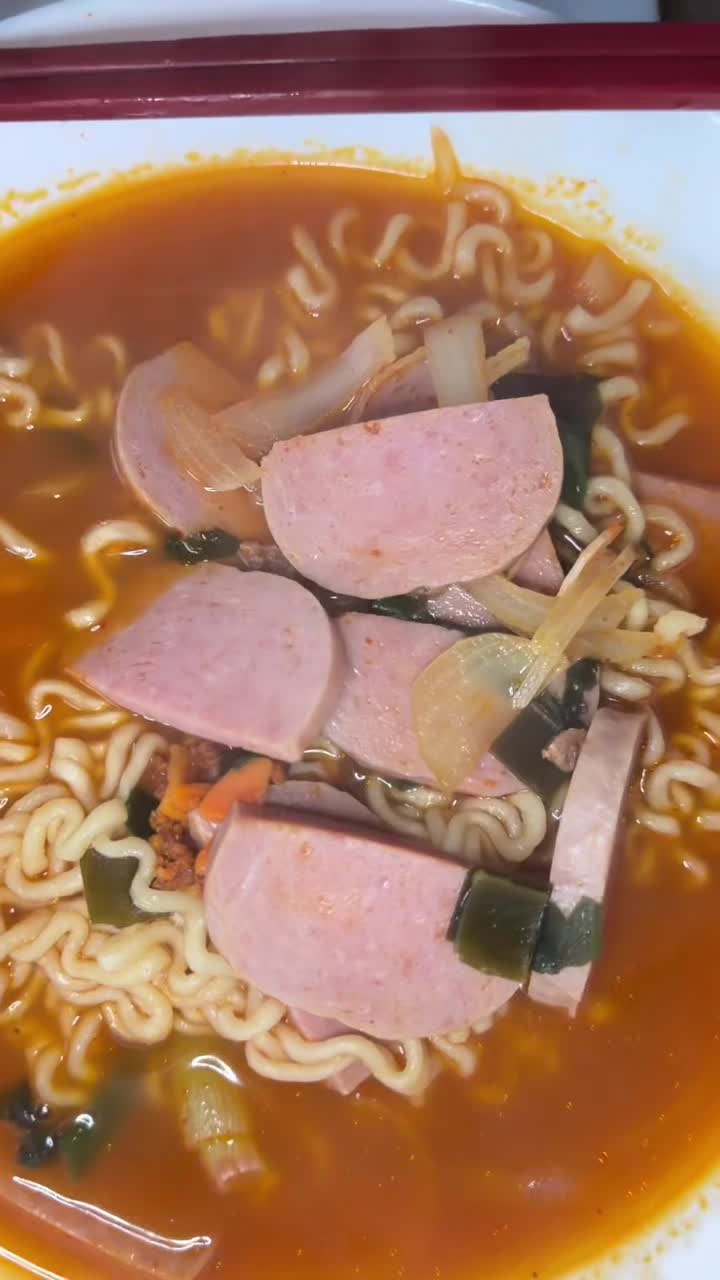
This is station No. 2 of our Ramen Battle — every pack on our table cooked and judged at home, one at a time. After Shin Green's gentle opener, the pick was Nongshim Neoguri Stir-Fry Seafood (볶음너구리), the stir-fry branch of the Neoguri family, in a 137 g bag. It was cooked at our table on the evening of November 2, 2026, and filmed the whole way; every photo in this guide is a frame from that cooking.
Two methods share this page. The pack's own, read off its back: boil 400 mL of water, add the noodles and flakes, cook 5 minutes, then strain and stir the seasoning through. And the house method, dictated by the cook of this house the same evening: three minutes, loosen, one more minute — with its own rulings on the three little packs inside. Both are written down; the verdict at the end is in the taster's own words.
Watch the full lesson: The Great Ramen Battle No. 2 — Neoguri Stir-Fry Seafood: All the Seasoning, None of the Fire
What you need
- One pack of Nongshim Neoguri Stir-Fry Seafood — noodle block, flakes, seasoning and oil pack inside
- Water for the boil — the pack's own measure is 400 mL
- Spam — a few thick slices (the house addition)
- Green onions, cut in lengths
- A white onion, sliced
- A pot with a lid, and a bowl to serve in
The family method, step by step
1. Meet the pack
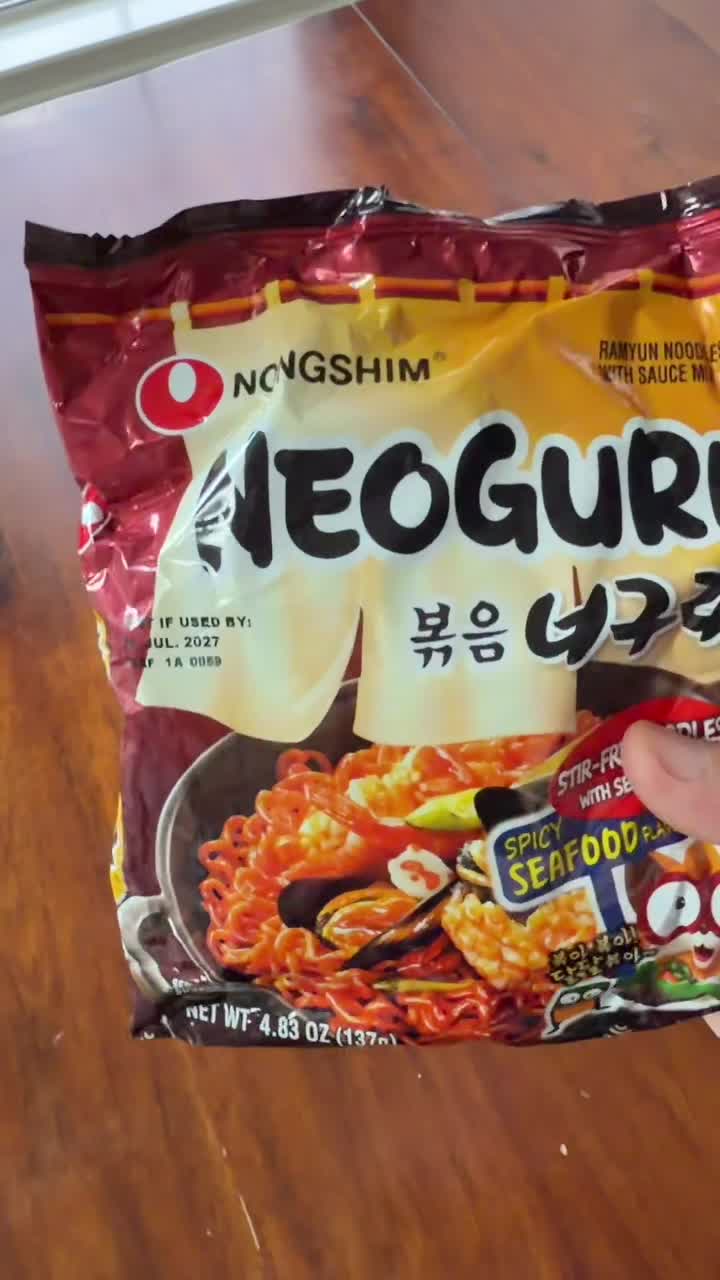
Neoguri is Nongshim's seafood name — the thick-noodled raccoon of Korean ramen — and this is its stir-fry branch: 볶음너구리, built to be drained and tossed rather than souped. Inside the 137 g bag are the noodle block, a flakes pack, the seasoning and a little pack of oil. Turn it over before anything boils: the back prints the maker's whole method and the label we read for the roster — 620 kcal, 1,270 mg of sodium, 13 g of protein.
Why: with a stir-fry pack, the back of the bag is half the recipe — it tells you this bowl is drained, not brothed. Our roster entry keeps the pack's label facts and photos; this guide is the cooking.
2. Water on, noodles in
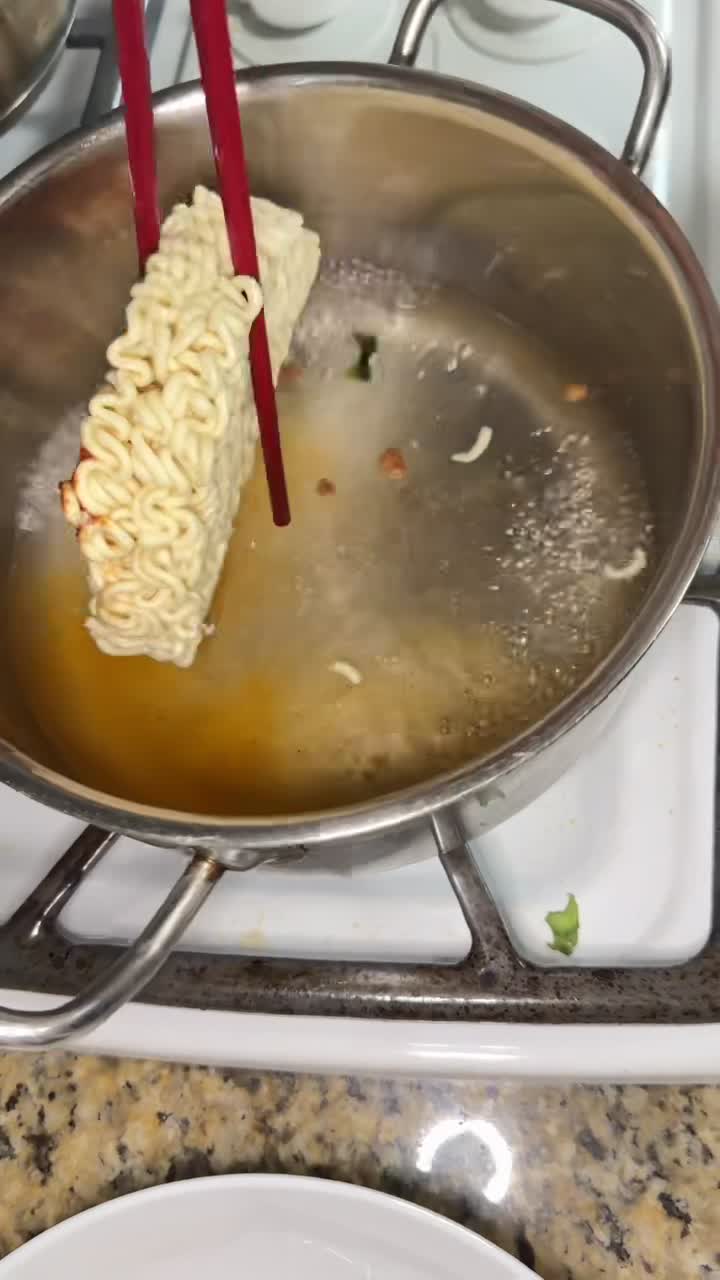
Bring the water to a real boil — the pack's measure is 400 mL, about two and a half cups — and lay the noodle block in. The house clock starts here, and so does everything else in this recipe: from this moment the packs and the add-ins go in alongside the noodles, not after them.
Why: a stir-fry bowl lives or dies on its water. Too much and the seasoning swims; the pack's 400 mL is portioned so the noodles cook through and still leave the bowl tossable.
3. Three minutes, lid on
Cover the pot and give the noodles three minutes. Neoguri strands are thick — thicker than a standard block — and the first stretch of the cook is theirs alone, softening in the boil while the flakes hydrate around them.
Why: thick noodles, honest timing. Rush this stage and the center of every strand stays chalky no matter what you do later; the loosen-up that follows needs noodles that are already supple.
4. Lid off, loosen, one more minute
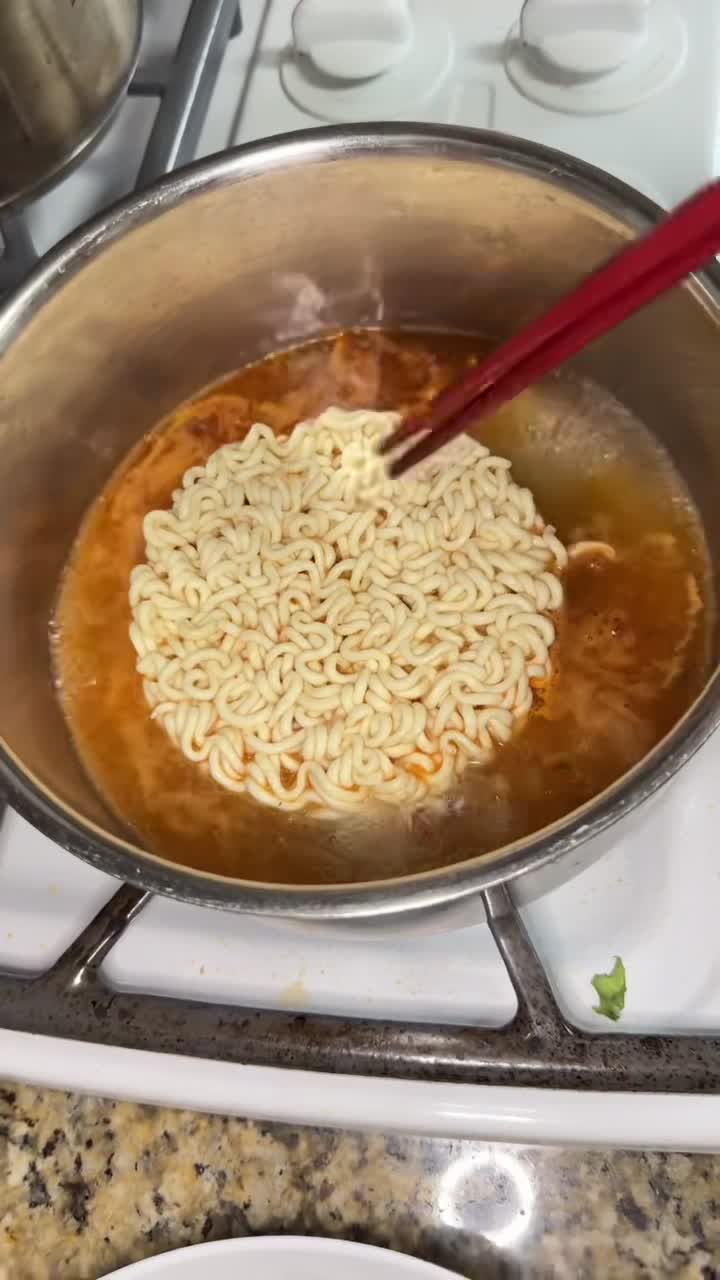
At three minutes, take the lid off and pick the noodles up with chopsticks — lift, shake, turn them over, tease the block apart until every strand moves on its own. Then give them one more minute. Four minutes total on the house clock: shorter than the pack's printed five, because the strands finish in the toss, glossy and separate.
Why: a block left alone cooks into a slab with raw seams inside. The loosen-up is the difference between a tangle you chew through and strands that slide.
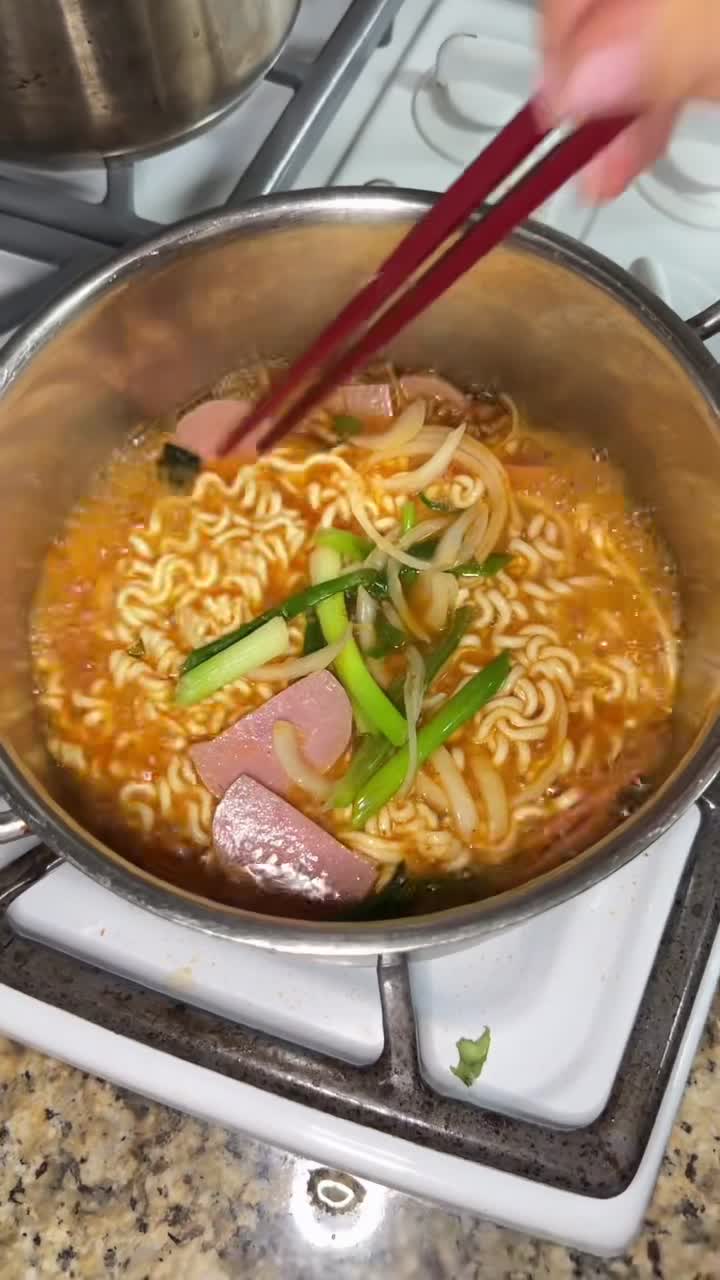
5. The three packs, three rulings
These went in with the noodles, and each pack got its own ruling. The flakes — the dried seafood-and-vegetable mix — go in, all of them. The seasoning goes in too: the whole pack, nothing held back. The little oil pack is the exception, and its ruling is the next step.
Why: this is the test the battle runs on — the pack cooked whole, as portioned, so the verdict is about the pack and not about our caution. Holding back seasoning would have left the real question (how hot is it?) unanswered.
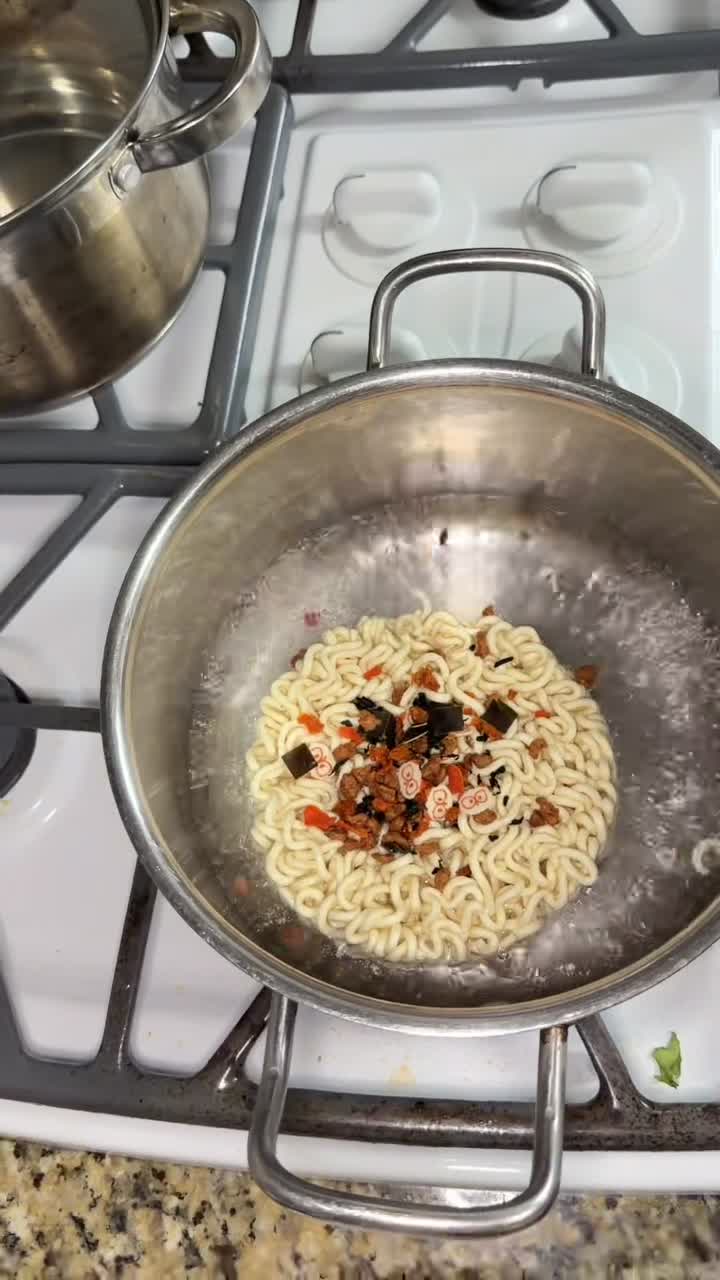
6. The oil pack goes in the bin
The oil pack never touches the pot — in this house it is thrown away, because the cook does not like that oil in her bowl. The pack's own route stirs it in at the end; ours skips it, and the bowl is none the poorer: the seasoning carries the flavor, and the Spam brings richness of its own.
Why: a printed method is a starting point, not a contract. The oil is the one ingredient this kitchen has a standing opinion about, and the honest guide writes the opinion down instead of hiding it.
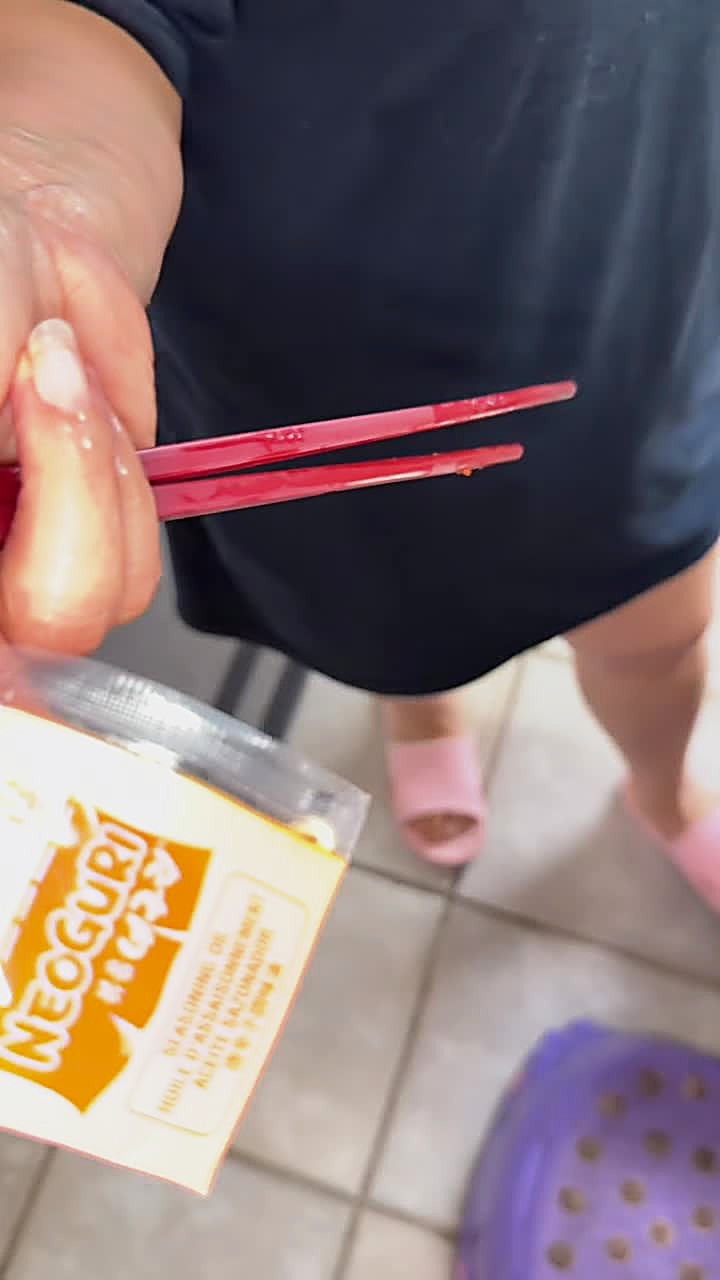
7. The house additions: Spam, scallion, onion
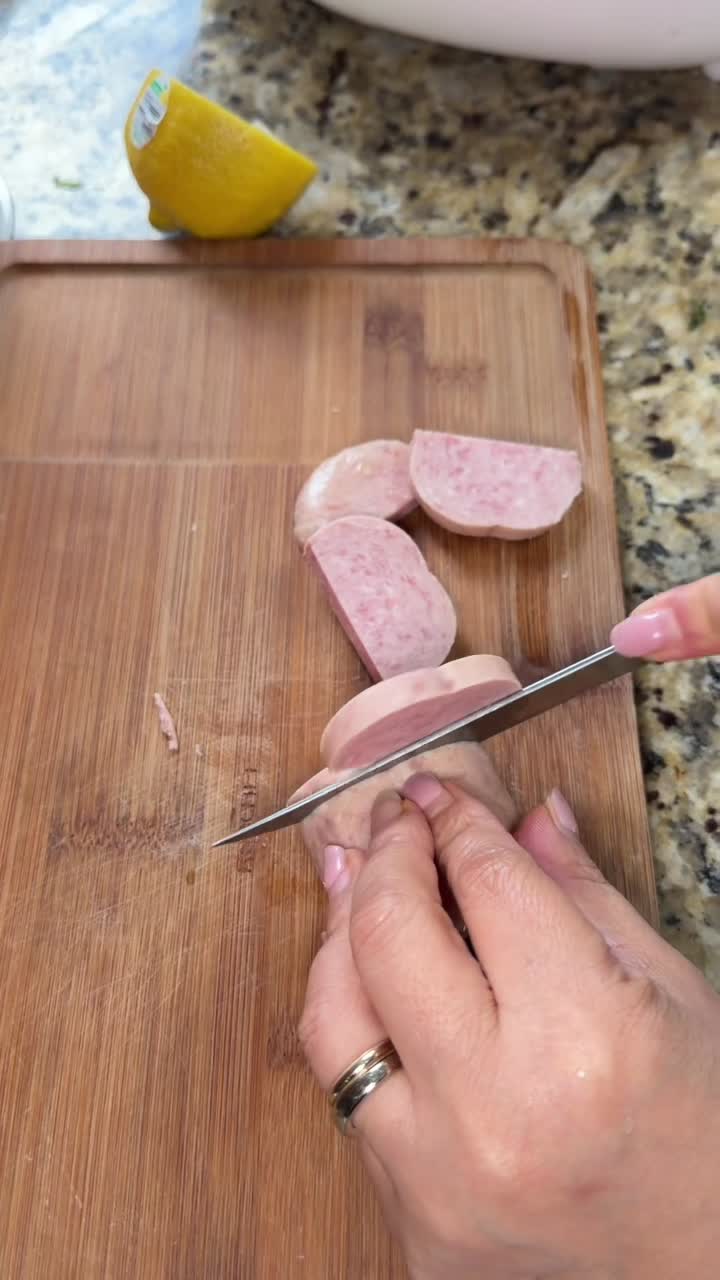
While the noodles cook, in go the family's own players: thick slices of Spam, green onions cut in lengths, and sliced white onion. They cook in the same pot, in the same minutes — the Spam warms through and edges into the broth, the onions slump and sweeten, the scallions stay green.
Why: a plain pack is a solo; this table cooks for a family. Spam and onion are how a 137 g bag becomes dinner — and the Spam is not decoration, it is half the appetite of the bowl.
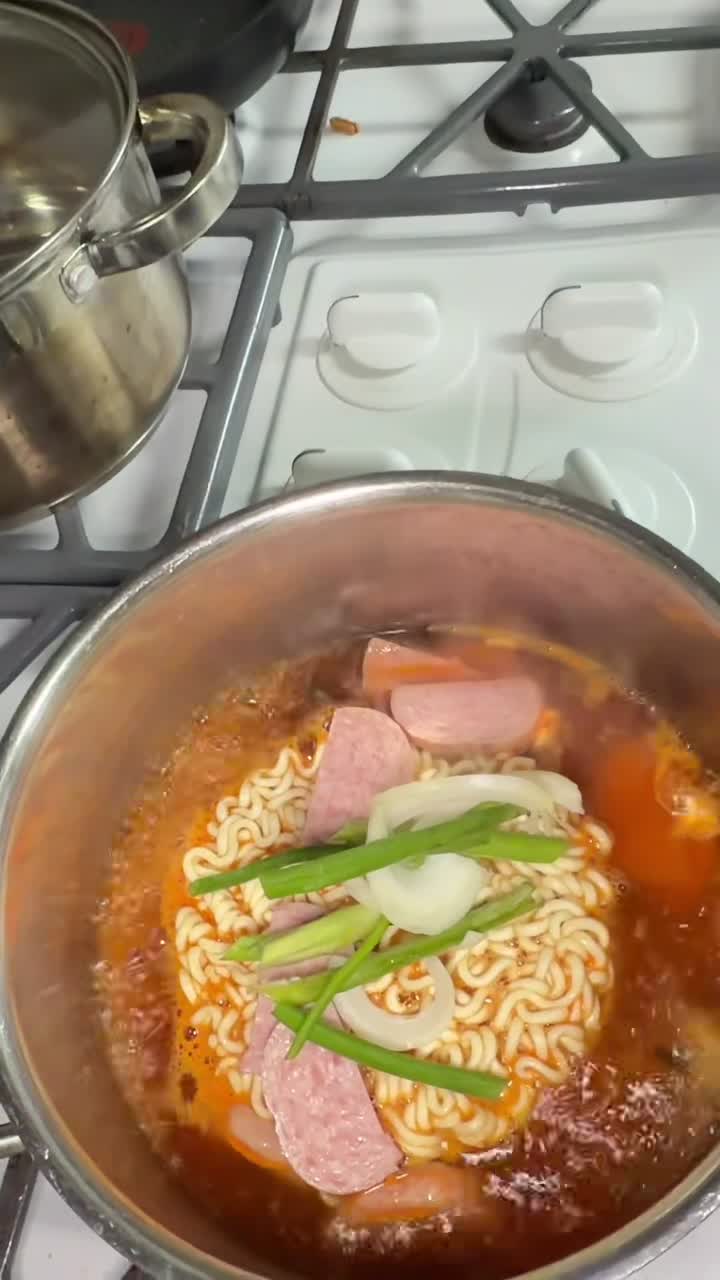
8. Into the bowl
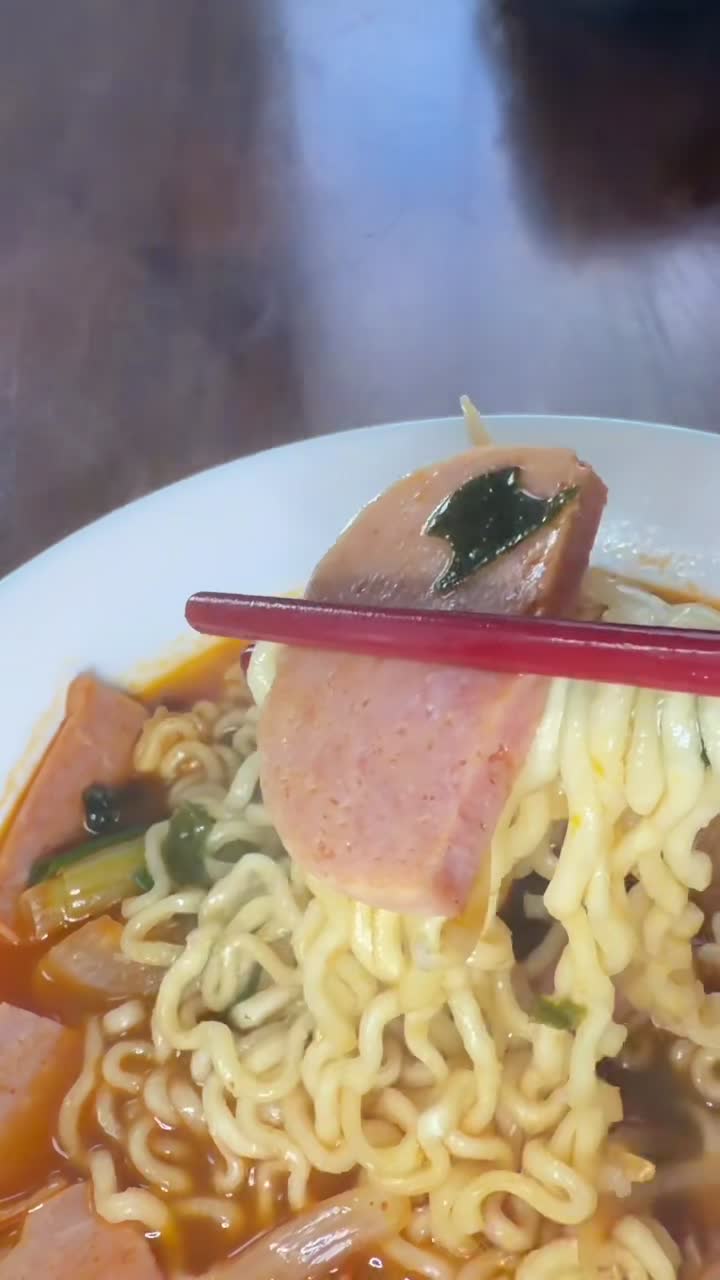
Tip the pot into a bowl — noodles, Spam, onions and the red cooking liquor together. At our table it was eaten the Korean way: the bowl in the middle, kimchi alongside, chopsticks straight in. The whole pack, the whole pot, no ceremony.
Why: a stir-fry pack served dry and neat would lose the liquor the seasoning lives in. Bowl it all, and the last mouthful tastes like the first.
Where this bowl sits in the battle
Station No. 1 was the gentle opener; station No. 2 was meant to climb a rung — a red pack, the whole seasoning in, a cook in the house who can take heat and asked for all of it. What the bowl actually delivered was a plot twist the roster now records: the color climbs, the heat does not. Neoguri's challenge is not fire but depth — a seafood base that fills the bowl — and that makes it a different kind of contender from the Buldak corner waiting further down the table: it wins on flavor, not on dare.
The two rulings that make it ours: no oil, all seasoning
Every house method is a set of small rulings, and this bowl has two that pull in opposite directions. The oil pack is refused — the cook does not like it, out it goes, no debate. The seasoning is accepted whole — every grain of the red powder, because a verdict needs the pack at full strength. Between those two rulings the bowl becomes specific: rich from Spam instead of oil, seasoned at the maker's full measure instead of ours. The battle film of this bowl is on our channel's schedule — when it premieres, it takes the video slot at the top of this page; the steps above are the complete method either way.
Where this bowl goes wrong
✕ Judging the heat by the color
The seasoning is brick-red and the broth follows it; the instinct is to brace, dilute, or hold half back. Don't. Cooked whole, this pack's heat is mild — the red is paprika-deep seafood seasoning, not a warning light. The battle's fire corner is elsewhere on the table.
✕ Cooking it like a soup pack
Neoguri's soup version is a different bag. This stir-fry pack is portioned for 400 mL and a drain-and-toss finish (the pack's own route); flood it like a soup and the seasoning thins into pink water. The house route keeps the liquor — but keeps it little.
✕ Skipping the loosen-up
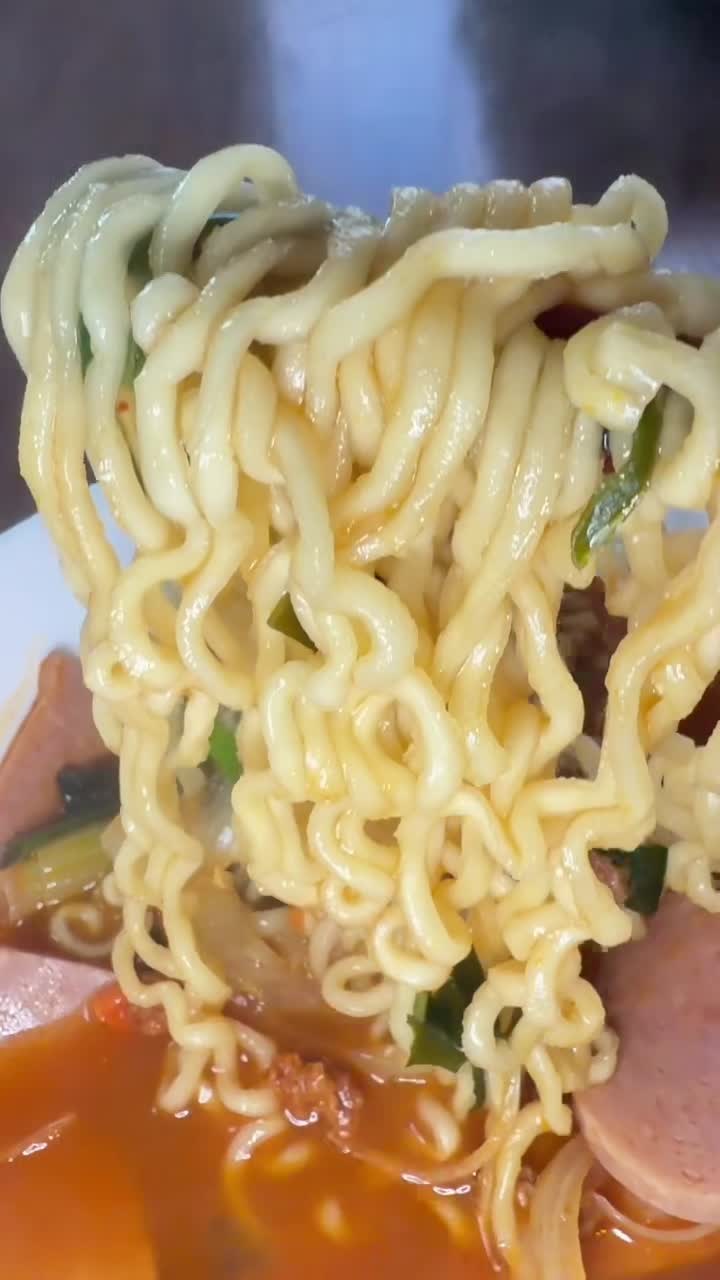
Three minutes in, the block looks done and pulls apart reluctantly. Leave it and the middle stays a slab. The lift-and-shake at the three-minute mark, then one more minute, is the whole texture of this bowl.
✕ Adding the extras at the end
Spam and onion dropped on top of finished noodles are garnish; cooked in the pot they are ingredients — the Spam gives up fat to the broth and the onion sweetens it. In with the noodles, not on top of them.
Questions, answered
Is Neoguri Stir-Fry spicy?
Mild — and that is the surprise in this bowl. The whole seasoning pack went in, the cook of the house can take heat and wanted it all, and the verdict still came back: not spicy. The seasoning's job here is the seafood base; the red color promises more fire than the bowl delivers.
What is the difference between the pack's method and the house method?
The pack says: 400 mL of water, noodles and flakes, 5 minutes, then strain and stir the seasoning (and its oil) through. The house cooks it in one pot: noodles in boiling water for 3 minutes, loosen, 1 more minute — with the flakes and the whole seasoning in from the start, the oil pack thrown away, and Spam, green onion and white onion added. Same pack, two honest routes; this page films the house one.
How long does it take, start to finish?
The noodles take about four minutes on the house clock (three, loosen, one more), and the slicing of Spam and onions happens while the water comes to the boil — the whole bowl lands in about ten minutes. The pack's own printed cook time is 5 minutes before its straining step.
How many calories are in a pack?
620 kcal for the 137 g bag — read off our own pack's back label, on camera. The same label reads 1,270 mg of sodium and 13 g of protein. That is the pack as printed; the Spam and onions the house adds are on top of it.
Why throw the oil pack away?
Because the cook of this house does not like that oil in her bowl — a standing preference, followed here and written down honestly. Nothing broke: the seasoning carries the flavor, and the Spam brings the richness the oil would have added.
Is this the same as regular Neoguri?
Same family, different bag. The soup Neoguri is a broth bowl; this stir-fry version (볶음너구리) is built to be cooked in little water and tossed with its seasoning. Our roster keeps the two as separate rows — they cook differently and they judge differently.
Sources and related reading
- Neoguri Stir-Fry Seafood on the roster — the Korean Ramen Roster, row #ramen-neoguri-stir-fry-seafood (XingAI Cook)
- Station No. 1 of the battle — the Shin Green how-to guide (XingAI Cook)
- The Korean Ramen Roster — every pack on our table, with its numbers sourced (XingAI Cook)
- Neoguri — the ramen family this pack belongs to (Wikipedia)
Station No. 2 is in the books: a red pack that turned out to be a seafood bowl in disguise, and a kitchen ruling — no oil, all seasoning — that we would cook again exactly as written. The battle moves on to the next pack. Thank God for a bowl the whole table can share.
Cooking ideas, not nutrition or medical advice. Check allergens and cook meat and eggs to safe temperatures.