
THE GREAT RAMEN BATTLE · STATION NO. 13
Paldo Jang Ramyun — Good, Honest, and a Little Too Salty
Cook Paldo's Jang Ramyun his way: greens blanched first and lifted out, the cake in for two minutes and no more, the seasoning in after — but not all of it, because this packet runs salty — an egg cracked in, then the heat off so the noodles and the egg rest in the steam. Two slices of galbi on top, raw garlic alongside. His score: 8.2 out of 10, and yes, he would buy it again.
Nothing amazing — and that is exactly why it earns a place in the cupboard.
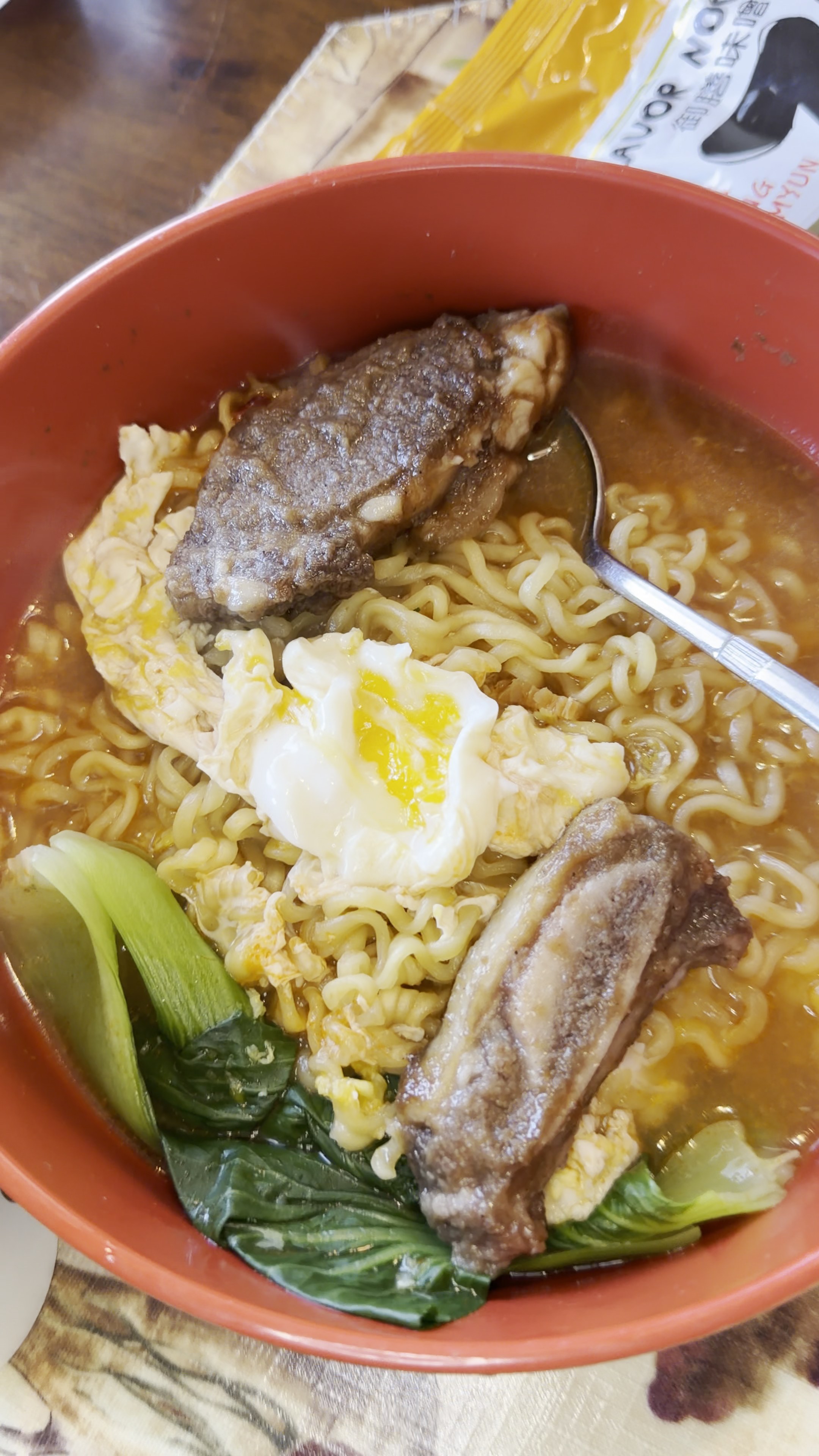
Station No. 13 is the honest one. Paldo's Jang Ramyun — 'soy flavor noodle' on the front of the pack, a jang-style soy-and-miso broth — is not here to stun anybody, and he does not pretend otherwise. Cooked his way, it is a solid, everyday bowl: the kind a house keeps on hand for a real lunch, not a special occasion.
His method runs in his usual order. The greens go in while the water is still warming and come out at the first boil, so they stay greens and not soup. The cake gets two minutes, no more. The seasoning goes in after the noodles — with one warning attached, because this packet is the saltiest he has met in a while, and he eats light. An egg goes in for the last minute, and then the part he insists on: the heat goes off, and the noodles and the egg rest. On top, two slices of his wife's Korean galbi from this morning's batch. That, plus raw garlic, is lunch — and lunch is enough.
Watch the full lesson: Paldo Jang Ramyun, Galbi on Top 🍜 The Everyday Pack, Done His Way — EP13 Long Cut (8.2/10)
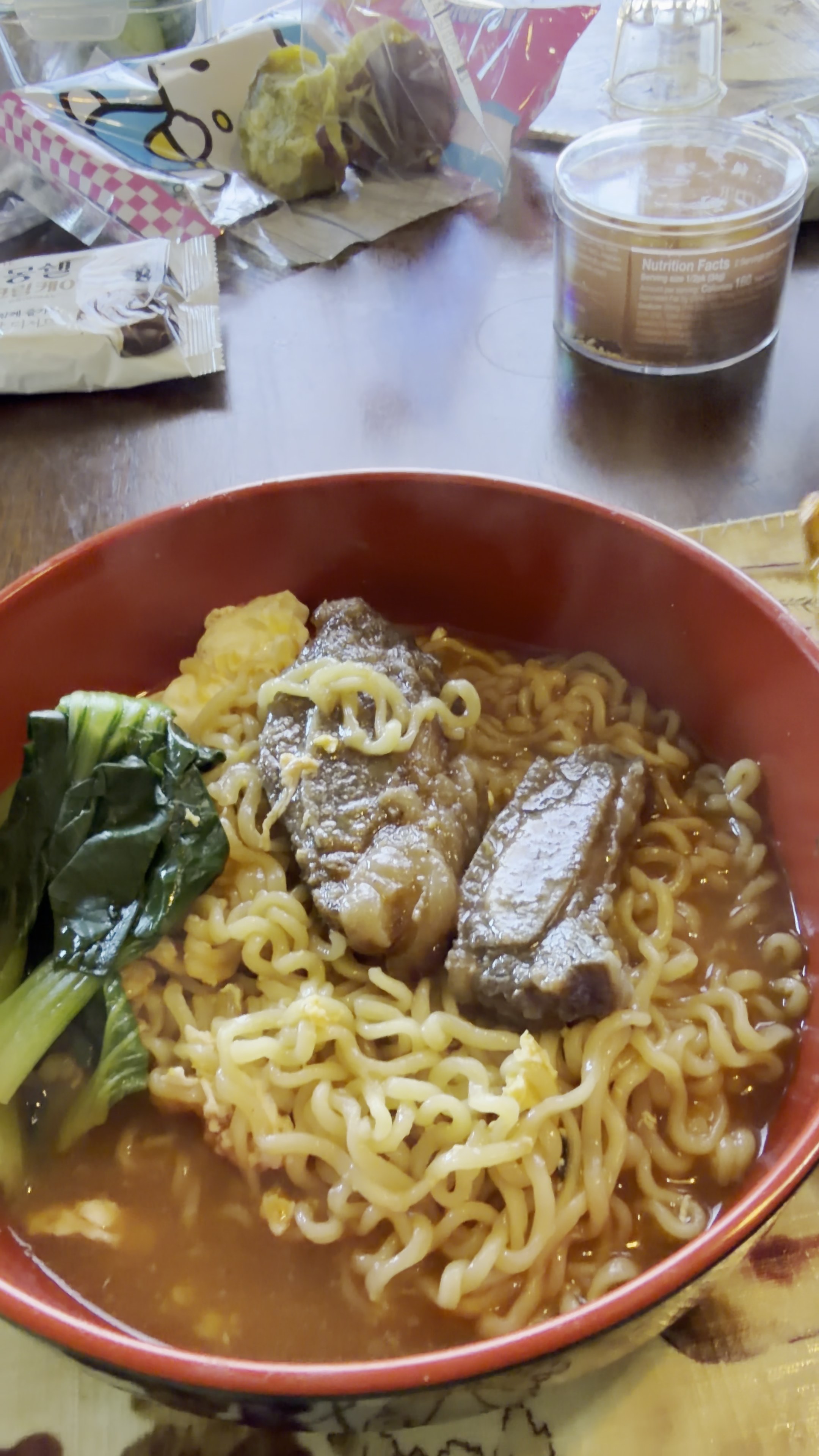
Today's bowl, as filmed
- One pack of Paldo Jang Ramyun (soy flavor) — cake and seasoning both used, the seasoning with care
- A handful of leafy greens — blanched first, in and out before the noodles
- One egg, cracked straight into the pot
- Two slices of Korean galbi (short rib) — from his wife's batch, marinated with Korean pear
- Raw garlic cloves, peeled — served with the finished bowl, never optional
- Water — and a little more of it than the pack suggests, if you use all the seasoning
- A glass pot with a lid — the whole cook happens in it
His method — greens first, heat off last
1. Meet the pack — an everyday one
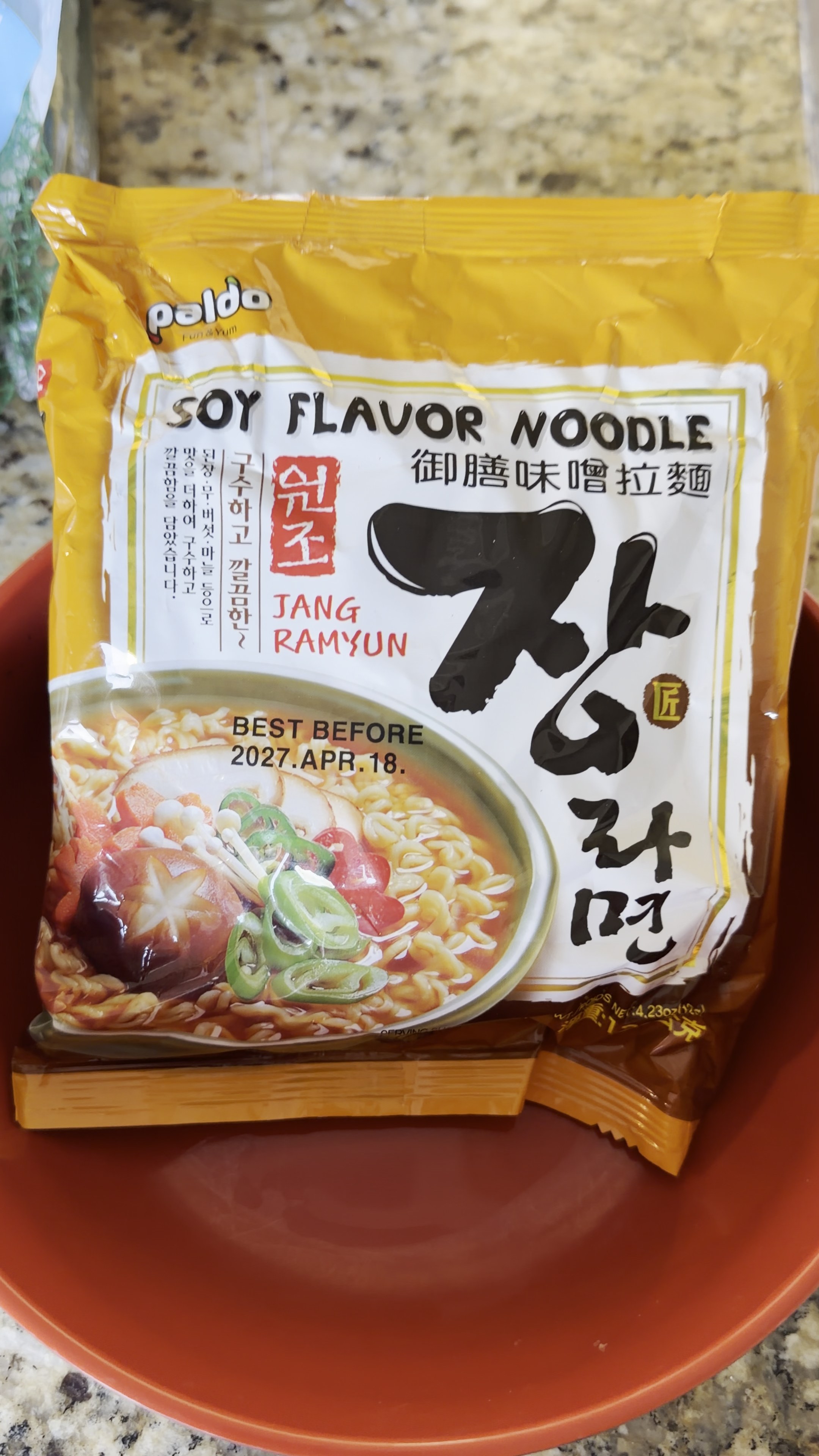
Paldo's Jang Ramyun in its yellow pack: 'SOY FLAVOR NOODLE' down the side, jang — the deep, fermented soy family that miso belongs to — doing the seasoning work. This is a cupboard pack, not a trophy pack, and he cooks it like one: read it, respect it, and fix the one thing it gets wrong.
Every station starts with the pack read honestly. This one's promise is modest, and the page will keep it that way — the score at the end is for a daily bowl, not a fireworks show.
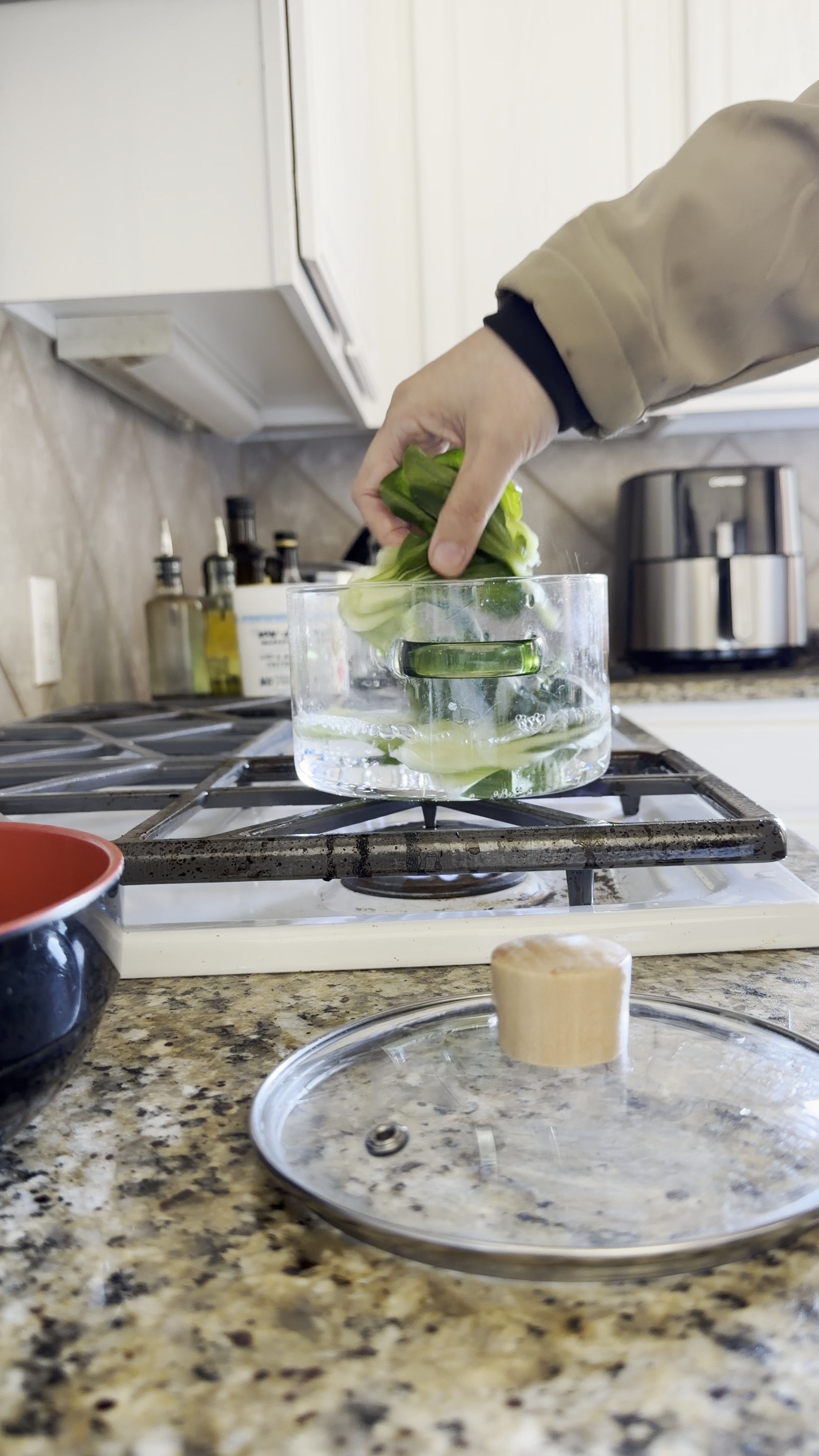
2. Greens in first — while the water is still warm
Before the water even boils, the greens go in. They ride the warm-up, and at the first real boil he lifts them straight back out. They are cooked — bright, tender, done — but they have not spent five minutes dissolving into the broth, and they will meet the noodles again in the bowl, not in the pot.
Greens cooked the whole way turn into the soup. Blanched at the first boil, they stay a vegetable: color, bite and freshness the noodles can sit next to.
3. The cake goes in — two minutes, no more
Into the cleared pot goes the noodle cake, and the clock matters here: two minutes, inside that and not beyond it. This cake does not need the long boil the pack allows. Two minutes leaves it short of done on purpose — because in this kitchen, the finish never happens on the flame.
An everyday cake overcooked is just soft. Kept short, it has something left to give the rest — which is where the chew comes from.
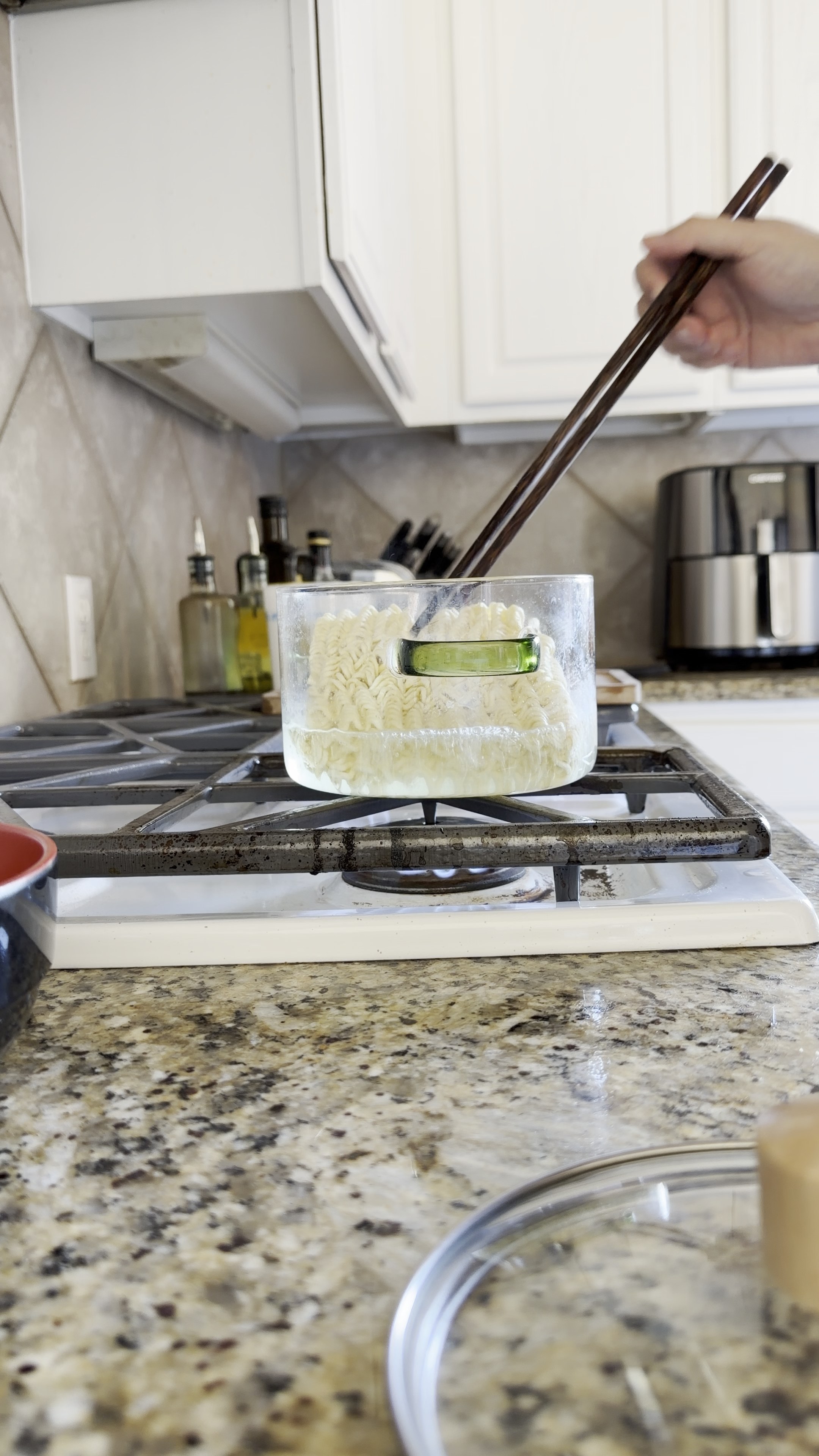
4. Loosen every strand
While the cake cooks, the chopsticks work it open — strand by strand, until the block is gone and the noodles move like noodles. A cake left in a slab cooks in patches: scorched edges outside, raw in the middle. Loosened, every strand gets the same two minutes.
This is the unglamorous step that decides the bowl. Even cooking is not an accident; it is a minute of chopstick work.
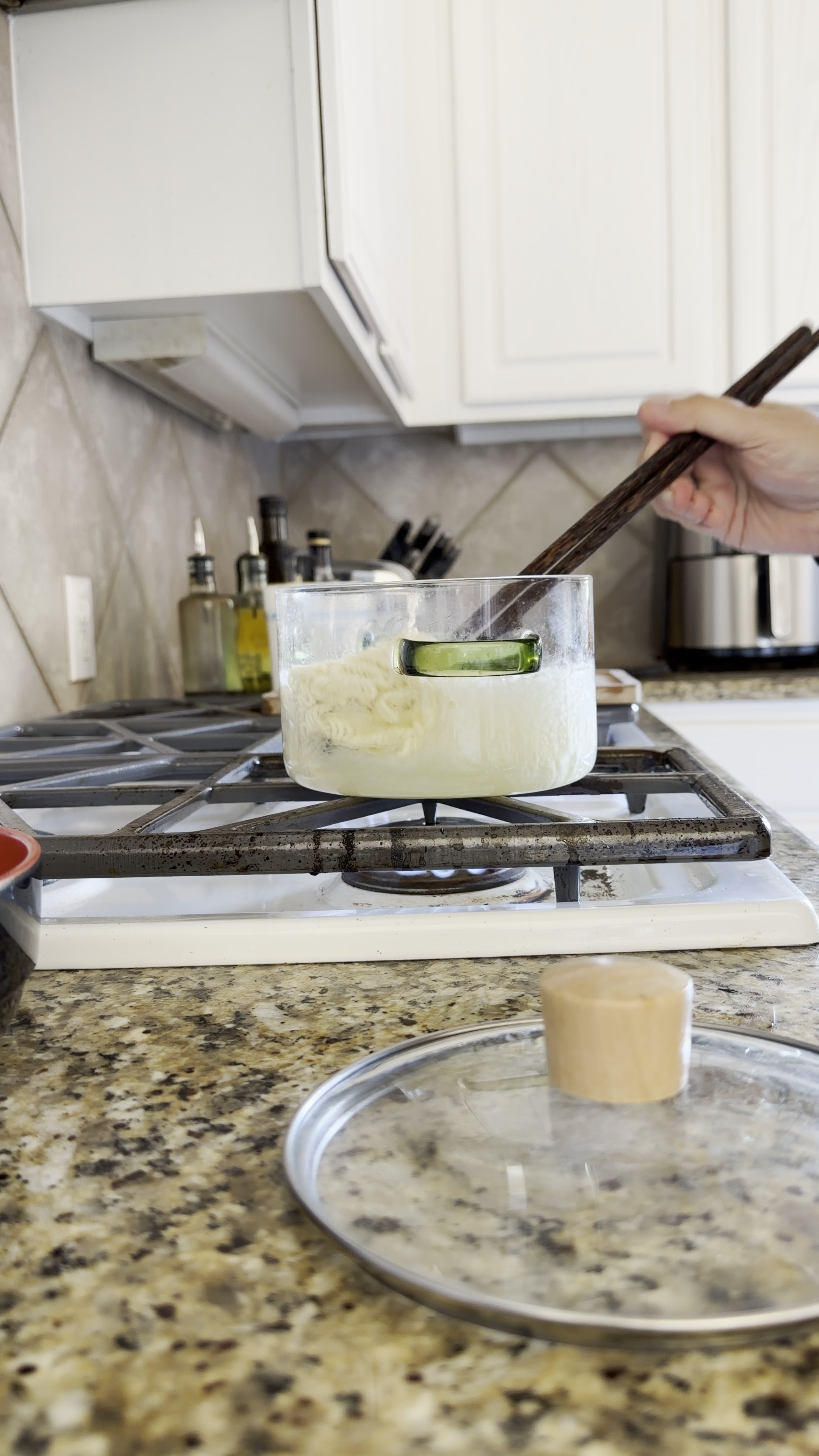
5. Seasoning in — but hear the warning
Now the seasoning goes in, and here is this station's one real lesson. This packet runs salty — the only flaw he found in the pack, and he eats light salt, so he feels it double. His rule: do not tip the whole packet in by habit. Hold some back — or, if the whole packet goes in, give it more water than the pack suggests. Season to the bowl you are actually making, not to the sachet.
A seasoning packet is portioned for an average palate, not for yours. The fix costs nothing: less packet, or more water. Either way the jang flavor stays; only the salt backs off.
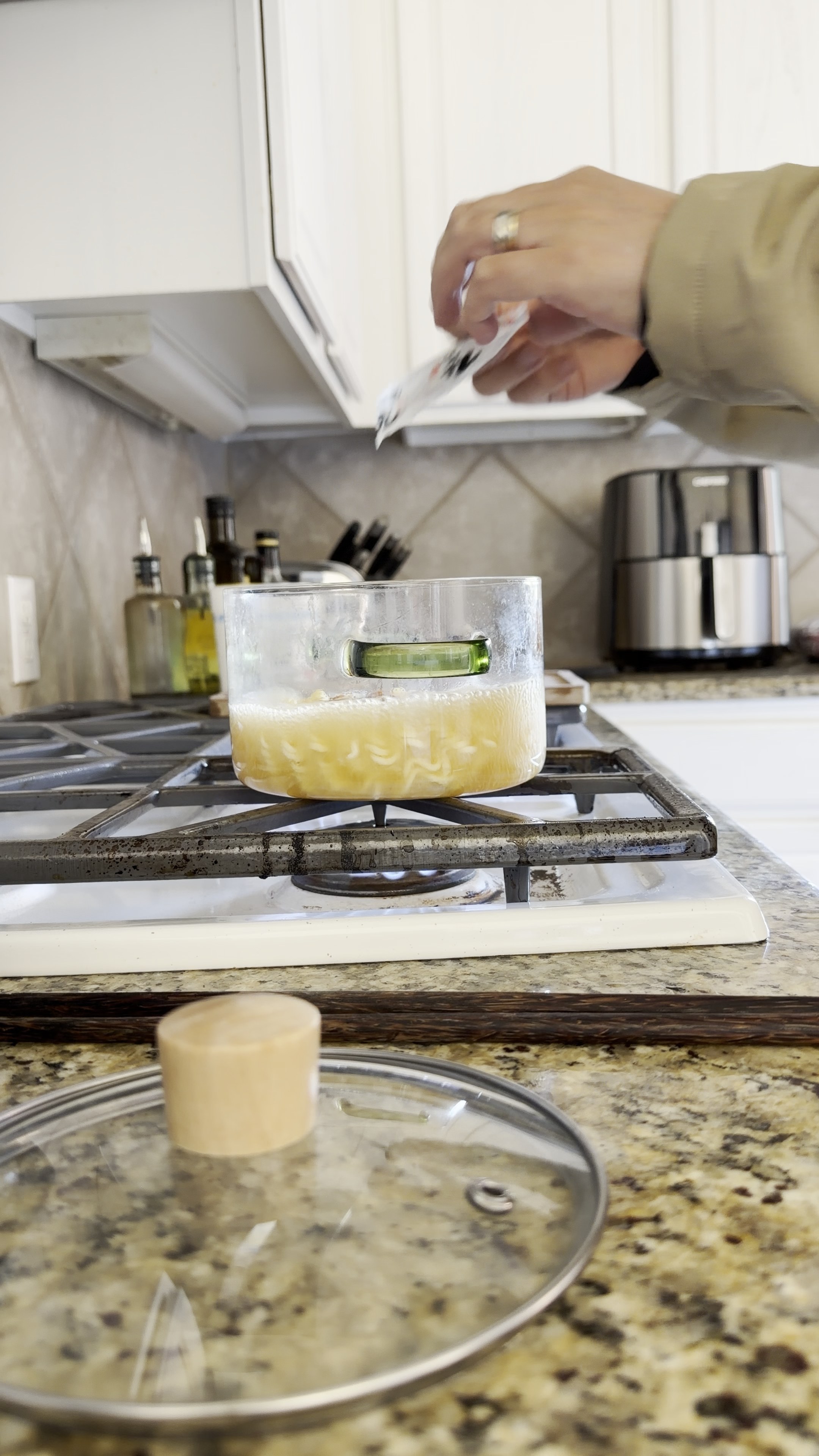
6. An egg, cracked straight in
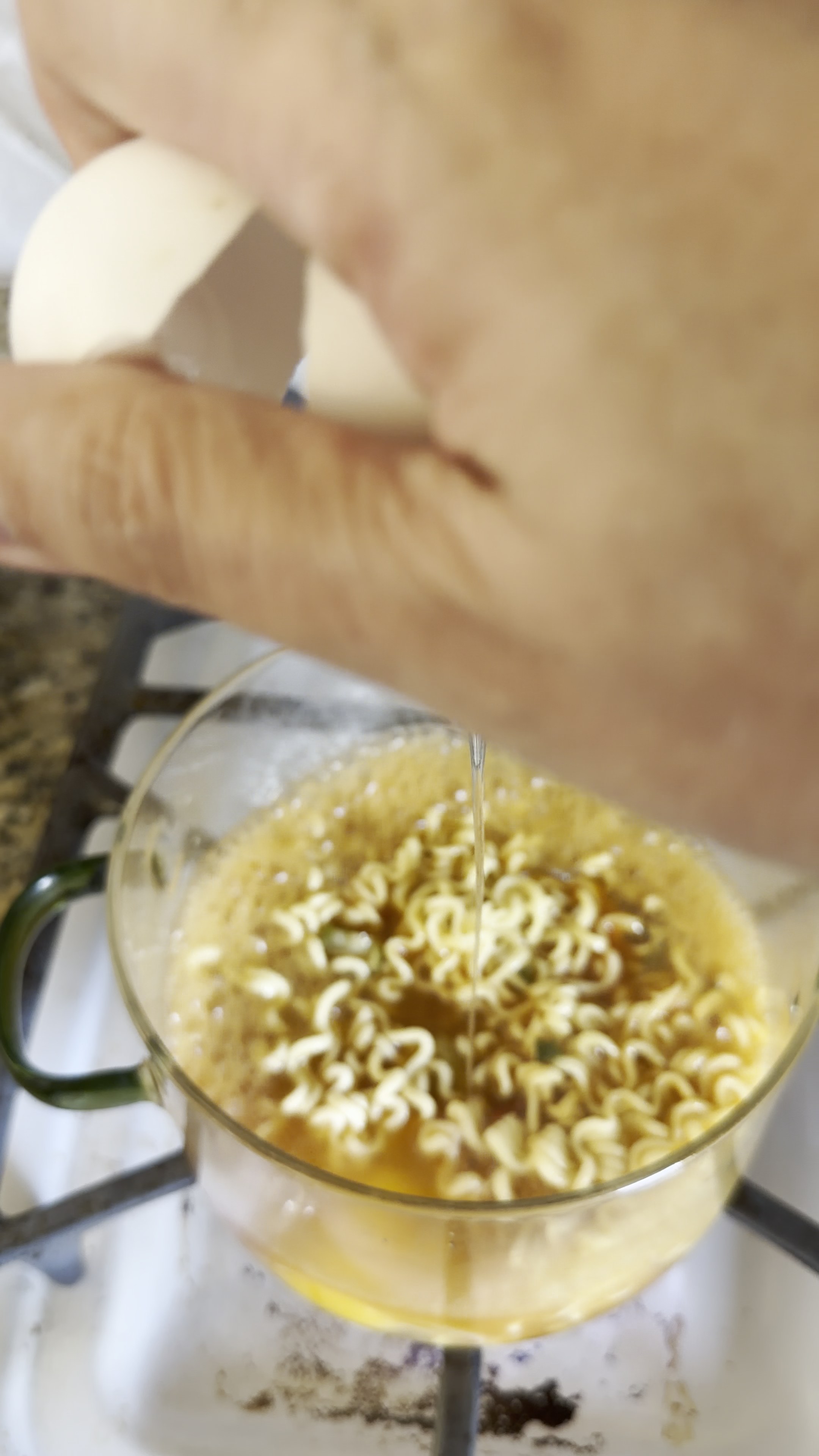
One egg goes in over the seasoned noodles — cracked straight into the pot, no bowl, no whisking. It gets one minute on the heat, just enough to set the white around a yolk that is still deciding. Then, like everything in this kitchen, it will finish off the flame.
The egg is the bowl's quiet protein and its soft landing — the rich note a plain soy broth asks for.
7. Heat off — let it rest
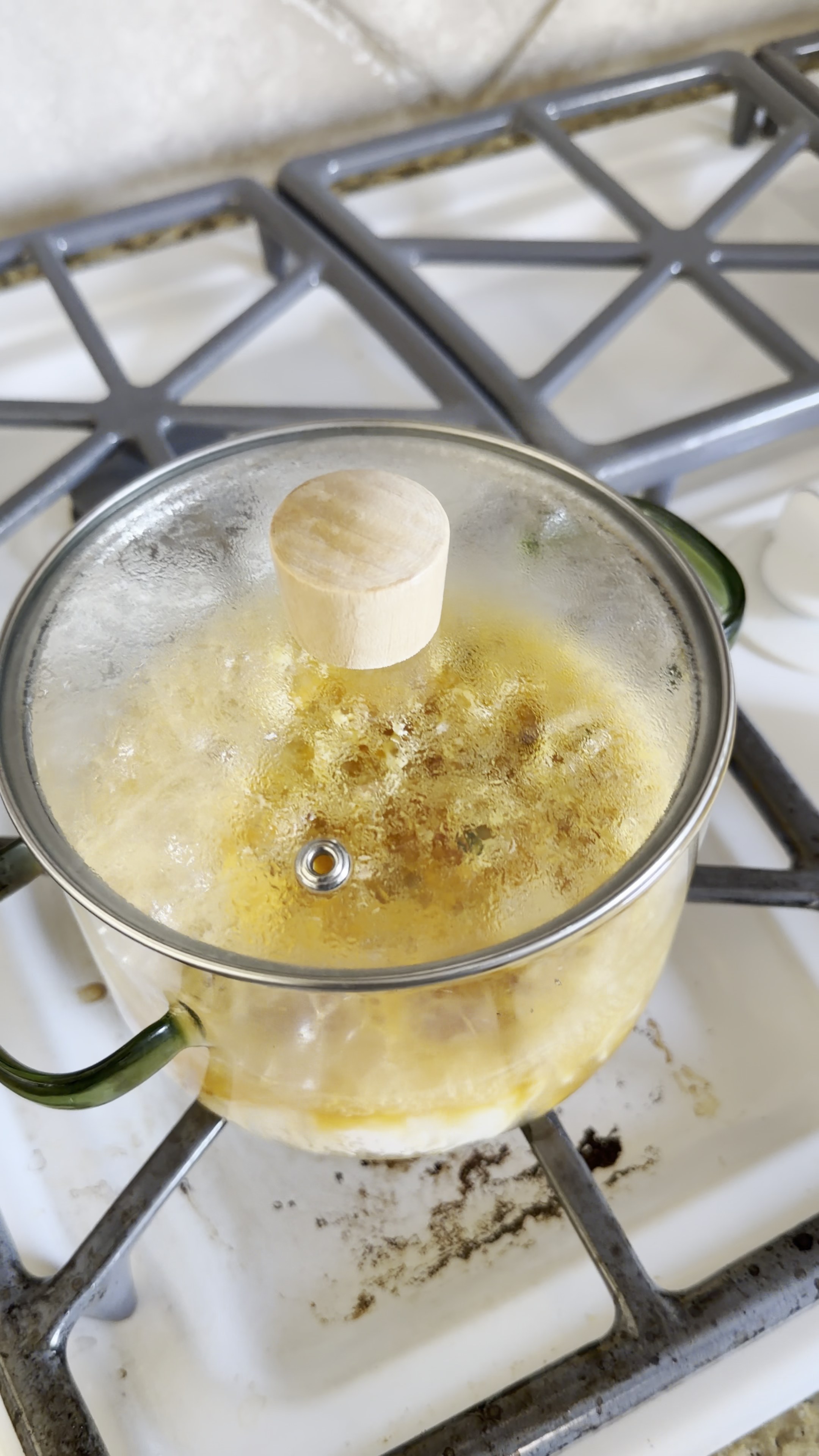
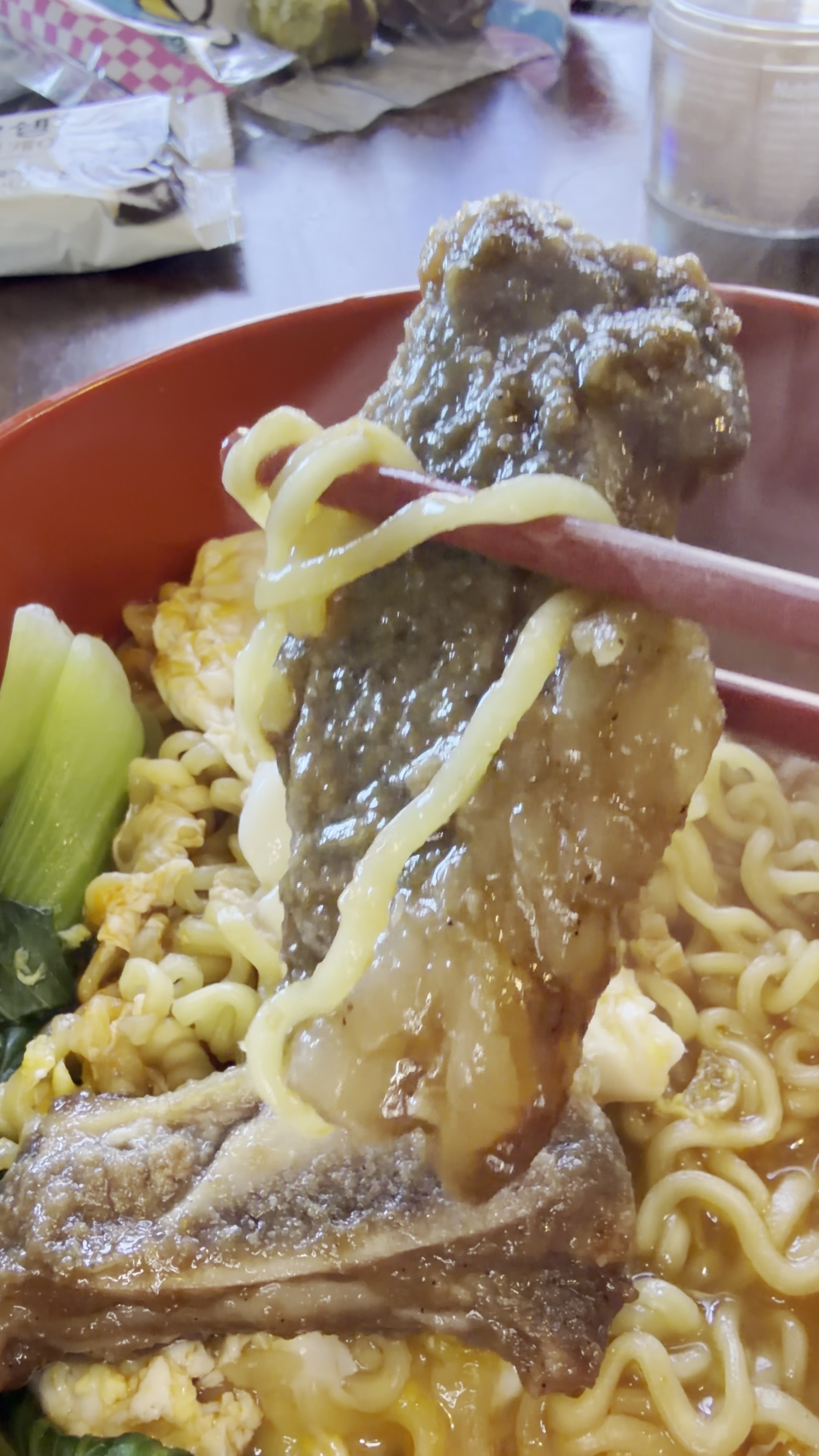
One minute after the egg, the heat goes off. Not down — off. The lid goes on, and the noodles and the egg rest together in the steam. This is the step he will not skip: rested, the noodles come out chewier, springier, with their bite intact, and the egg finishes gentle instead of rubbery. Boiled straight through, both would be less.
The rest is free cooking that cannot overshoot. It is the same rule this kitchen has kept since station No. 1, and it is half the reason a two-minute cake eats like a longer cook.
8. Galbi on top, garlic alongside
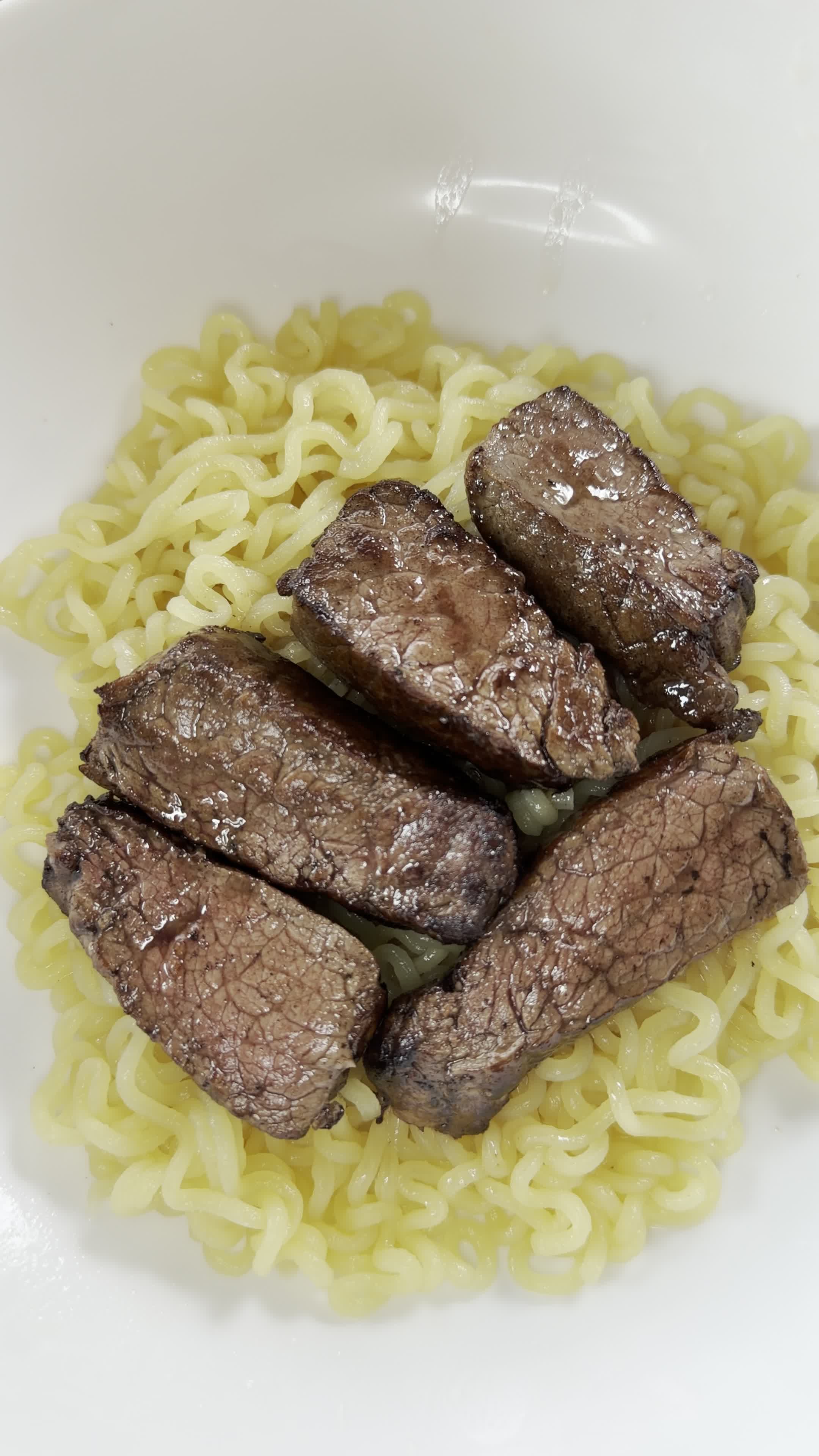
The bowl is finished the way lunch actually happens at this table: two slices of his wife's Korean galbi — from the batch she marinated this morning, Korean pear in the marinade — laid over the noodles, the blanched greens back alongside, and raw garlic on the side, eaten with the bowl. His rule for garlic needs no translation, but here it is anyway: noodles without garlic lose half their fragrance.
The galbi is not part of the pack's score — it is part of the household. A daily bowl plus a little of what the house cooked this morning is exactly how a cupboard pack becomes a meal.
Why an ordinary pack still gets a station
A battle that only tests the spectacular ends up useless on a Tuesday. This station exists for the pack most houses actually buy: cheap, plain, fine. Judged honestly, cooked carefully, it tells you more about your cupboard than another trophy noodle would. Nothing amazing — and a bowl he would happily eat again next week. Both halves of that sentence are the review.
8.2 — a good score with one salty footnote
The number sits where the bowl sits: above the line, without a crown. What lifts it is the method — greens blanched and out, a two-minute cake loosened strand by strand, an egg rested off the heat until the noodles turn chewy. What holds it back is the one flaw he kept returning to: the seasoning is too salty for a light palate, and no amount of good cooking changes what is inside the sachet. His verdict is plain: a fine household staple, worth keeping on hand — and he would buy it again.
Watch the sachet, not the clock. The one move that ruins this bowl is emptying the whole seasoning packet on autopilot. Hold some back, or add the water — the jang flavor survives both; your afternoon thirst will thank you.: EP13 — The Everyday Pack, Done Right 🍜 Paldo Jang Ramyun 8.2/10 — The Great Ramen Battle
Where this bowl goes wrong
✕ The whole packet, standard water
That is the salty trap the pack sets. The seasoning is portioned strong; in the standard amount of water it dominates everything. His fix: hold part of the packet back — or use it all and add more water. Never both full packet and standard water.
✕ Boiling the greens with the noodles
Greens that ride the whole cook dissolve into the broth and take their color with them. In while the water warms, out at the first boil — they come back in the bowl, bright and still themselves.
✕ Cooking the cake all the way on the flame
Two minutes, then off. A cake boiled to done on the heat keeps softening in the bowl and lands slack. Rested under the lid, it arrives chewy — the texture is made in the rest, not the boil.
✕ Skipping the garlic
His words: eat noodles without garlic and half the fragrance is gone. The raw garlic is not decoration at this table; it is the last seasoning, added by the eater. Leave it off and the bowl is quieter than it should be.
Quick answers
How salty is the Jang Ramyun seasoning, really?
Salty enough that it is the pack's one flaw — he eats light salt and felt it at full strength. His fix is simple: do not use the whole packet, or use it all with extra water. The jang flavor is deep enough to survive both.
Why do the greens go in first — and come out before the noodles?
So they blanch instead of dissolve. In during the warm-up, out at the first boil: they keep their color and bite, and they meet the noodles again in the bowl instead of disappearing into the broth.
Why turn the heat off instead of just serving?
The rest finishes the cooking without overshooting it. Noodles rested in the steam come out chewier and springier; the egg sets gently instead of going rubbery. It is the same rule this kitchen has used since station No. 1.
What is the galbi on top?
Two slices of Korean short rib from the batch his wife marinated that morning — Korean pear is one of the marinade's known keys. It is a household topping, not part of the pack, so it is not part of the pack's score either.
How did he score it — and would he buy it again?
8.2 out of 10, and yes — his words: nothing amazing, but a good, honest everyday noodle to keep in the house. The only flaw is the salty seasoning, and that one has a fix.
Keep reading
Station No. 13 is the cupboard telling the truth: a plain pack, an honest score, one salty footnote — and a bowl he will eat again. Next station, a new pack steps up. — XingAI Cook
Cooking ideas, not nutrition or medical advice. Check allergens and cook meat and eggs to safe temperatures.