
THE GREAT RAMEN BATTLE · STATION NO. 11
Spicy Kimchi Ramyun, No Packet — the Method That Never Fails
Take the noodle cake out of Nongshim's Spicy Kimchi pack and leave the soup packet in the bag. Cook the cake in kimchi, tofu and cherry tomatoes, stop the heat just before it is done and let the steam finish it — the kimchi does all the seasoning, and he scores the bowl 8.3 out of 10.
The soup packet never touched the pot. Nothing was missing.
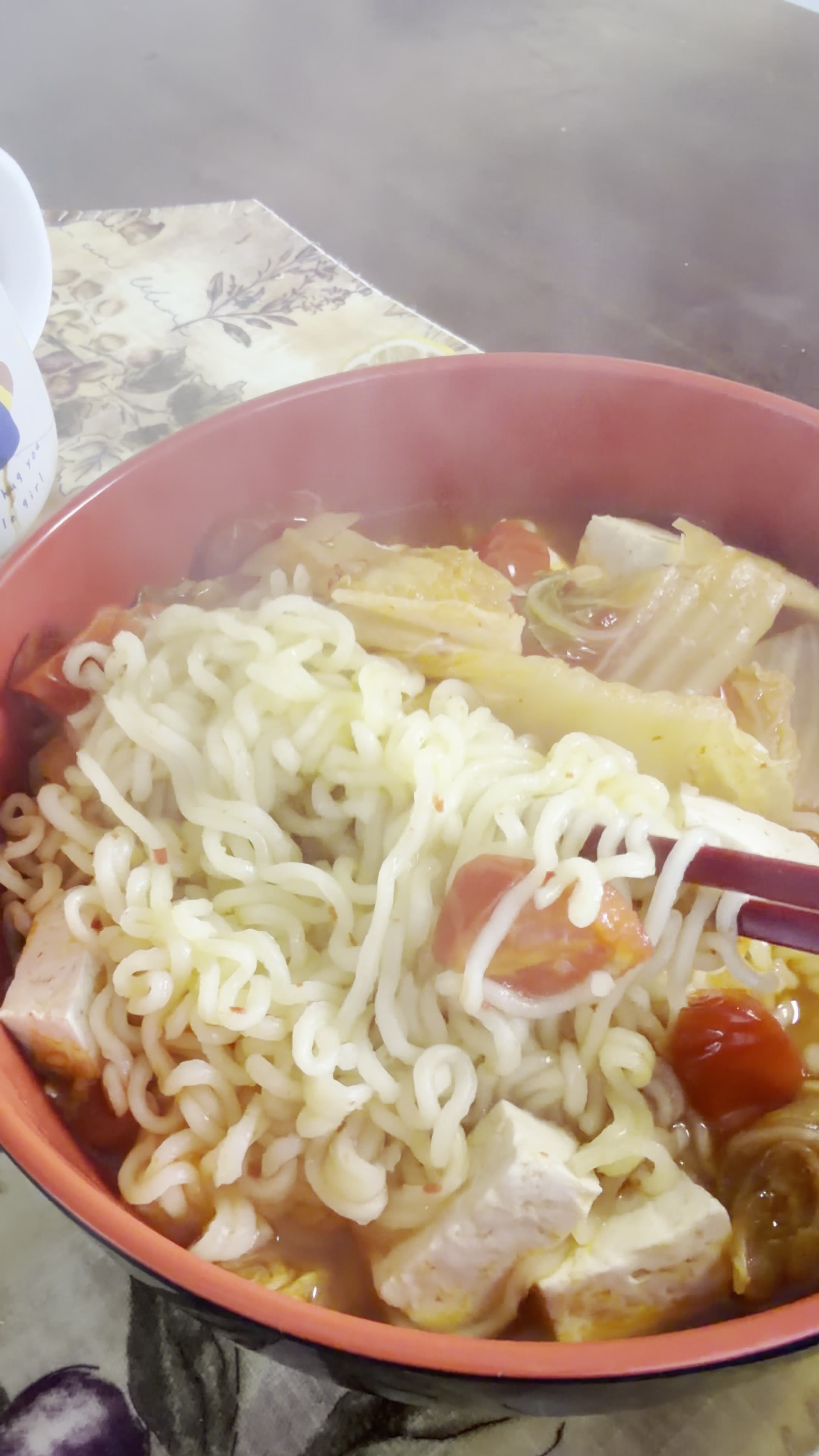
Station No. 11 is not really judging a pack. It is judging a method — the one he reaches for when a bowl has to come out right no matter what is in the pantry. The pack on the table is Nongshim's Spicy Kimchi Ramyun, the US version, and his first move is the whole recipe: the soup packet stays in the bag. No packet, no MSG, nothing from a sachet at all. Only the noodle cake earns its place in the pot.
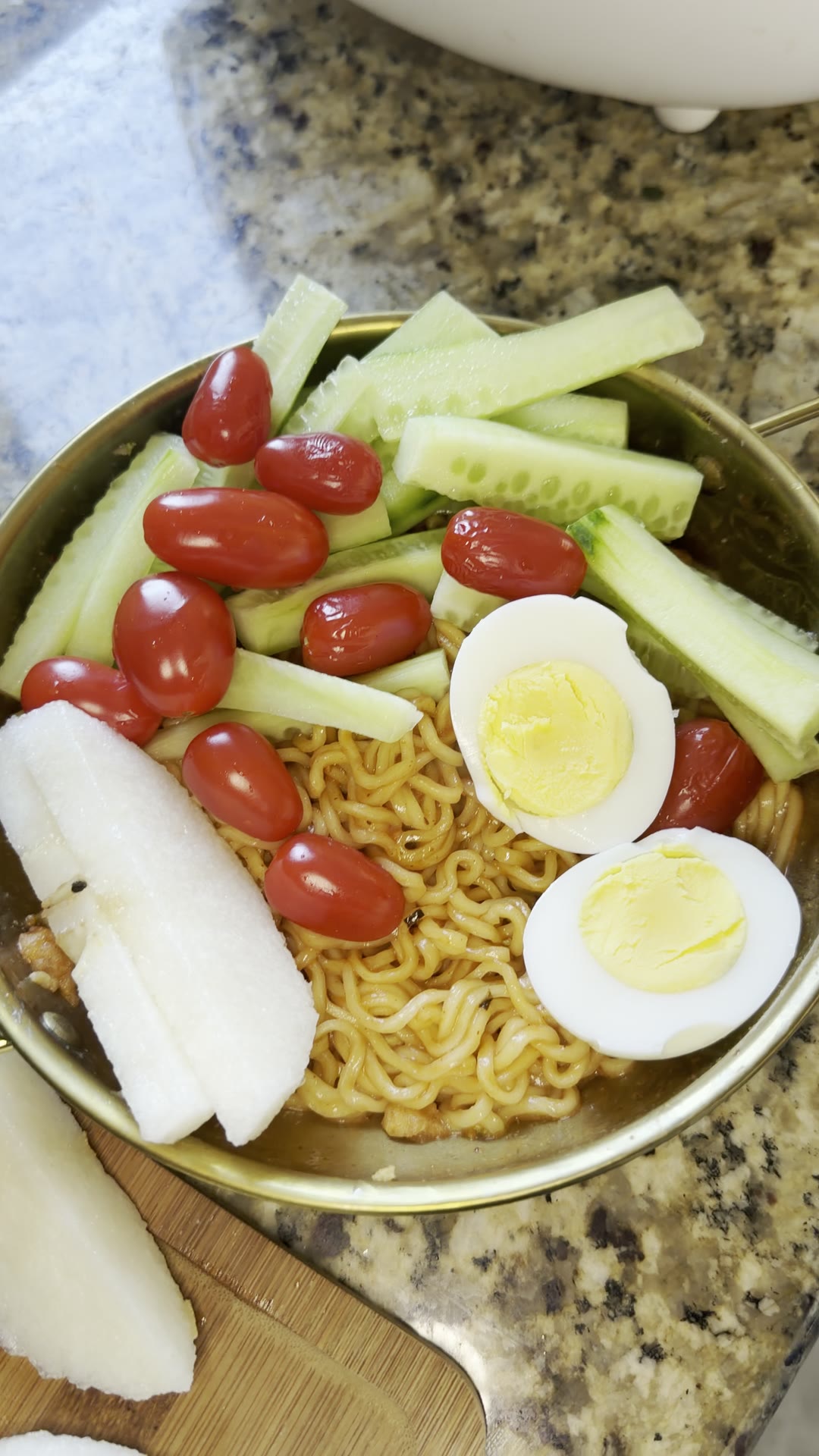
Everything else in the bowl is already in the house. Kimchi — a little of it, and it does the work of the entire seasoning shelf, because he eats light salt and the kimchi's own salt is, in his words, already enough. Tofu, which he says a bowl like this must have. Cherry tomatoes, cut in. And raw garlic, peeled and set on the finished bowl, eaten alongside. No greens and no egg today — he was not that hungry, and the method does not need them.
Watch the full lesson: EP11 — Skip the Packet: Kimchi Does It All 🍜 Spicy Kimchi 8.3/10 — The Great Ramen Battle
Tonight's bowl, as filmed
- One pack of Nongshim Spicy Kimchi Ramyun (US version, 120 g) — of which you will use the noodle cake only
- A little kimchi — the bowl's entire seasoning; its salt is the only salt
- Tofu, cut into cubes — at this table, a must
- A handful of cherry tomatoes, cut into chunks
- Raw garlic cloves, peeled — served on the finished bowl, never optional
- Optional, when the house is hungrier: greens and an egg — both skipped today
- A glass pot with a lid — the whole cook happens in it
- Water for the boil — plain, unseasoned
His method — the packet stays in the bag
1. Meet the pack — then ignore half of it
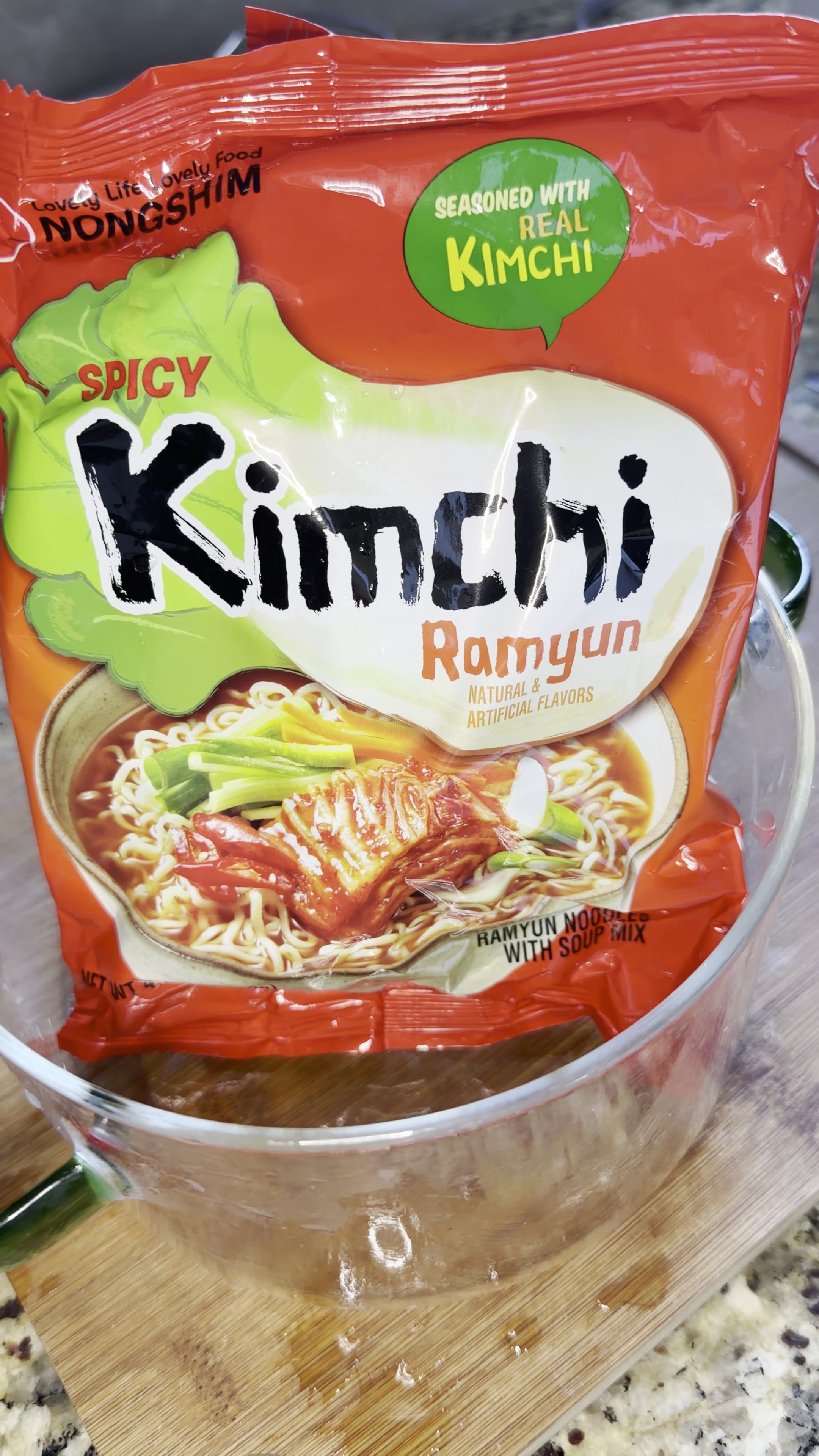
Nongshim's Spicy Kimchi Ramyun in its US dress: 'Seasoned with real kimchi' is printed on the front, and the label, read off our own pack on camera, says one bag, 120 g, 500 kcal for the whole bag. Inside are the round noodle cake and the soup sachets. Today only one of those things gets cooked. The sachets stay in the bag — that is not thrift, it is the recipe.
New packs get read before they get cooked — and this one gets read so you know exactly what you are leaving out: the packet is the only thing standing between this bowl and his method.
2. The prep: kimchi out, tofu cubed
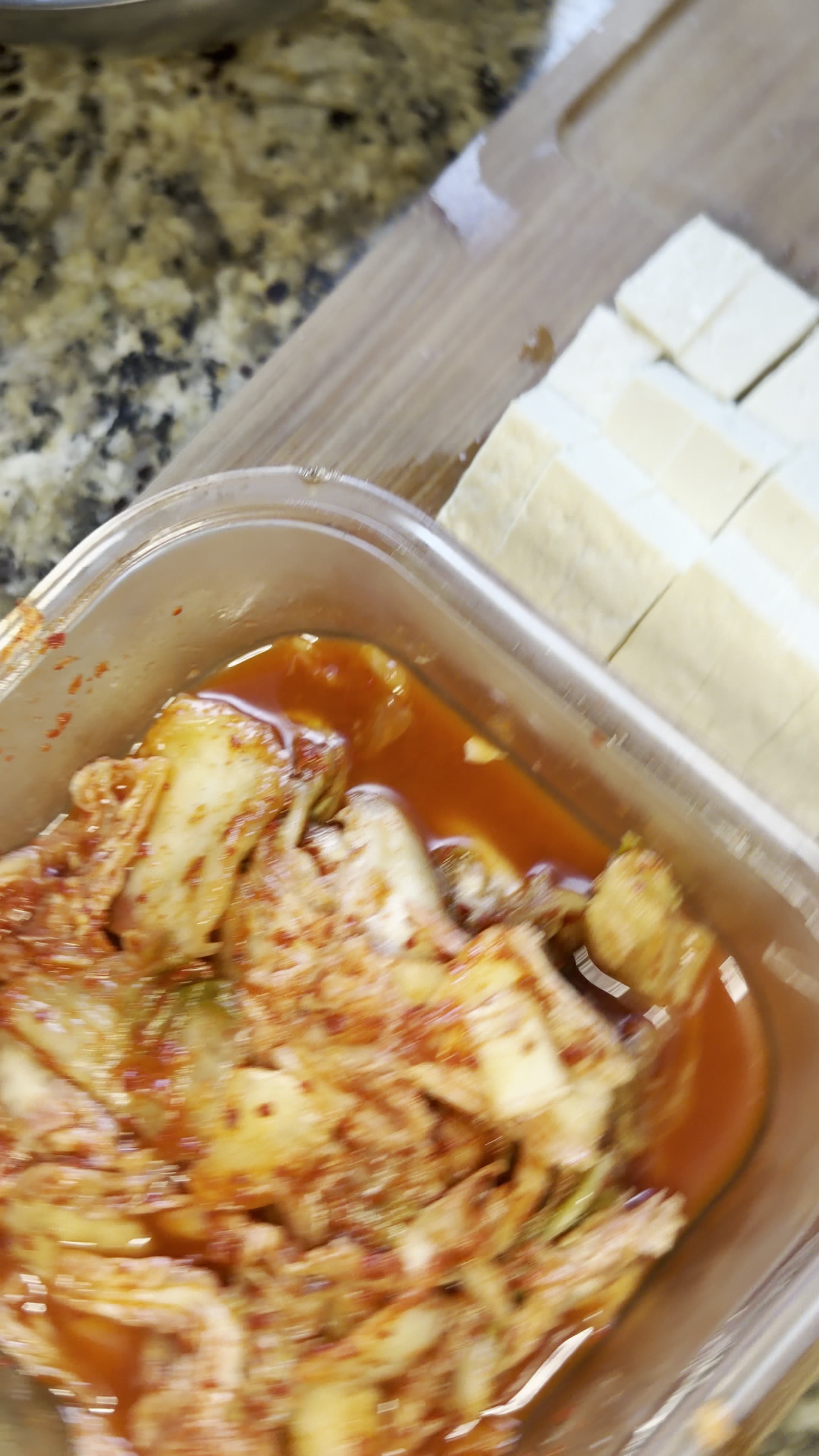
Before any heat: a little kimchi comes out of its box, the tofu is cut into cubes, the cherry tomatoes are washed and cut into chunks. Nothing exotic, nothing measured — the bowl is built from what a Korean home kitchen already holds, in the few minutes the water needs to come up.
The method's promise starts here: if the bowl needs a shopping trip, it is not the never-fail bowl. Everything on this board was already home.
3. Kimchi goes in first — it is the seasoning
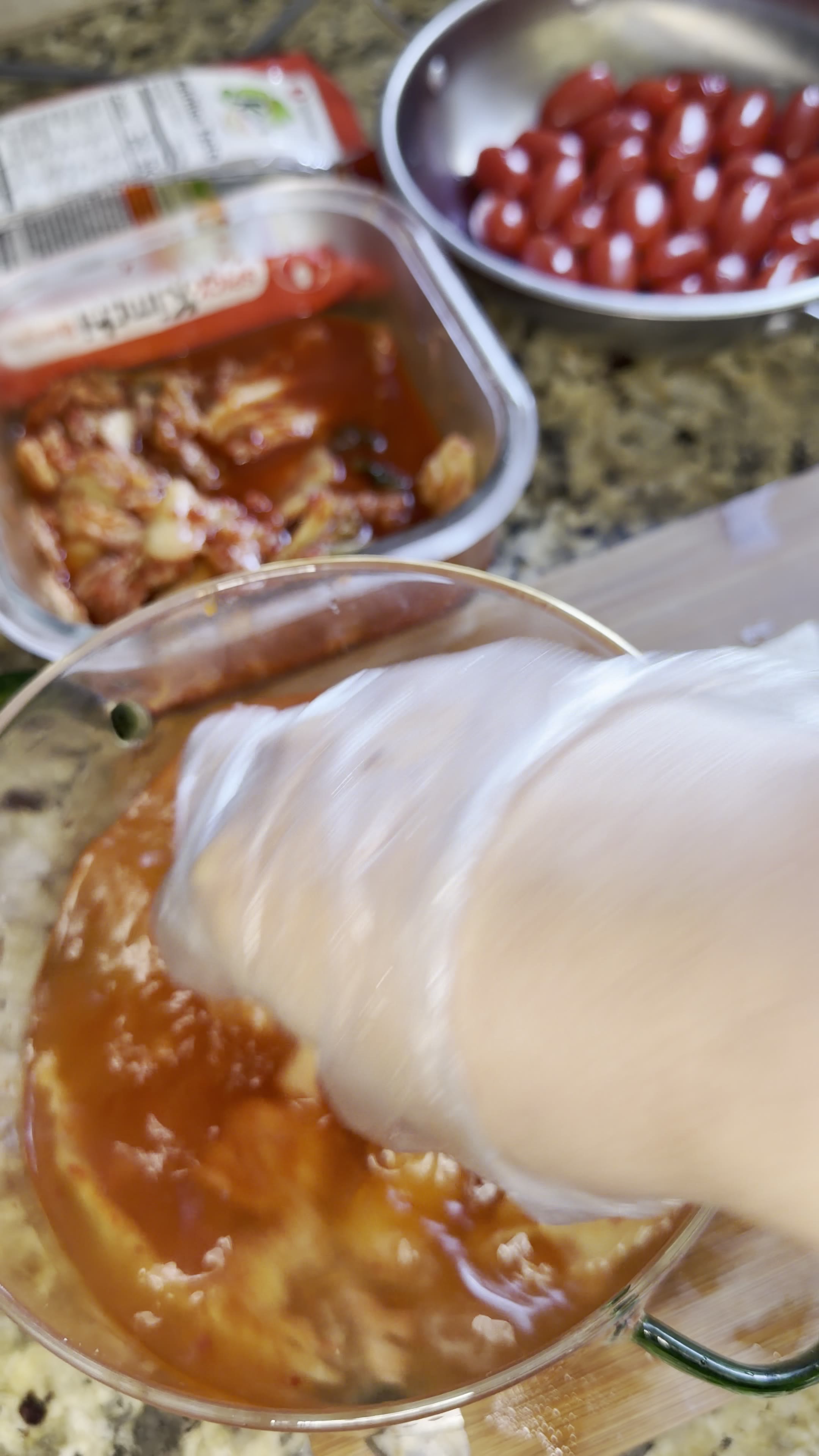
The kimchi goes into the glass pot and starts stewing in the water before the noodles ever arrive. This is the step the whole station stands on: the kimchi gives the pot its salt, its heat and its depth, the way a soup base would — because today it is the soup base. He adds nothing else. No packet, no MSG, no extra salt; he eats light, and the kimchi's salt is enough.
Seasoning the water first means every strand cooks inside the flavor instead of meeting it afterwards — that is why a plain cake can carry a bowl this fragrant.
4. Only the cake goes in
The round noodle cake goes into the kimchi broth, whole. It loosens, softens and takes the color of the pot around it. If you are used to tearing open a sachet at this moment, this is where the method asks for trust: the pot already tastes like something, and the cake is just here to carry it.
His verdict on the cake itself is honest — ordinary. The method never asked it to be more. The flavor was never the cake's job.
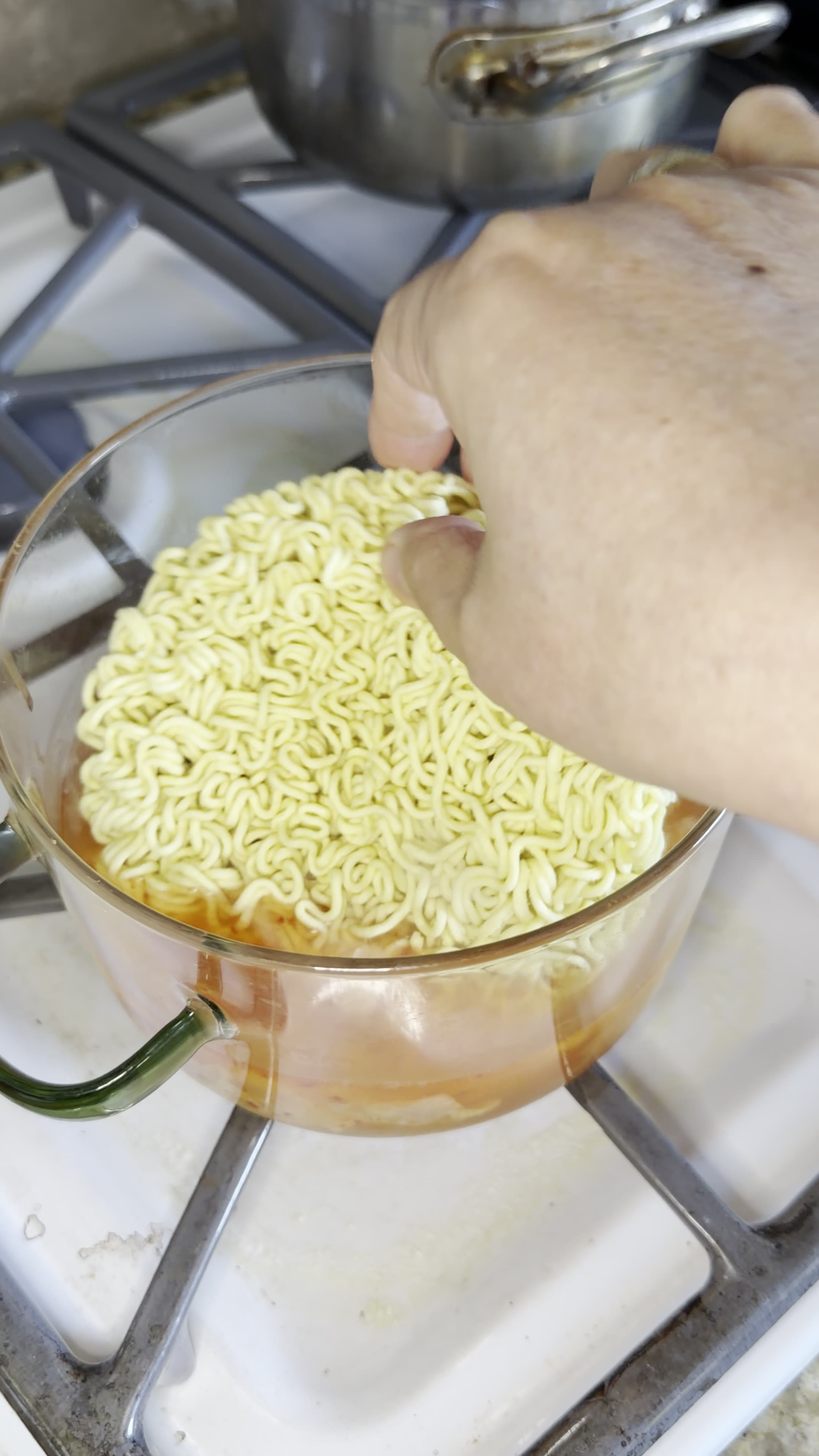
5. Tofu and tomatoes join
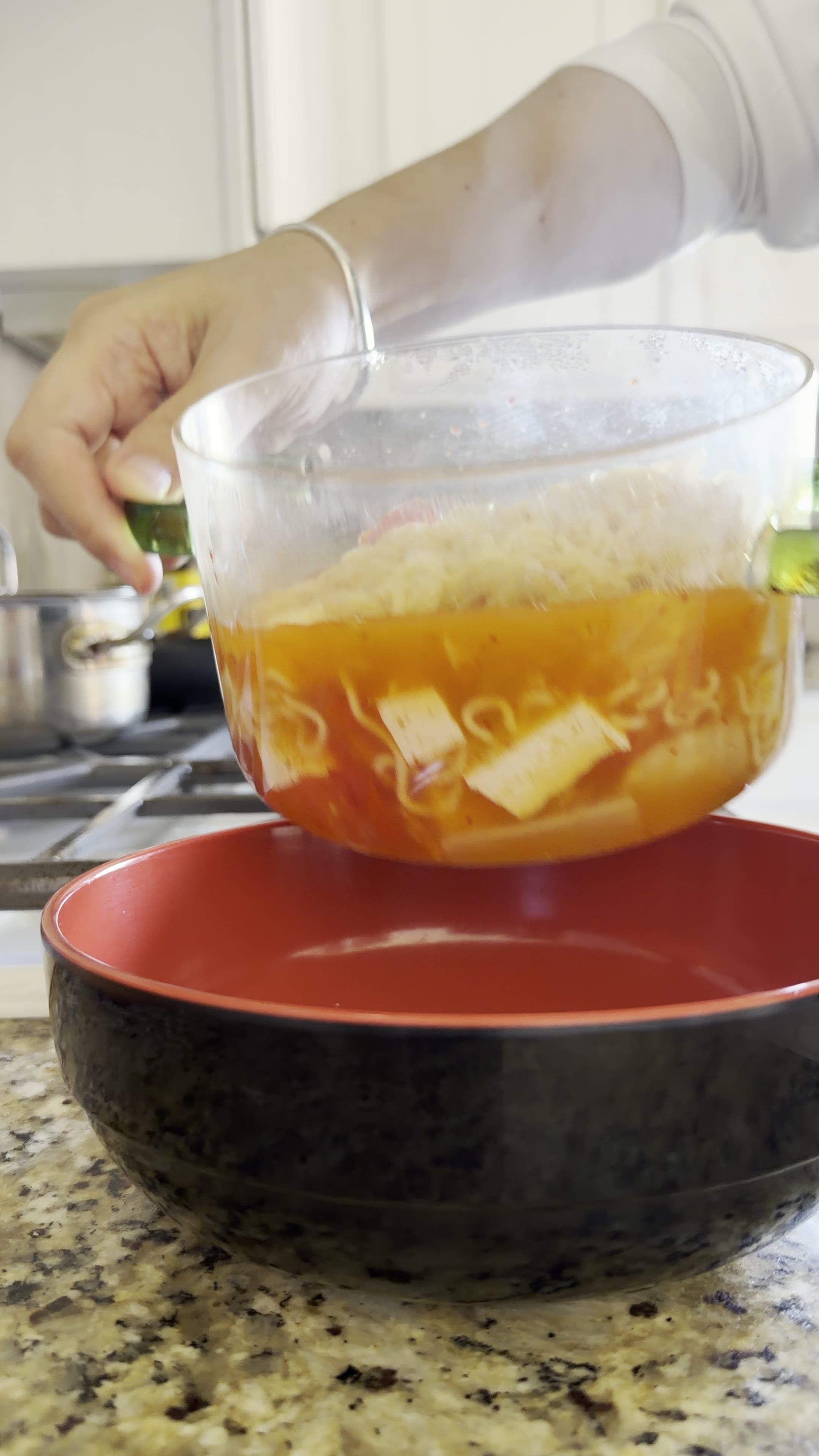
The tofu cubes go in by hand, then the cherry tomato chunks, and the chopsticks arrange them through the noodles. The tofu is the bowl's soft counterweight — his words are that a bowl like this is best with tofu in it, always. The tomatoes cook down just enough to give their sweetness to the broth.
Every addition has a job: tofu softens the landing, tomato rounds the kimchi's edge, and neither one seasons — the kimchi already did that alone.
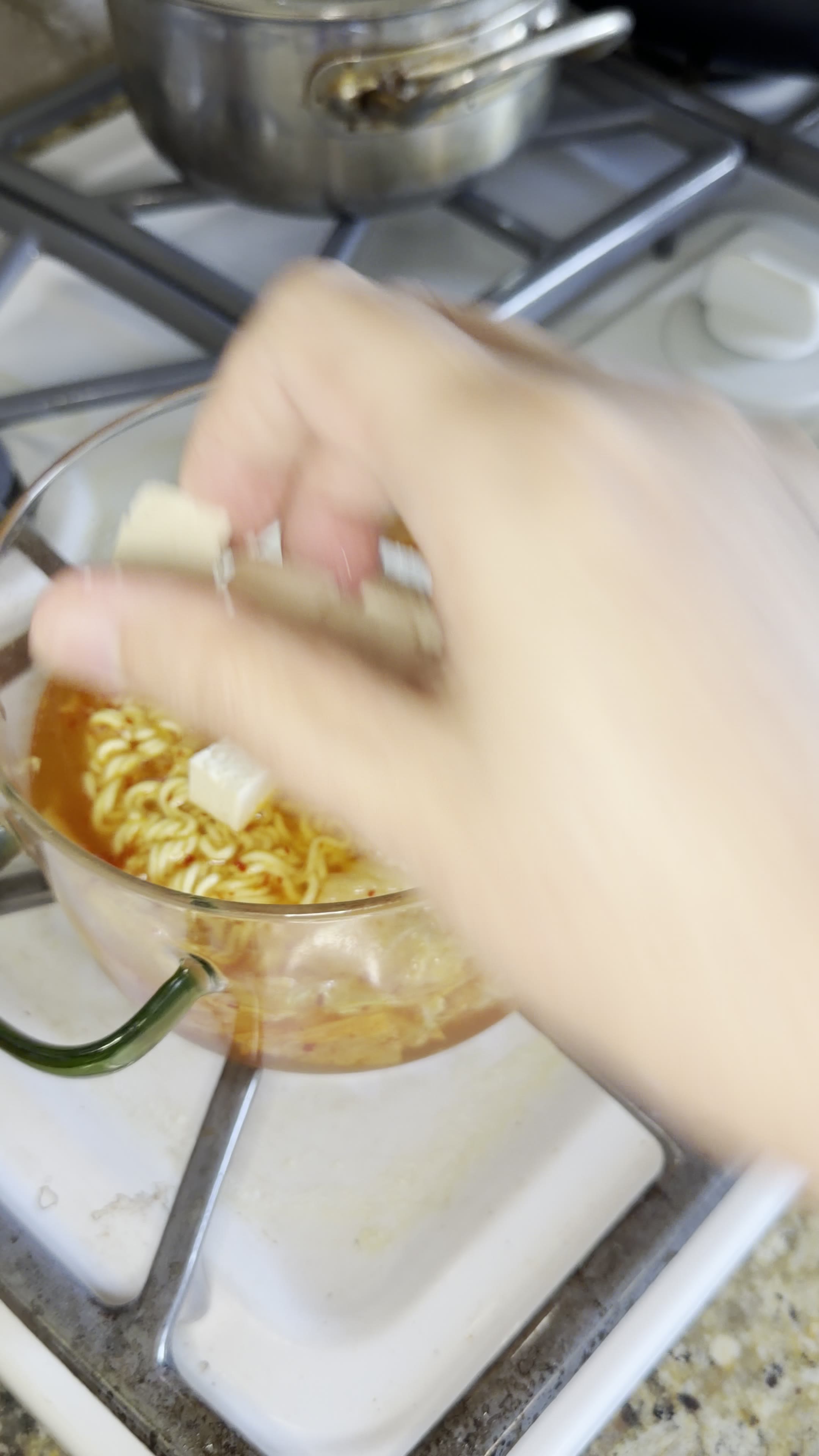
6. Heat off early — the steam finishes it
Just before the noodles are fully cooked, the heat goes off. Not down — off, while they are still short of done. The lid goes on and the noodles finish in the steam, the same free cooking this kitchen has sworn by since station No. 1. Boil them all the way and they blow past tender; rest them and they arrive soft and supple, cooked through without a second of violence.
This is the technique half of 'never fails': the steam cannot overcook the way a rolling boil can, so the texture lands in the same place every single time.
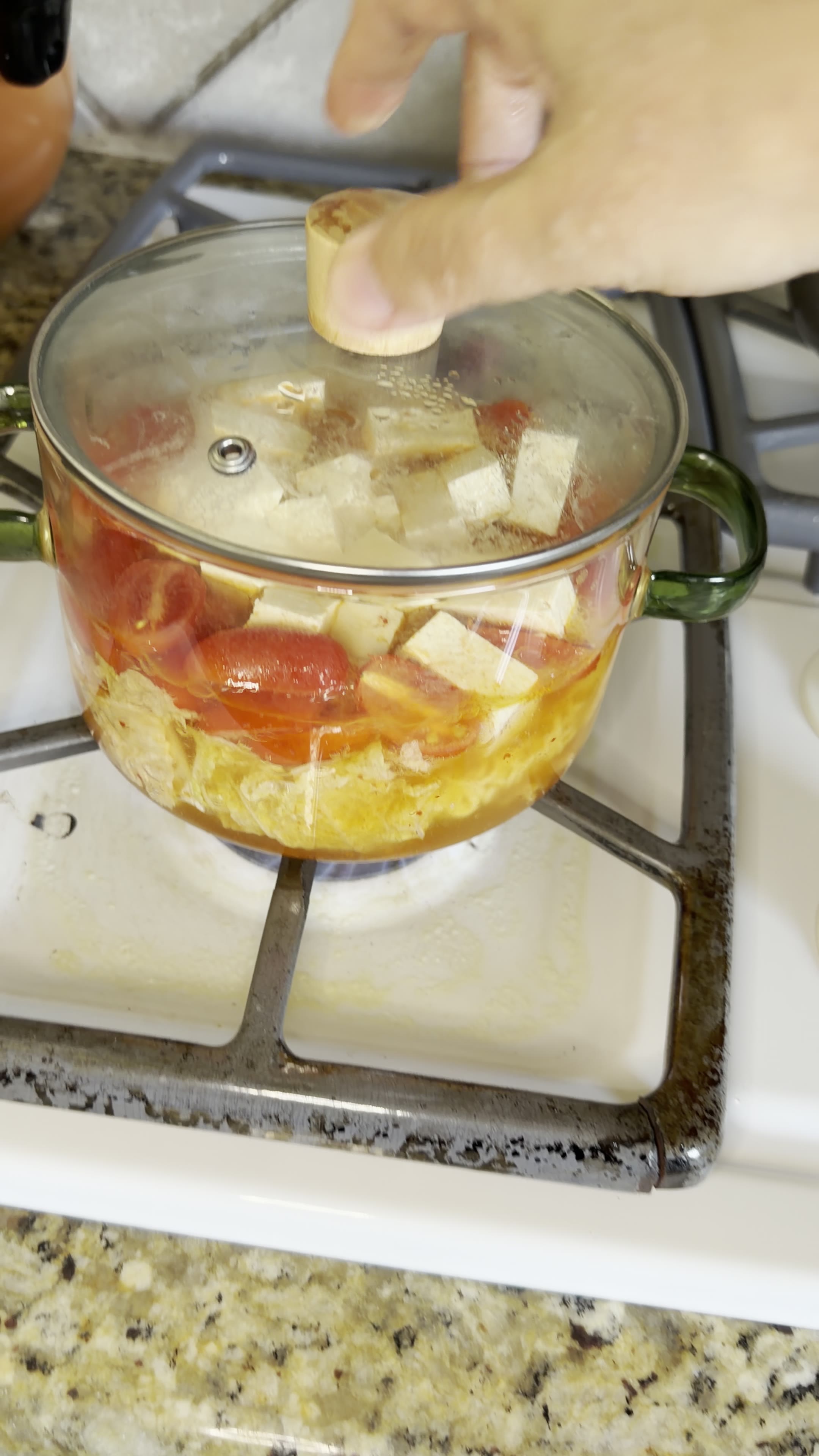
7. Raw garlic, on the finished bowl
The bowl comes out steaming, and the peeled raw garlic cloves are set right on top of the noodles — not cooked, not chopped into the pot, eaten raw alongside, bite by bite. At this table raw garlic with a bowl like this is not a garnish and not a suggestion. It is, in his words, a must.
Raw garlic is the last seasoning, and it is added by the eater, not the cook — sharp against the soft noodles and the deep kimchi broth.
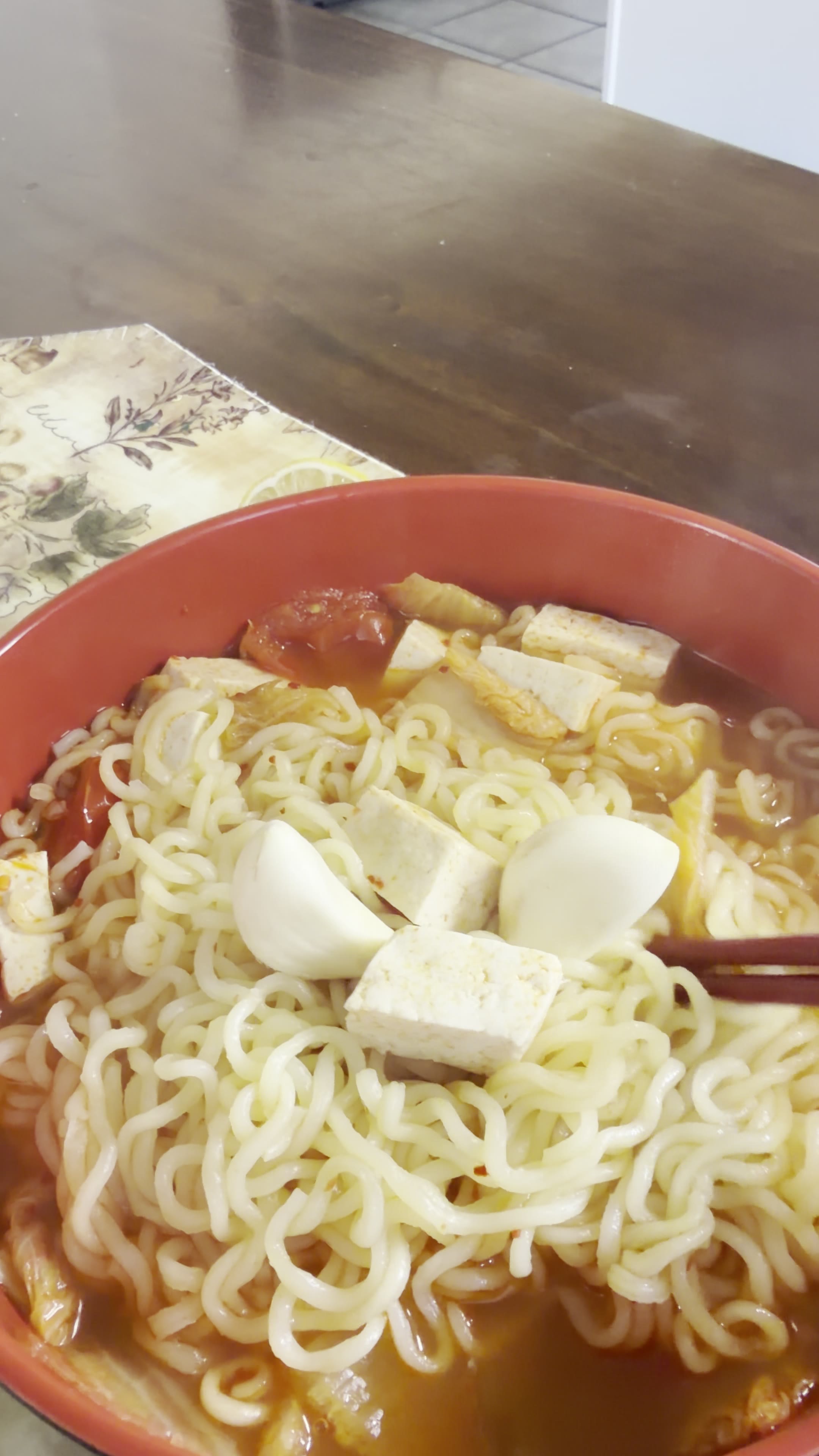
8. The pull
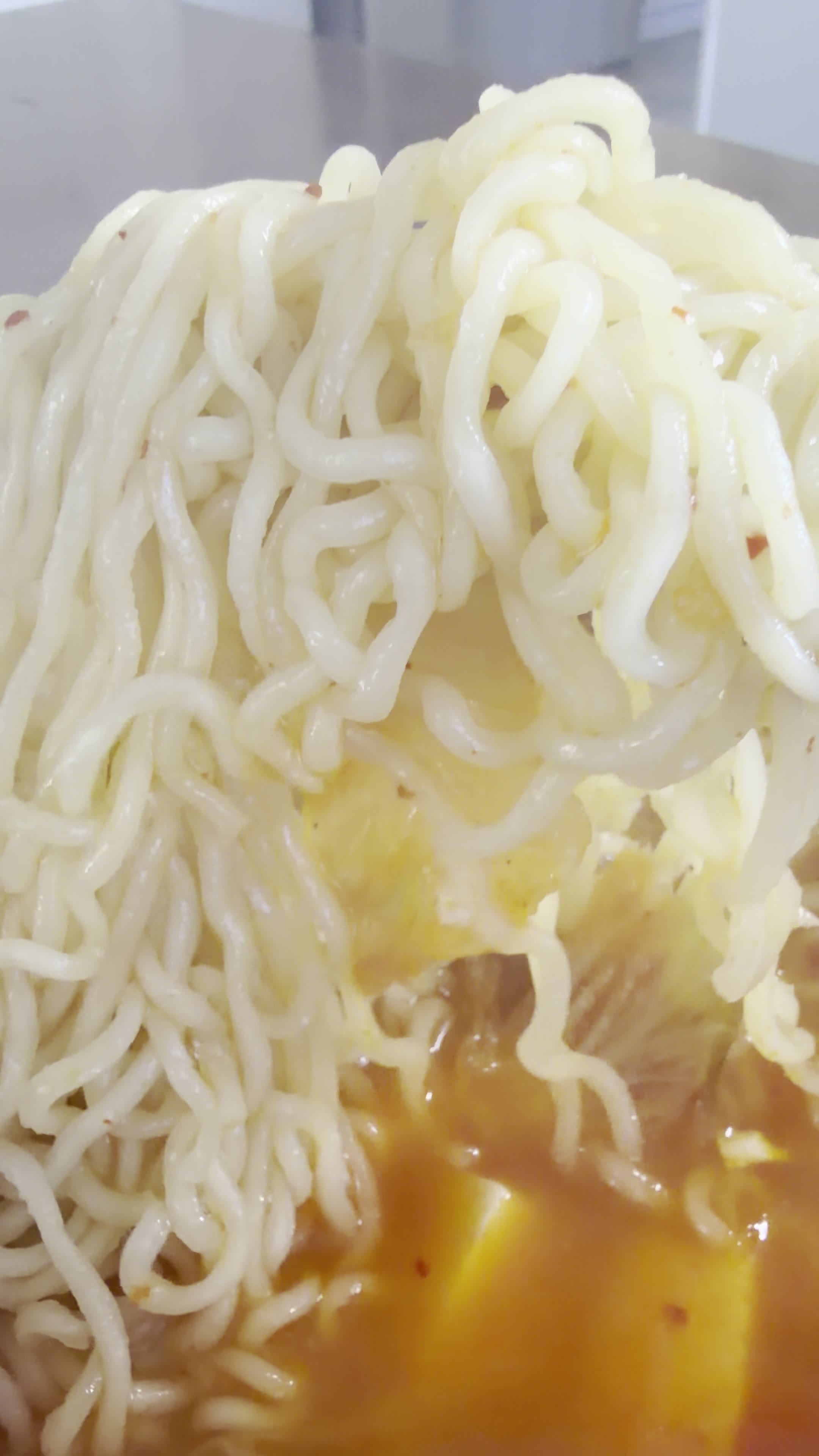
Then the bowl gets what every station gets: the pull. Long strands, tofu riding along, the tomatoes showing through the red broth. The cake was ordinary — the bowl is not. That gap between the pack and the bowl is the entire point of station No. 11, and it is why this page is named after a method instead of a noodle.
The pull is the verdict you can see: soft, glossy, carrying the kimchi in every strand — a pantry cake, cooked like it mattered.
Why a method gets its own station
Every other station in this battle crowned or buried a pack. This one exists because his most-used recipe is not a pack at all — it is a way of cooking that turns whatever cake is in the cupboard into the same good bowl. Swap the cake and the bowl still works; that is his claim, and this station is the proof he filmed for it. A battle that only ranks packs would have missed the thing his kitchen actually runs on.
8.3 — above the milk bowl, below the chew crown, on a different scale
The number needs its footnote. Buldak Original (station No. 8, his 8.7) still holds the chew crown, and the milk-boiled Triple X (station No. 10, his 8.2) is still the comfort bowl. This 8.3 is not really grading the Spicy Kimchi cake — he calls the cake ordinary. It grades the method: skip the packet, let kimchi season, steam to finish, garlic raw on top. Scored as a pack, it is a mid-pack bowl. Scored as the way he will actually cook on a tired Tuesday, it is the highest-value station in the battle so far.
Where this bowl goes wrong
✕ Using the soup packet anyway
The whole method collapses. The packet doubles the salt, buries the kimchi's own flavor, and turns a bowl built on one clean seasoning into every other instant bowl. The sachet stays in the bag — that is the recipe.
✕ Boiling the noodles all the way
Cook them to done on the flame and they keep going in the bowl — soft into slack. Off the heat just before done, lid on, and the steam lands them tender every time.
✕ Skipping the tofu
His words: a bowl like this is best with tofu, always. Without it the bowl is all edge — kimchi heat with nothing soft to land on. The tofu is not bulk; it is balance.
✕ Adding salt, or skipping the garlic
He adds nothing — the kimchi's salt is the seasoning, full stop. And the raw garlic is a must at his table, eaten with the bowl, not cooked into it. Leave either habit behind and it is a different, lesser bowl.
Quick answers
Why skip the Spicy Kimchi soup packet?
Because the kimchi does the job better. His method: the kimchi stews first and seasons the whole pot — salt, heat and depth — so the packet would only double the salt and bury the kimchi's flavor. No packet, no MSG, nothing added at all.
Can I use a different noodle cake?
Yes — that is the point of the station. His words: the cake itself is ordinary, the method never fails, and the same method on another cake still tastes right. The method is the recipe; the cake is interchangeable.
What has to go in the bowl?
Four things are non-negotiable at his table: kimchi (the only seasoning), tofu (always), cherry tomatoes cut in, and raw garlic served on the finished bowl. Greens and an egg join when the house is hungrier — both were skipped the day this was filmed.
Why turn the heat off before the noodles are done?
Carryover steam finishes them gently and cannot overshoot the way a boil can. Boiled all the way, the noodles go slack in the bowl; rested under the lid, they come out soft and supple — the same texture every time, which is half of 'never fails.'
How did he score it?
8.3 out of 10 — and the score belongs to the method more than the pack. The cake alone he calls ordinary; cooked his way, with kimchi doing the seasoning and garlic raw on top, the bowl earns 8.3 and a plain verdict: worth buying.
Keep reading
Station No. 11 is the bowl this kitchen actually lives on: no packet, no fuss, no way to get it wrong. Next station, a new pack steps up — and it steps up against a method, not just a menu. — XingAI Cook
Cooking ideas, not nutrition or medical advice. Check allergens and cook meat and eggs to safe temperatures.