
THE GREAT RAMEN BATTLE · STATION NO. 8
Buldak Original, Half a Sachet — The Spiciest Bowl He Has Ever Finished
The black pack, met with a rule instead of bravado: half the sauce sachet, no more. The noodles go into boiling water, the heat goes off near the end, the lid goes on — that is how he gets the chew. His score: 8.7 out of 10.
Eight stations in, the battle finally meets the black pack. He handles spicy food well. He used half the sauce — and still could not finish the bowl. His one-word review has three parts: one word — thrilling. Two words — spicy. Three words — spicy and thrilling.
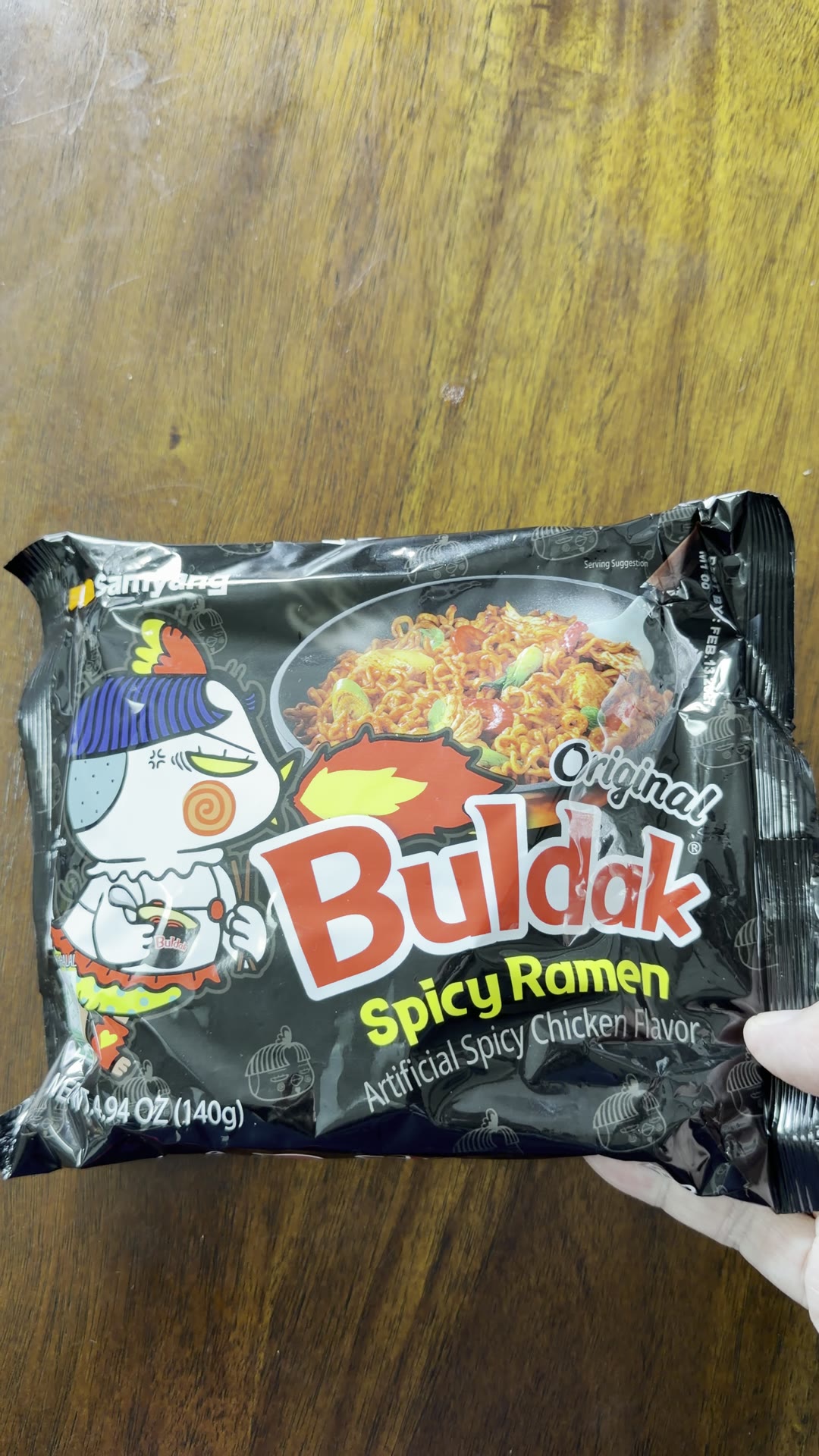
Some packs arrive with a reputation, and this one arrived in black. Samyang's Buldak Original — the US label reads Spicy Ramen, Artificial Spicy Chicken Flavor, 140 g — is the bowl he had been circling for seven stations. He finally cooked it the way the day demanded: leftover roast chicken torn into strips and the morning's leftover salad standing by, because a bowl this hot was never going to be eaten plain.
Then the bowl fought back. Half the sauce sachet went in — his own caution, not the pack's instruction — and it was still, in his words, the spiciest noodle he has ever eaten. He did not finish it. Sparkling water and an orange closed the meal. And then he did the thing that makes this station matter: he scored it 8.7 anyway, and said he would buy it again.
Watch the full lesson: EP8 — Buldak Original × Half a Sachet Was Too Much 🔥 The Great Ramen Battle
What you need
- One pack of Samyang Buldak Original (black pack, 140 g) — noodle cake, the red sauce sachet and the flake sachet
- Water — the pack prints 2½ cups (20 OZ)
- Half the sauce sachet. That is the house rule this page exists to teach
- His way on the day: leftover roast chicken, torn into strips
- His way on the day: leftover salad from the morning
- At the table, non-negotiable after this bowl: sparkling water and an orange
His way, filmed as it happened
1. Read the black pack first
The pack on the board is the US black pack: Samyang's Buldak Original, Spicy Ramen, Artificial Spicy Chicken Flavor, 140 g, made in South Korea. The back label is worth the ten seconds it takes: 560 kcal, sodium 1,630 mg — and a printed method that assumes you will use the whole sauce sachet. He read it, and decided otherwise.
Why: with this pack, the label is the warning. Knowing what the full sachet is before the pot boils is the whole game.
2. Noodles into water already boiling
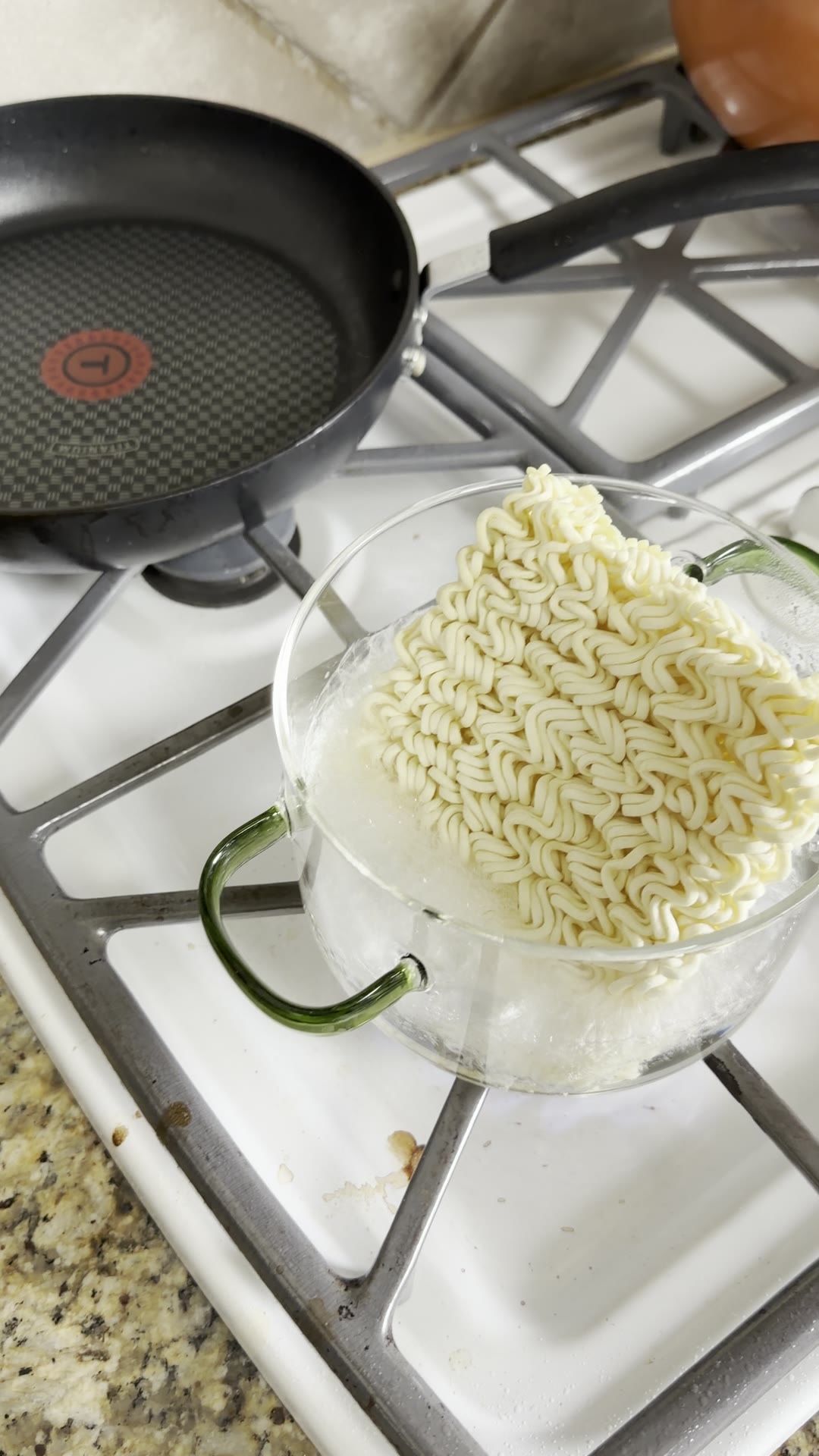
His rule starts before the pack's does: the water is at a rolling boil first, and only then does the noodle cake go in. No cold start, no lukewarm soak — the cake hits boiling water and the chopsticks loosen it straight away.
Why: boiling water from the first second is where his chew comes from. A slow start makes a soft noodle, and this bowl is built on spring.
3. Heat off at the end — lid on, let it finish
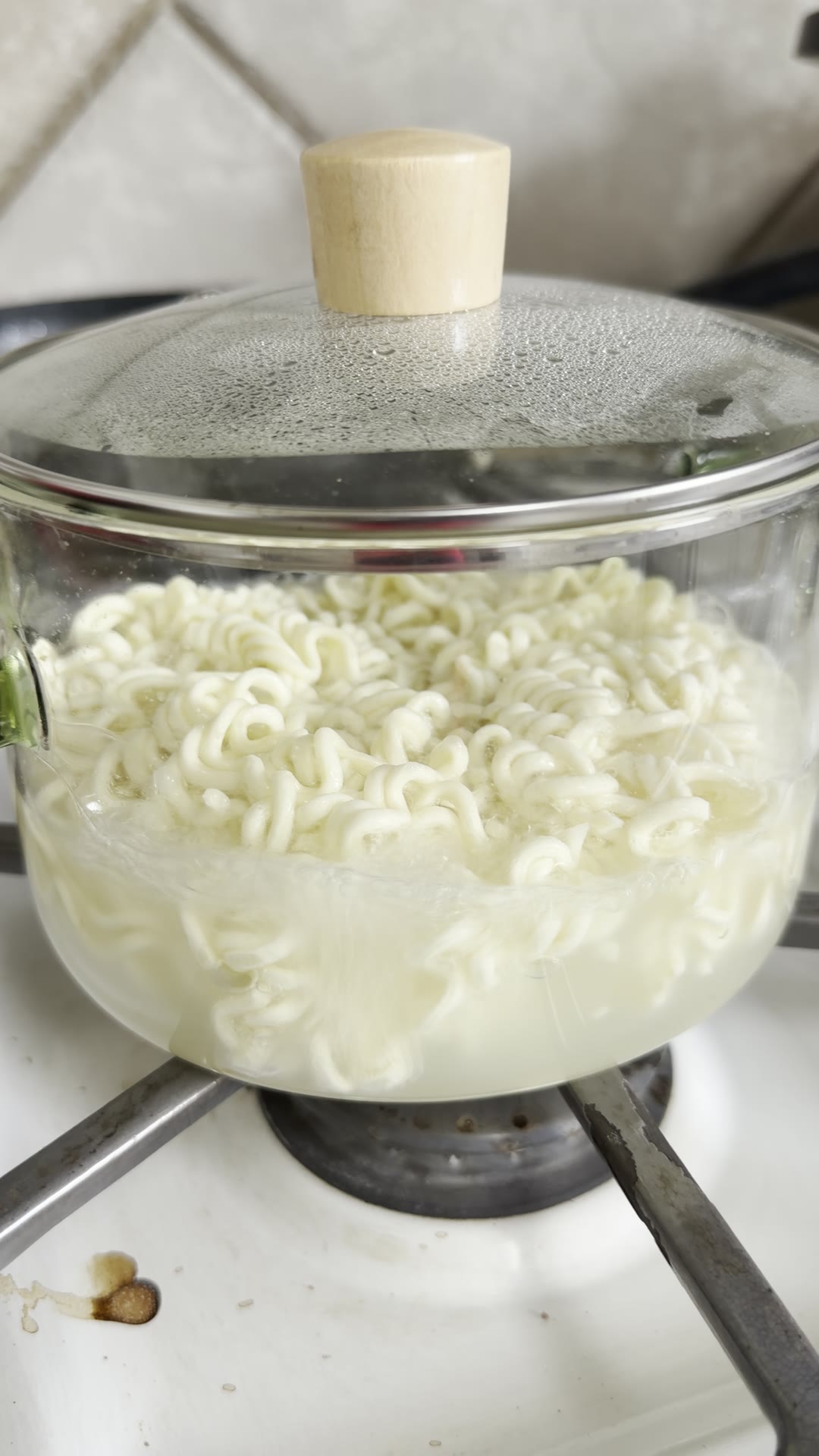
Near the end of the cook, he turns the heat off and puts the lid on. The noodles finish in the trapped steam, off the boil, until they have swollen to exactly where he wants them. This is his signature move with a dry bowl, and he does not skip it.
Why: finishing off the heat is how the noodle stays springy instead of blowing out. His words: that is how it gets its chew.
4. Lift the noodles out, onto the chicken and salad
The noodles are lifted out of the pot and landed straight into the big steel bowl, on top of the morning's leftover salad and the roast chicken torn into strips. Nothing is wasted at this table: yesterday's chicken and this morning's salad were always going to meet this bowl.
Why: the chicken and salad are not decoration. They are ballast — body and cool crunch under the hottest sauce on the roster.
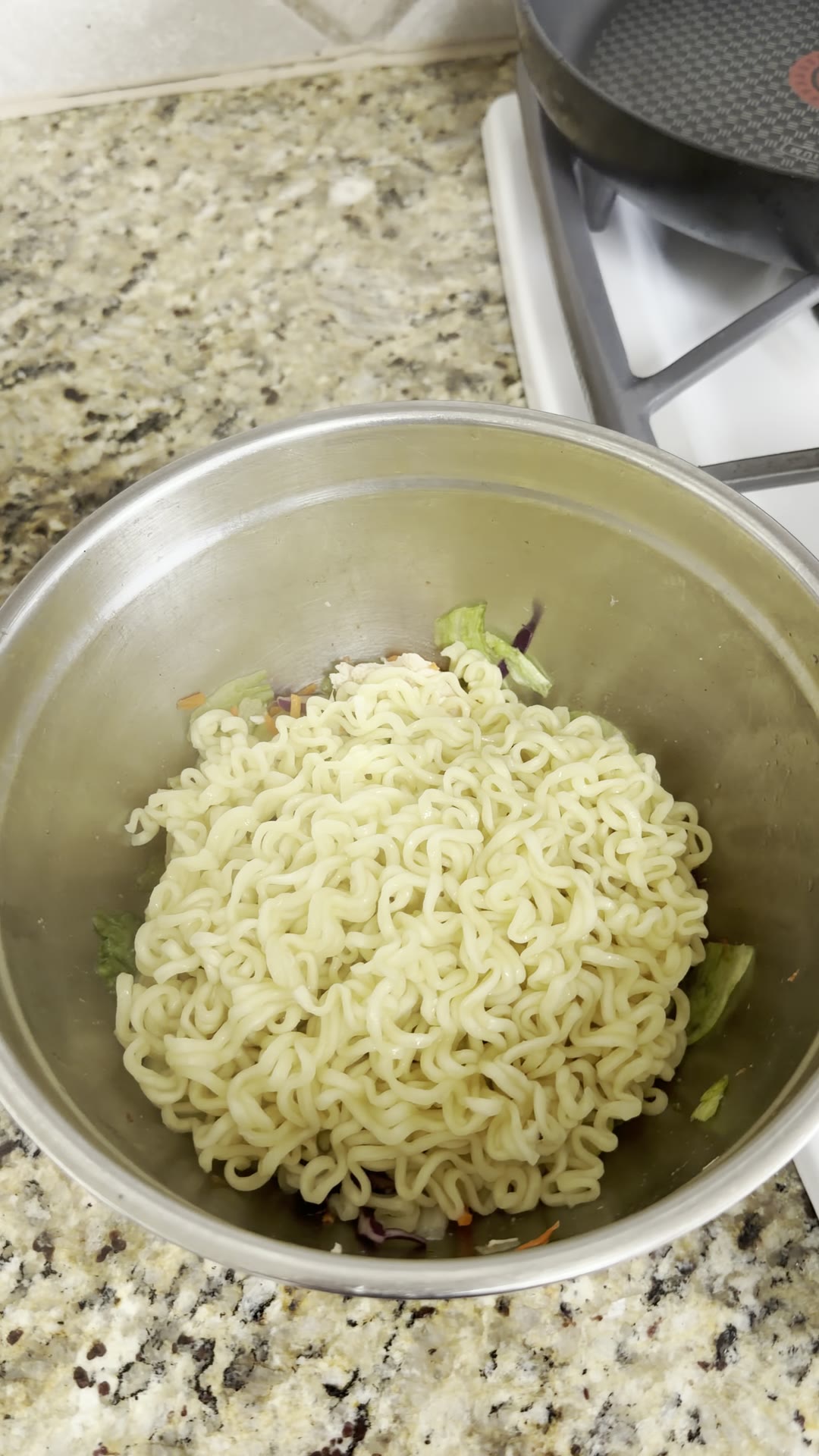
5. Half the sauce sachet. Not a drop more
The red sachet comes out and half of it goes in. Half. His advice to anyone who has never eaten this pack is the bluntest sentence in the whole battle: if you have not tried it before, never go past half a sachet. If half treats you kindly, add more next time — slowly.
Why: he handles spicy food well, and half a sachet still beat him. The full sachet is not a starting point; it is a destination you earn.
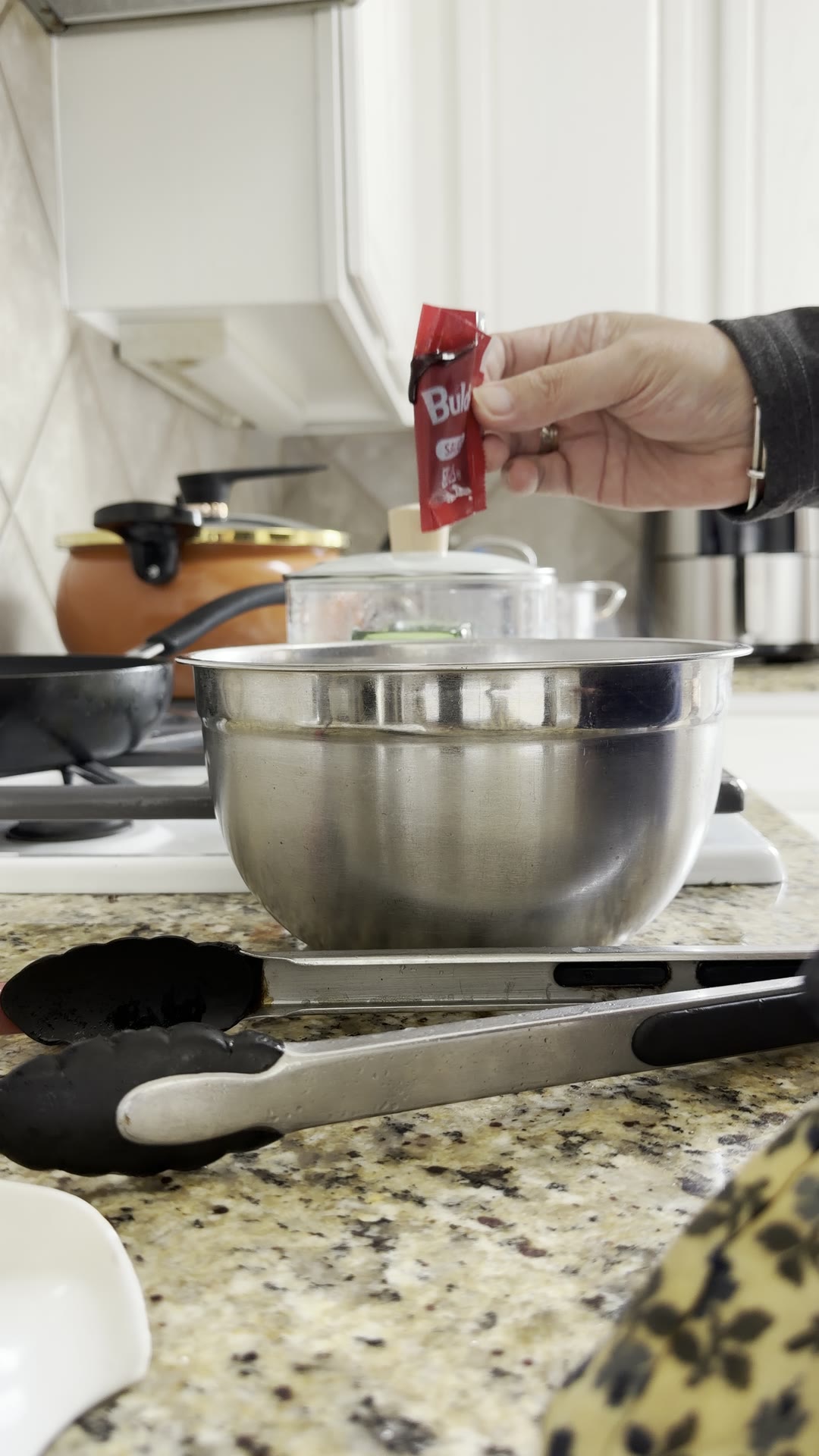
6. Drain the way the pack prints it — keep a third of a cup
The pack's own method, printed on the back, keeps ⅓ cup (4 OZ) of the cooking water and drains the rest before the sauce goes in and stir-fries for 30 seconds. That slick of starchy water is what lets a dry sauce coat every strand instead of clumping.
Why: a dry bowl lives or dies on the coating. The kept water is the difference between glossy noodles and a sticky knot.
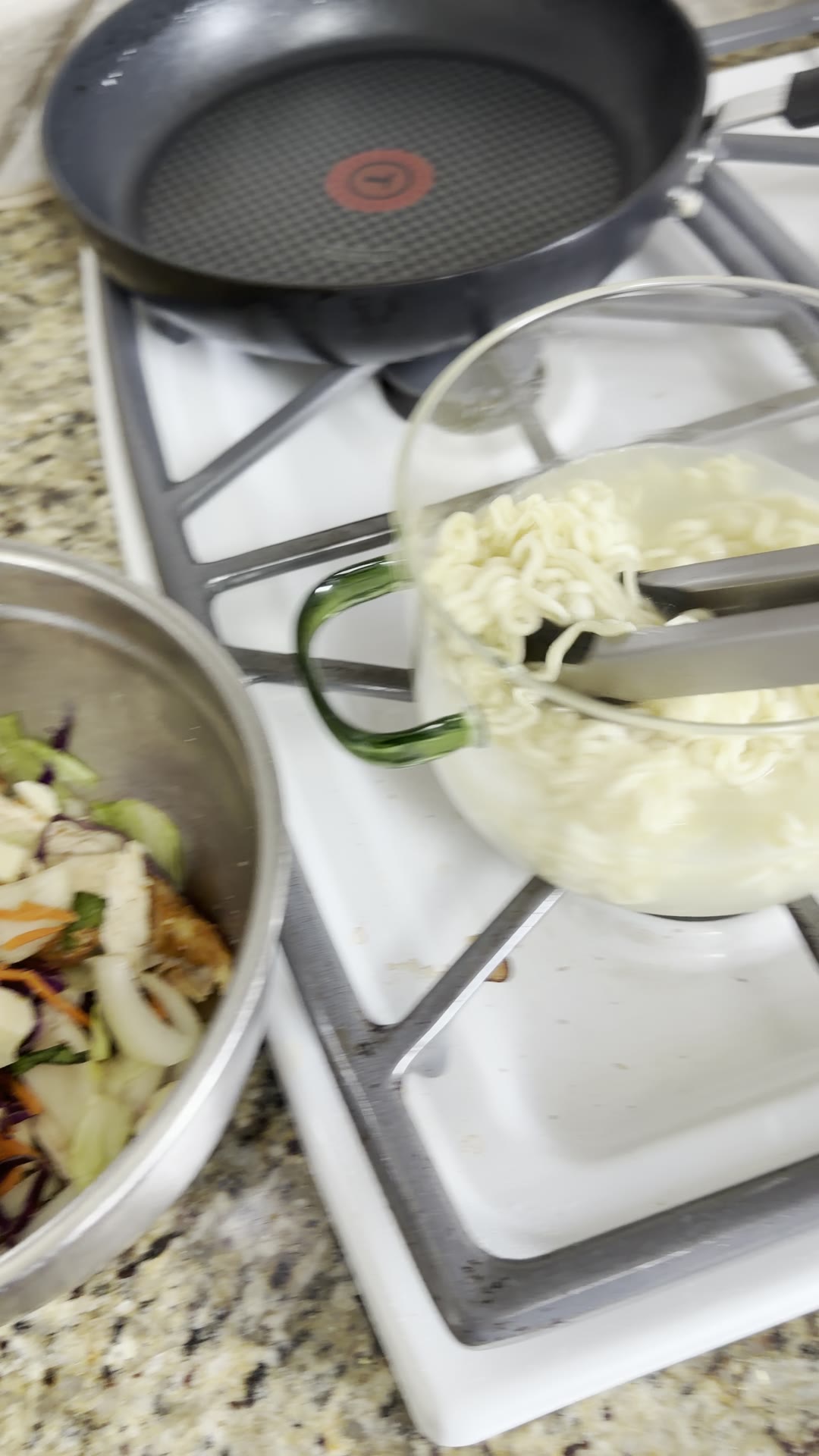
7. Toss until every strand turns
Then the big toss: chopsticks and tongs working the bowl until the sauce, the chicken strips, the salad and the cucumber slices are one bowl. Even mixed with all that company, his verdict was immediate — it was still hot. One house word before anyone digs in: if the sauce gets on your hands, wash them — don't just wipe them on paper. This sauce on a fingertip that later finds an eye is a burn you will feel. Better careful, he says.
Why: tossing is not a formality in this bowl. Every strand the sauce misses is a plain strand, and a plain strand is a missed chance to spread the heat out.
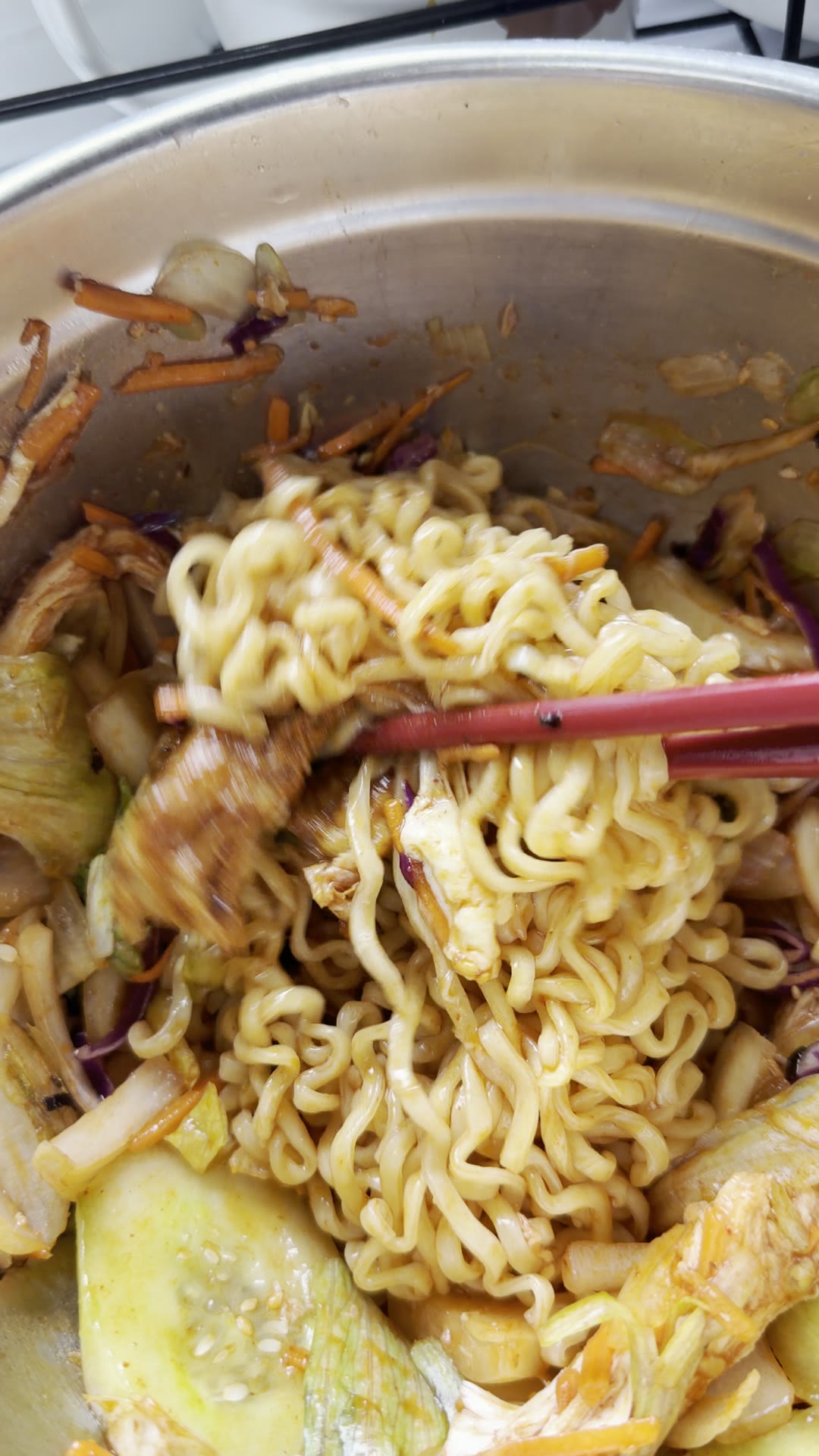
8. Plate it with the pack beside it
The bowl goes onto the plate it will be eaten from, and the empty black pack goes down beside it — the way this battle always signs its bowls. Peeled garlic sits at the plate's edge; the oranges and the sparkling water are already on the table, though nobody yet knows how necessary they are about to be.
Why: the pack beside the plate is the battle's receipt. What you see is exactly what was cooked — no swaps, no stand-ins.
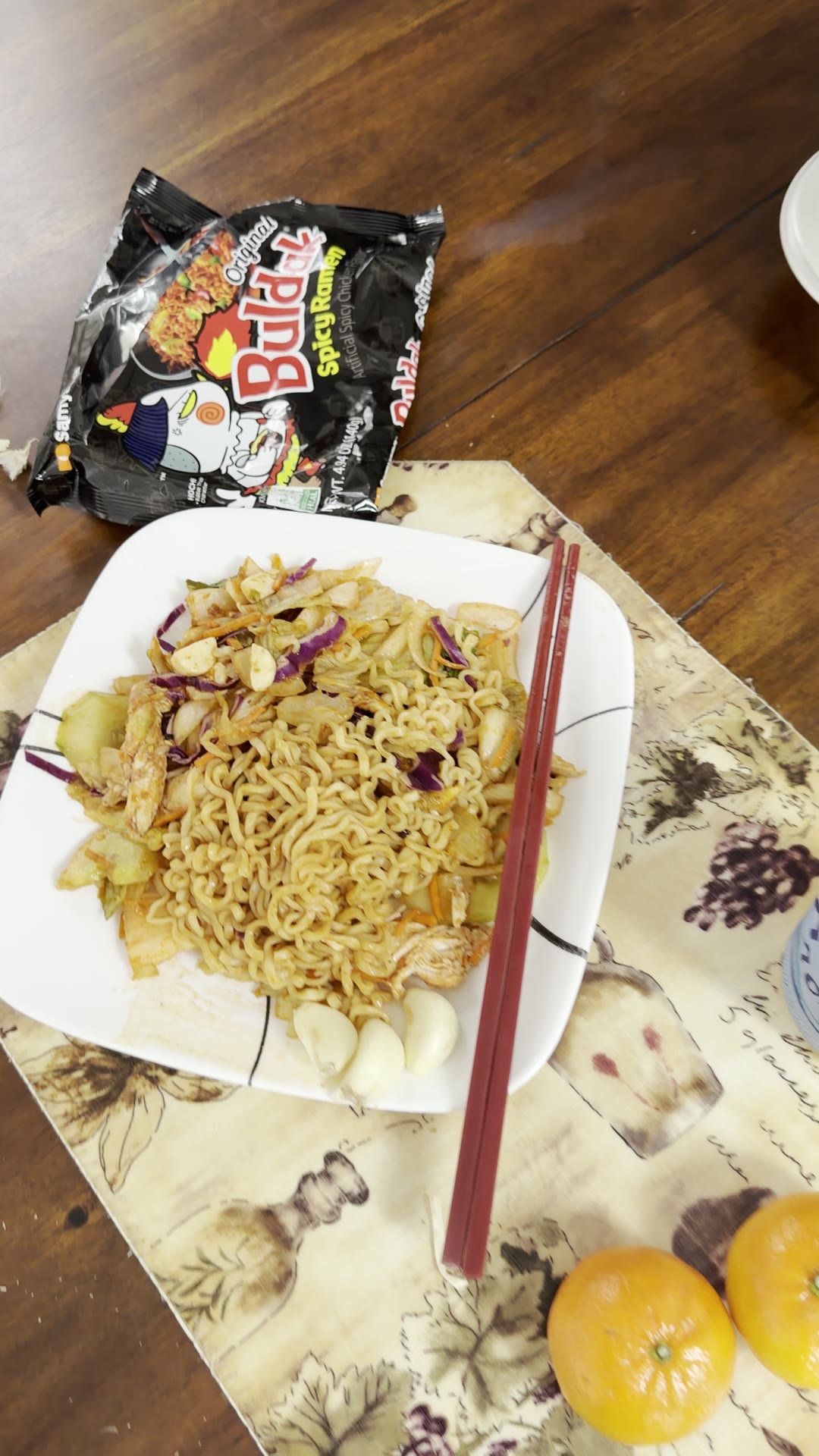
9. Sparkling water and an orange — the rescue kit
He did not finish this bowl. The heat built past the chicken, past the salad, past everything, and the meal ended the way his tasting notes say it did: sparkling water, and an orange from the table. He is not embarrassed about it. It is the data point the whole station turns on.
Why: when a man who handles heat well leaves noodles in the bowl, the bowl has told you its truth. Believe it before your first bite, not after.
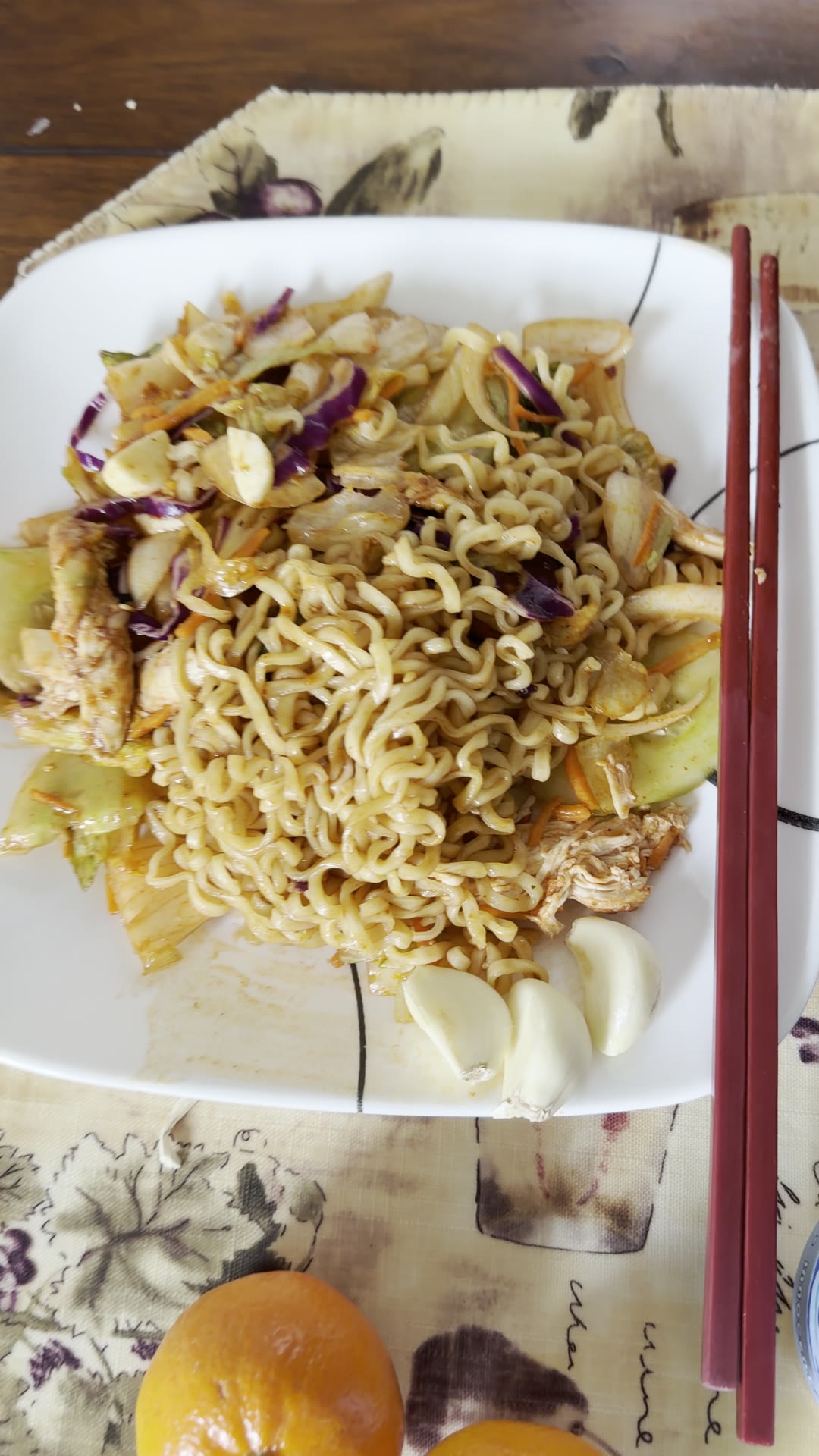
10. The pull: chew that argues back
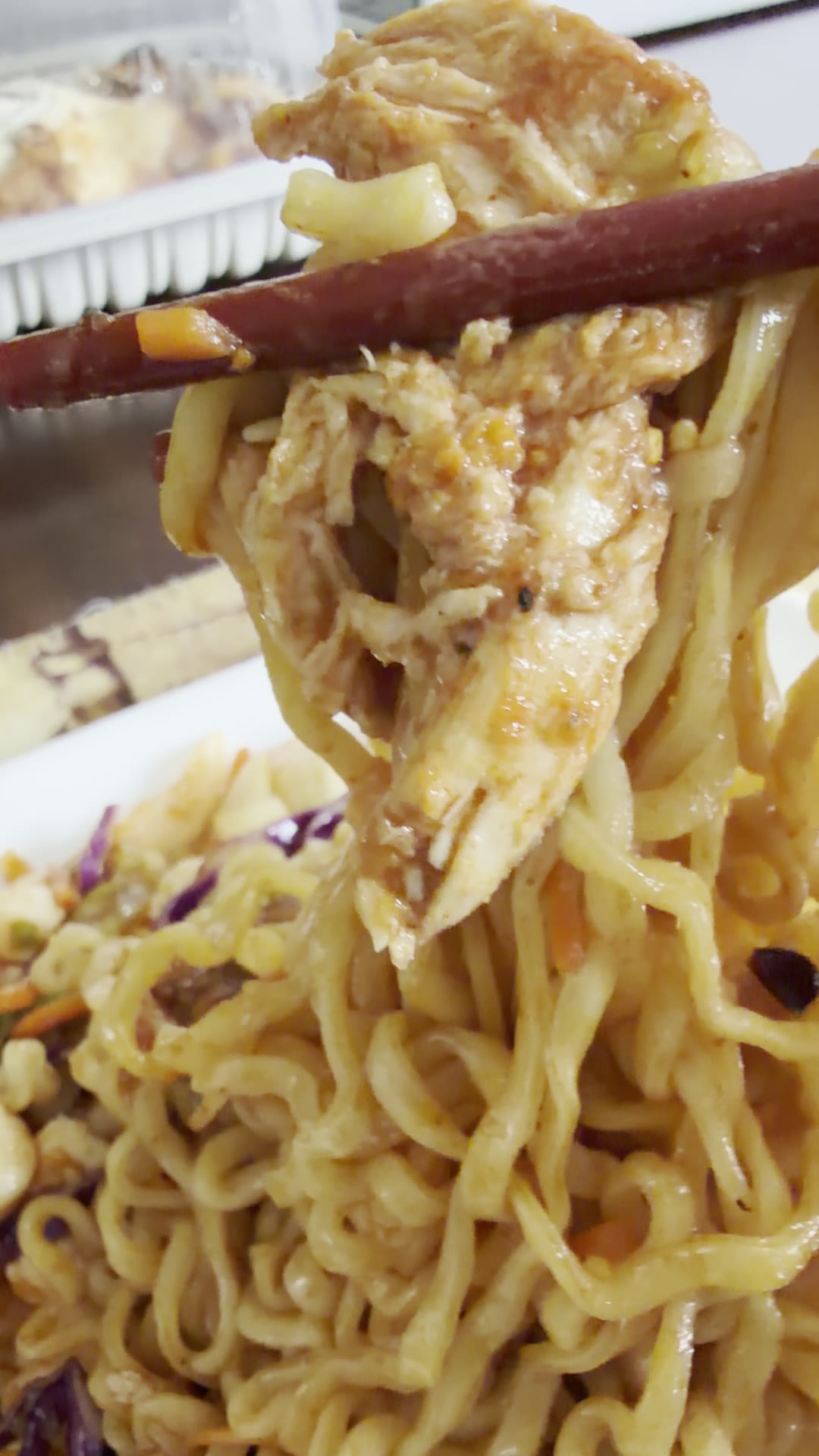
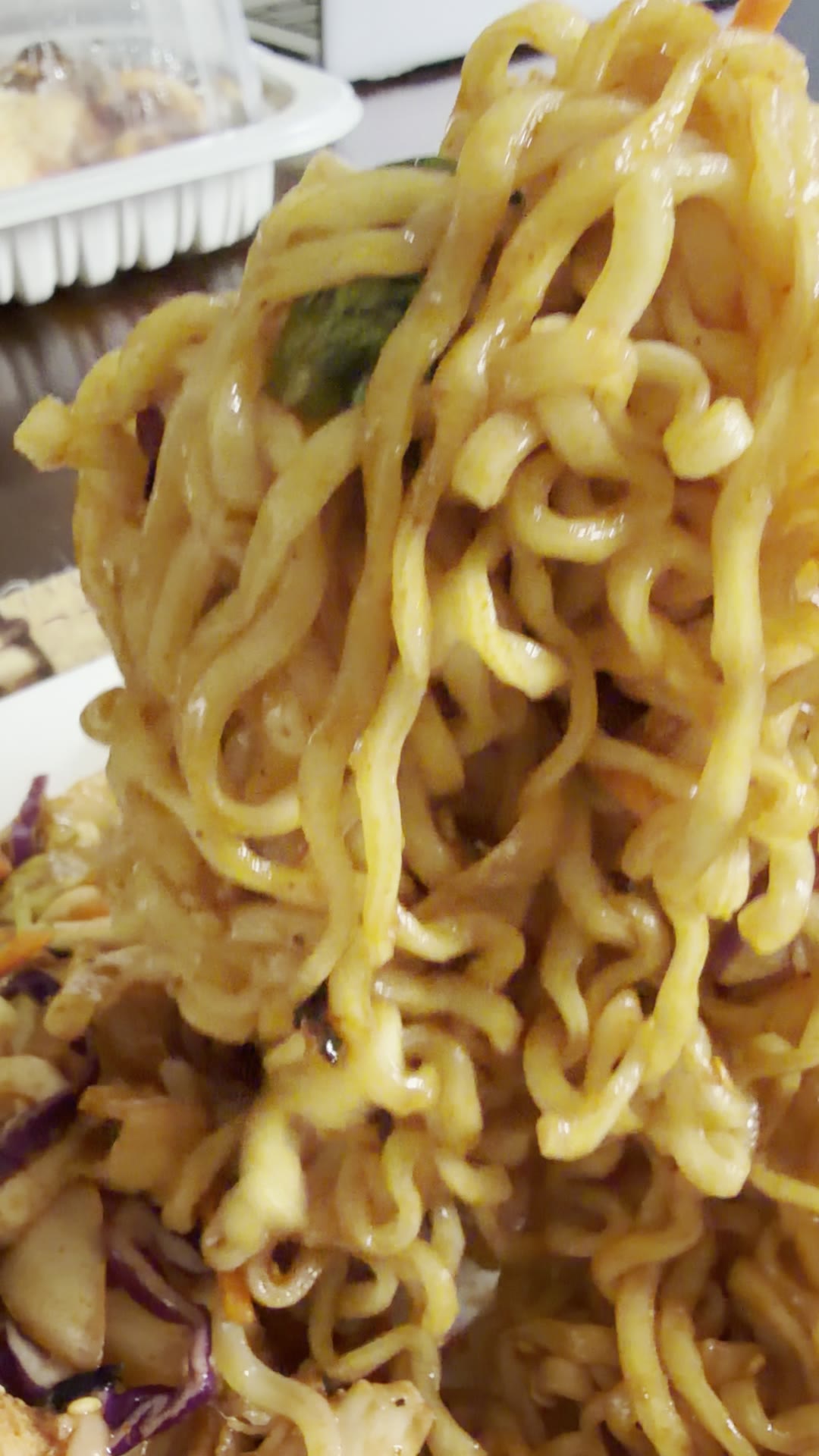
And still — the pull. Lifted high, the strands come up glossy and unbroken, springy as anything he has eaten; his comparison was the springiest noodle he knows, and this one matched it, maybe passed it. Under the heat there is salt, and there is sweet — the sauce has layers, not just fire. His summary of the whole station takes nine words in his language: one word, thrilling; two words, spicy; three words, spicy and thrilling.
Why: this is why the score survived the heat. A bowl can be too hot and still be great — the chew and the sauce carried it.
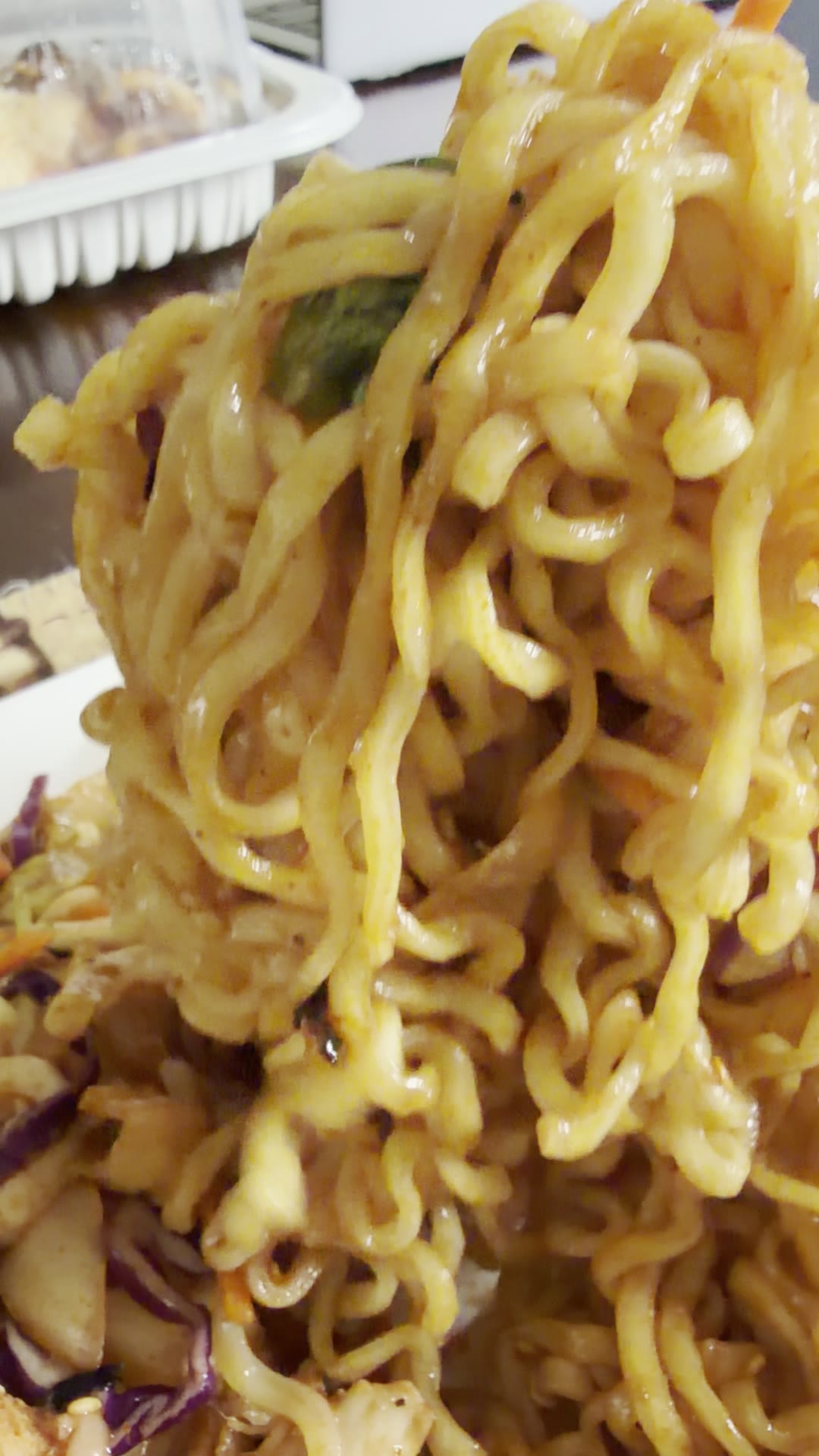
On the side: leftovers, promoted
Nothing on this table was bought for this bowl. The roast chicken was left over from the night before, torn into strips; the salad was left over from the morning. That is the house pattern — yesterday's dinner and this morning's bowl meeting today's battle station — and here it doubles as fire equipment: cool leaves and plain chicken are the only things standing between the eater and the reddest sauce on the roster.
Why this station is the roster's heat benchmark
The roster has fire-tier packs before this one, but they were all judged by someone finishing the bowl. Station No. 8 sets the benchmark differently: this is the pack that stopped a heat-tolerant cook at half sauce. Every future 'spiciest yet' claim in this battle gets measured against this page — half a sachet of the black pack, unfinished, scored 8.7 anyway. That combination — beaten by it, buying it again — is the most honest review this series has produced.
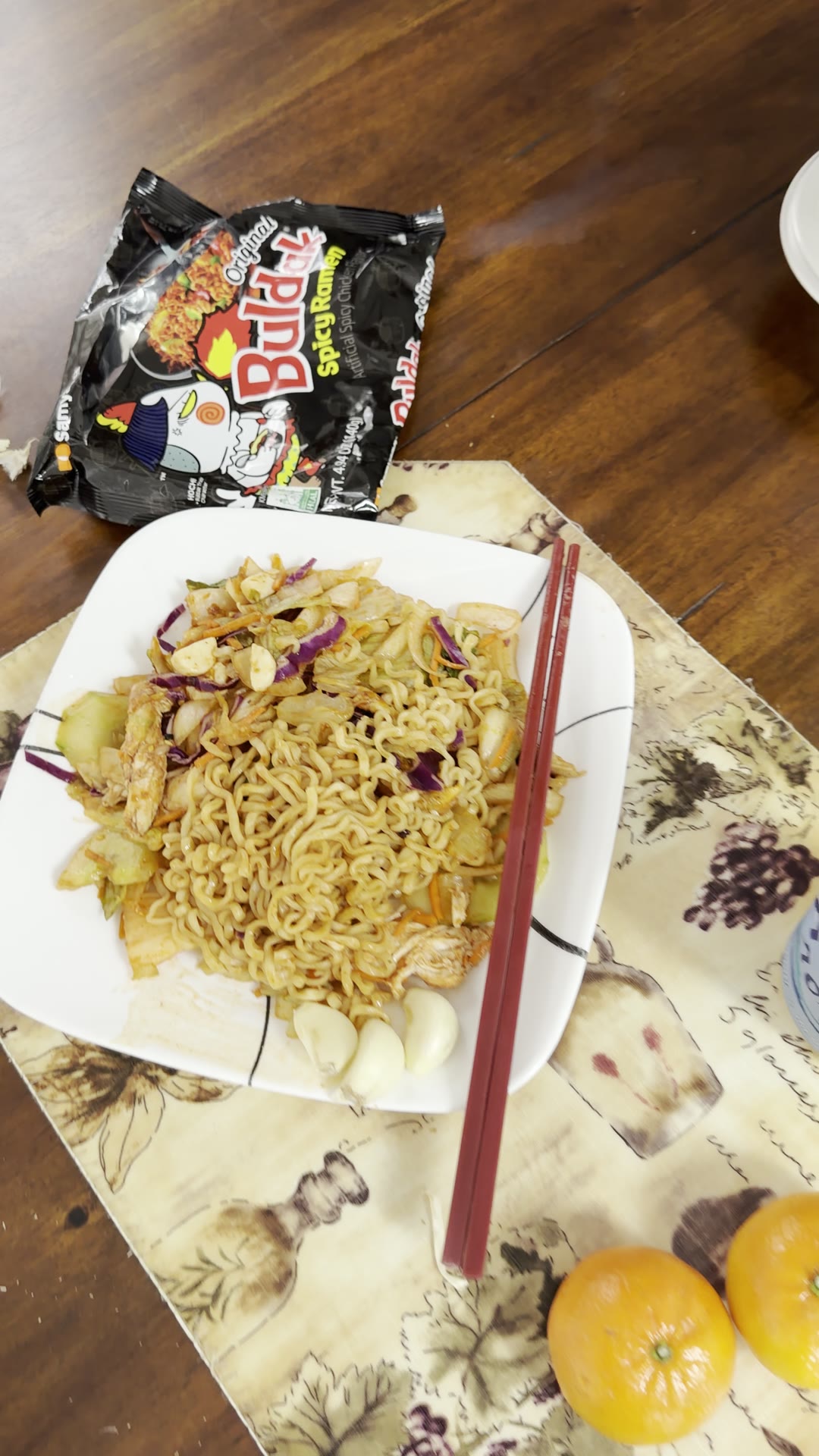
Where this bowl goes wrong
✕ The full sachet, first time
The single most expensive mistake in this series. The pack prints a full-sachet method because the pack does not know you. He knows himself: half. First time with the black pack, never past half — and if half is kind, work up slowly.
✕ Starting the noodles in cold water
His chew rule is boiling water or nothing. A cake that warms up with the water goes soft at the edges and never gets its spring back — and with this sauce, the chew is half the pleasure.
✕ Boiling it to death instead of resting it
Kept at a hard boil to the end, the strands blow out and go slack. His finish — heat off, lid on, steam does the last part — is what keeps them arguing back when you bite.
✕ No rescue kit on the table
Do not sit down to this bowl unarmed. His meal ended with sparkling water and an orange because they happened to be there. Put them there on purpose.
✕ Judging it by the heat alone
The heat is the headline, but it is not the review. Underneath it the sauce carries salt and sweet, and the noodle itself is the springiest on the roster. Score the whole bowl — he did: 8.7.
Asked at our table
How much of the sauce sachet should a first-timer use?
Half. That is his answer, given as advice, not as a guess: never more than half the sachet if you have never tried this pack. He eats spicy food regularly, used half, and still could not finish the bowl. If half goes well, add a little more next time.
Is this the spiciest pack in the battle so far?
By his own ranking, yes. In his words, of all the spicy noodles he has eaten, this is the spiciest — and that verdict was reached on half a sachet. The other half of the packet is still an open question.
What does the label actually say?
Read off the pack on camera, Nov 10, 2026 (US label): Samyang Buldak Original, Spicy Ramen — Artificial Spicy Chicken Flavor; one bag, 140 g (4.94 OZ); 560 kcal; sodium 1,630 mg; total fat 18 g; total carbohydrate 86 g; protein 14 g. Made in South Korea. The label prints no Scoville figure, so this page prints none either.
If it beat him, why 8.7 out of 10?
Because the score is not a pain rating. The noodle's chew matched the springiest he knows, the sauce has salt and sweet under the fire, and the pack earned his respect: his words were that it is pricey for a reason. He docked it from 9 only because the heat beat him. Across the dozens of noodles he has eaten, this one stands its ground: 8.7 — and he buys it again, without regret.
Sources & the cook's own words
- The Korean ramen roster — this pack's row, its label figures and the cook's verdict (XingAI Cook)
- Station No. 7 — Ilpoom Jjajang, the bowl before this one (XingAI Cook)
- Station No. 10 — the milk bowl that challenged it: Triple X Spicy, boiled in milk and water
- Station No. 4 — Namja Ramen, the house chew benchmark (XingAI Cook)
Station No. 8, cooked and eaten Nov 10, 2026. Next in the battle: station No. 9 — a new bowl steps up. Pack facts on this page were read off the real pack on camera, Nov 10, 2026: Samyang Buldak Original (US label: Spicy Ramen, Artificial Spicy Chicken Flavor), net weight 4.94 OZ (140 g), 560 kcal, sodium 1,630 mg, total fat 18 g, total carbohydrate 86 g, protein 14 g; product of South Korea. The method — boiling water, heat off, lid on — the half-sachet rule, and every verdict on this page are the cook's own, given Nov 10, 2026. Filmed at our table the same day.
Cooking ideas, not nutrition or medical advice. Check allergens and cook meat and eggs to safe temperatures.