
THE GREAT RAMEN BATTLE · STATION NO. 7
Ilpoom Jjajang, First Time — Cucumber Strips In, Raw Garlic Beside
A first-timer's bowl, cooked the simplest way he knows: boil the noodles, pour off most of the water, sauce in and mix. Then his two signatures — cucumber strips mixed in, and a raw garlic clove beside the bowl. His score: 8.5 out of 10.
Seven stations in, the battle finally reaches black bean. He had never eaten this pack before — and his verdict came with a number: at least 8.5 out of 10, and he is buying it again. The surprise is not the sauce. It is the cucumber and the garlic.
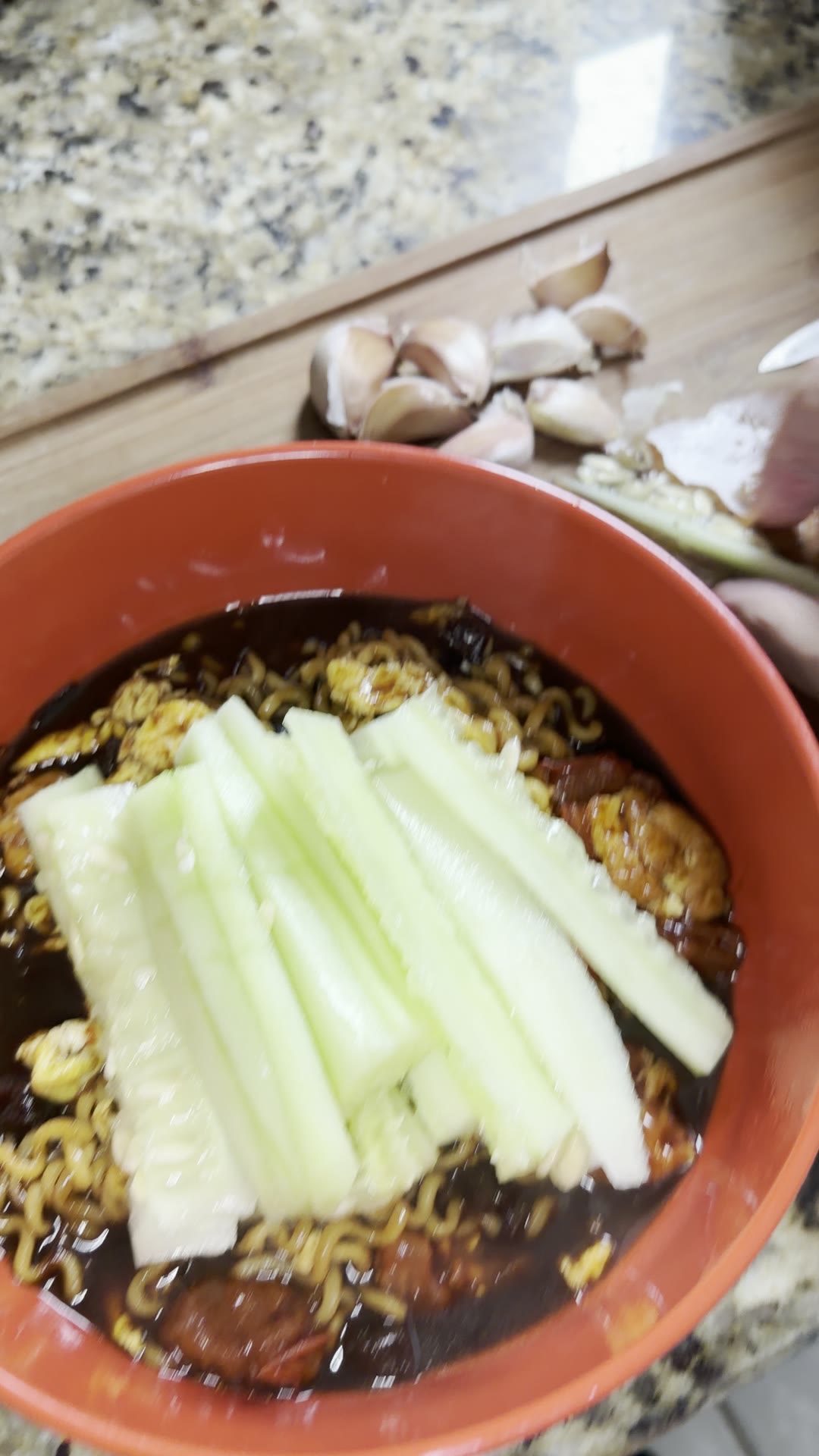
Every station so far has been a soup or a stir-fry he already knew. Station No. 7 is different: Paldo's Ilpoom Jjajangmyeon — the spicy export version, a 190 g pack — is a bowl he had never eaten before. A first impression, filmed as it happened, with nothing rehearsed and no second take.
His way with it is the simplest method in the whole battle. The noodles boil; most of the water is poured off; the black bean sauce goes in and gets mixed through. Then the bowl becomes his: a little of lunch's leftover tomato-egg joins the pot, cucumber strips go over the top and get mixed in, and the bowl is eaten the way he insists jjajang is eaten — with a clove of raw garlic. His words for that rule: noodles without garlic lose half their fragrance.
Watch the full lesson: Ilpoom Jjajang, First Time — Cucumber Strips In, Raw Garlic Beside | The Great Ramen Battle EP7
What you need
- One pack of Paldo Ilpoom Jjajangmyeon, spicy version (190 g) — noodle cake and the black bean sauce sachet
- Water for boiling
- Cucumber — a piece, cut into strips
- Raw garlic — at least one clove, peeled, for the table
- Optional, his way on the day: a little leftover tomato-egg from lunch
His way, filmed as it happened
1. Meet the pack
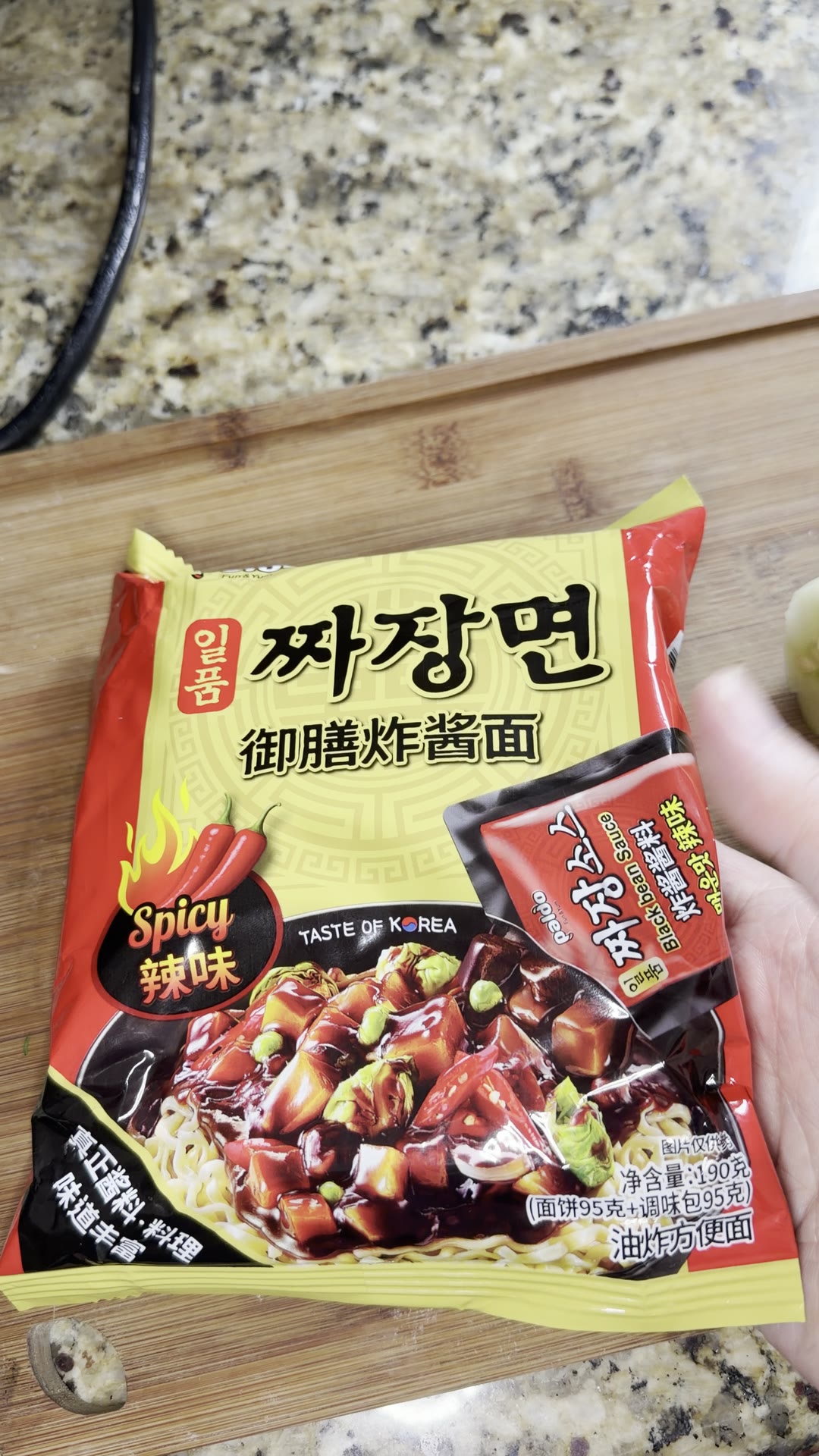
Paldo Ilpoom Jjajangmyeon, the spicy version — the export pack carries the Chinese label name 御膳炸醬麵(辣味), net weight 190 g, product of Korea, with the 일품 mark and a TASTE OF KOREA badge on the front. Inside is a real black bean sauce in a sachet, not a powder. The cook had never eaten this one before; everything on this page is a first impression.
A sauce, not a soup base — this station is built on coating noodles, not on broth.
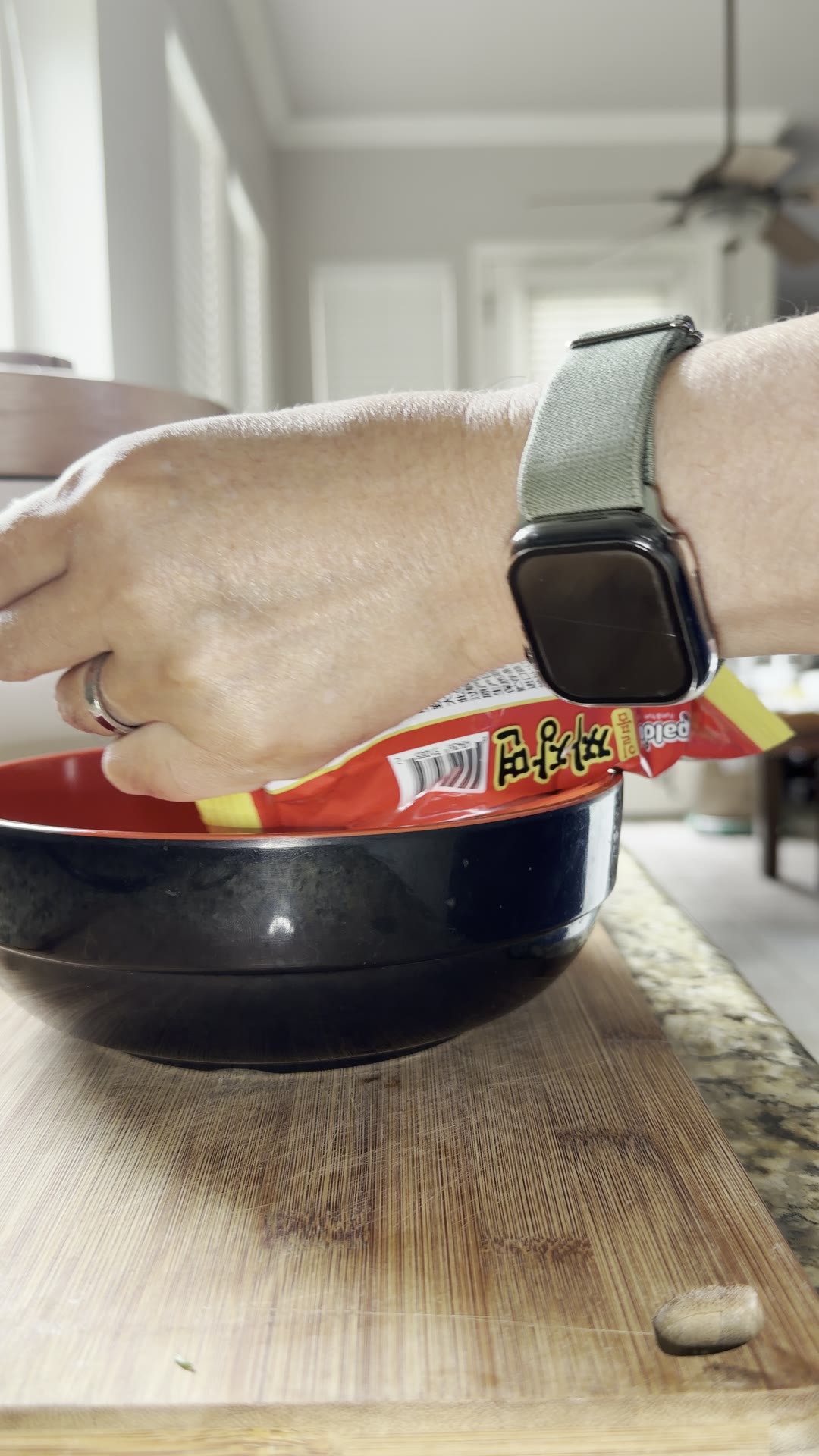
2. Open it up
The pack opens over the bowl: the noodle cake comes out and the sachets are set ready beside it. One pot, one bowl, one board — the whole station fits on the counter in a single glance, exactly how his lunches always start.
Nothing to hunt for once the water boils — the one-pot rule of this kitchen.
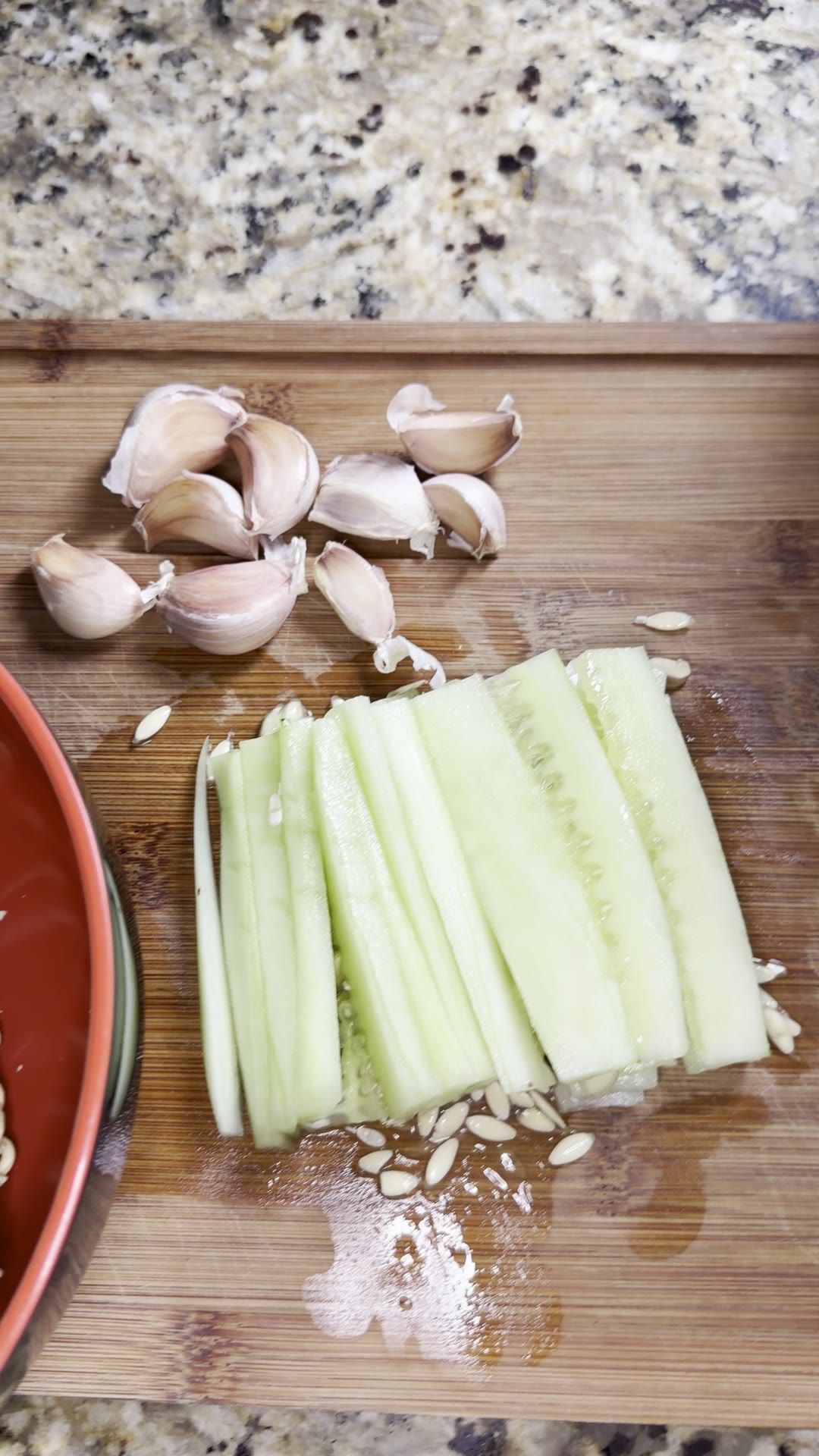
3. The board: cucumber strips and garlic
Before any water boils, the board is ready: a cucumber cut into long strips, and garlic cloves waiting beside the noodle cake. Both are already decided. The cucumber is not a garnish in his book — it gets mixed into the bowl at the end, which he calls the normal way to eat jjajang — and the garlic is not optional at all.
His two signatures are prepped first, because the bowl moves fast once the sauce lands.
4. Cake into boiling water
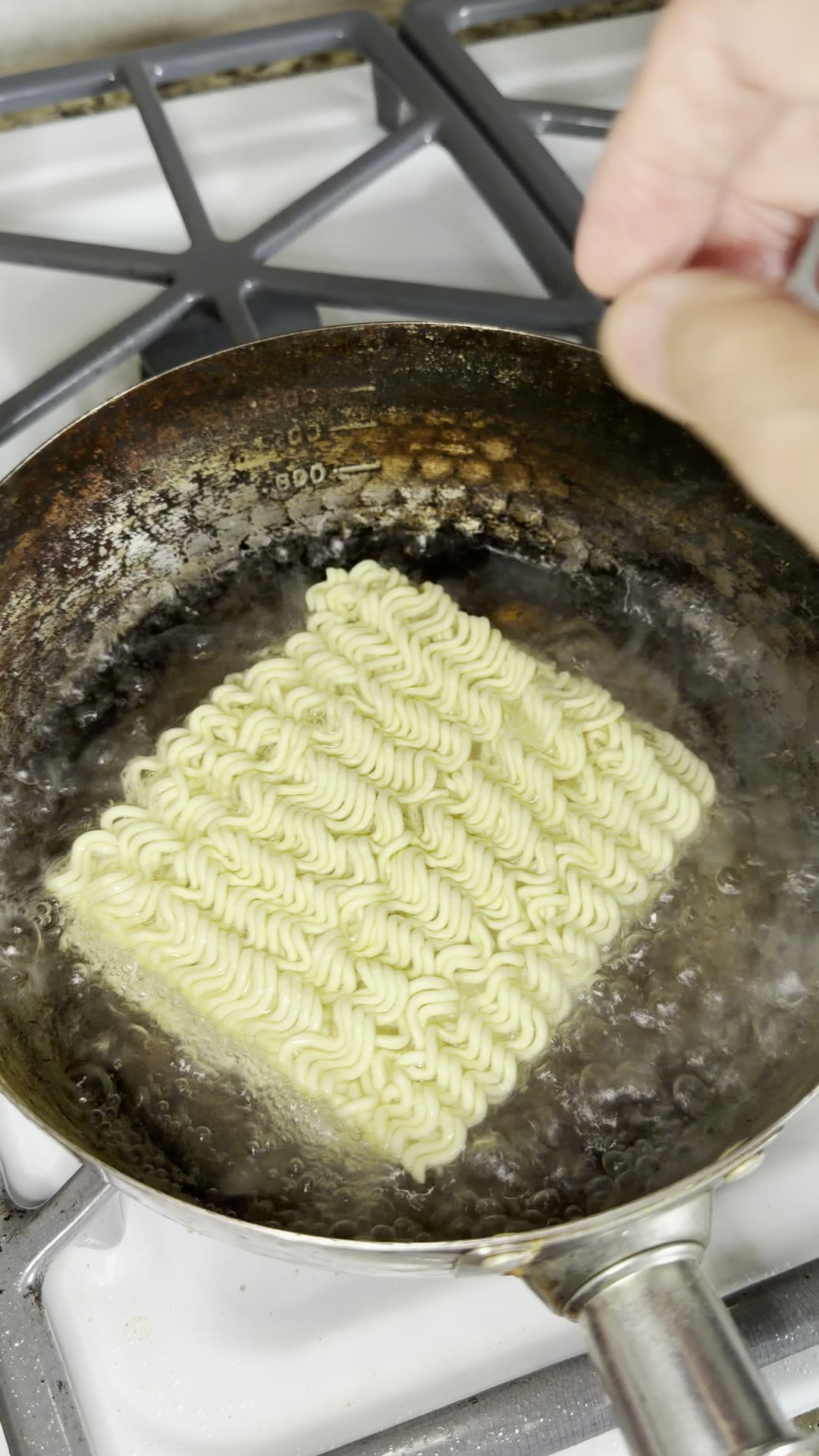
The water comes to a rolling boil and the cake goes in whole. No sauce, no seasoning yet — the noodles cook plain, loosening in the pot, stirred as they soften. This is the only cooking the pack asks for; everything after it is assembly.
Plain water, full boil — the chew is made here, before the sauce ever shows up.
5. Pour off most of the water
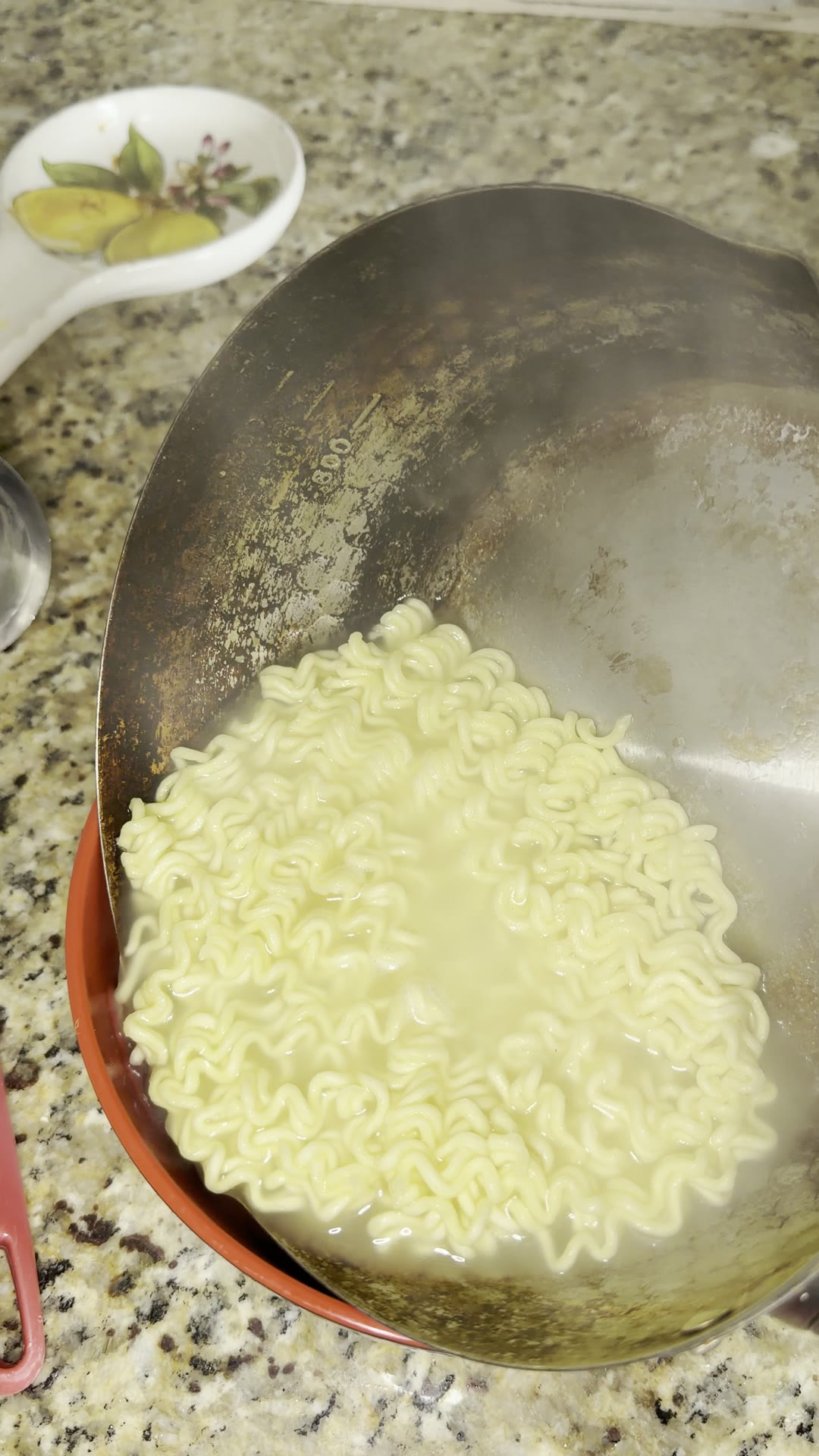
When the noodles are done, he pours off most of the cooking water — more than half of it goes, a little stays in the pot with the noodles. This is the one measurement that matters at this station, and he does it by eye and by feel, the pot tipped over the bowl until what is left looks right.
Too much water and the sauce drowns; none at all and it will not spread. Most of it goes — not all.
6. Sauce in — mix until it shines
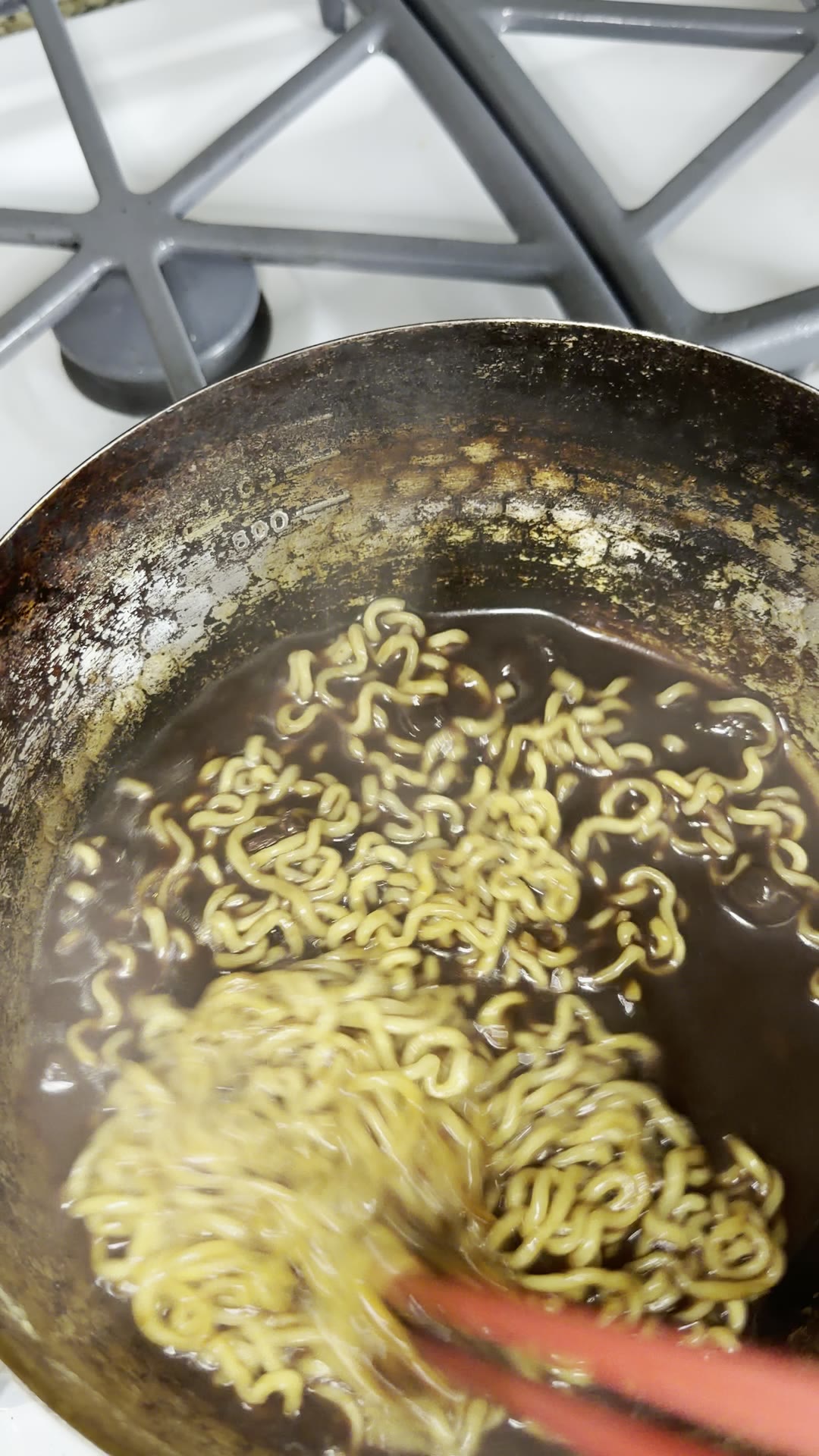
The black bean sachet is torn open and squeezed over the noodles, and the chopsticks get to work: turn, lift, turn again, until every strand has taken the sauce and the whole pot turns glossy and dark. The little water left behind loosens the paste so it coats instead of clumping.
This is the bowl's whole flavor, applied in one go — mix like you mean it.
7. Lunch's tomato-egg joins
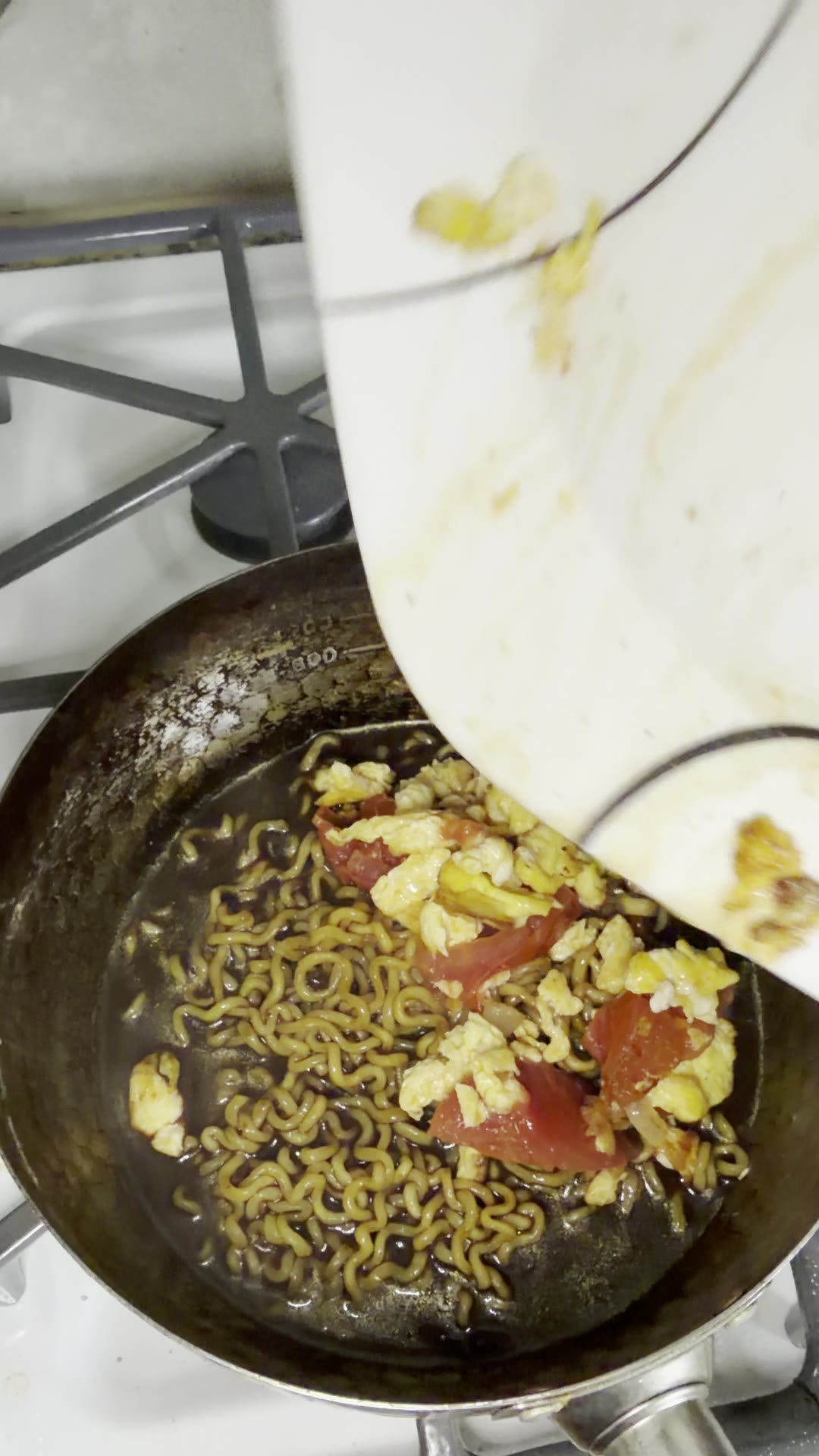
On the day, there was a little tomato-egg left from lunch — the family's tomato and scrambled egg — and it went into the pot on top of the sauced noodles and got folded through. Nothing measured, nothing wasted. His verdict on the addition, in his own words: it tastes just as beautiful in there.
A leftover earns its place when it disappears into the bowl like it was planned.
8. Into the bowl
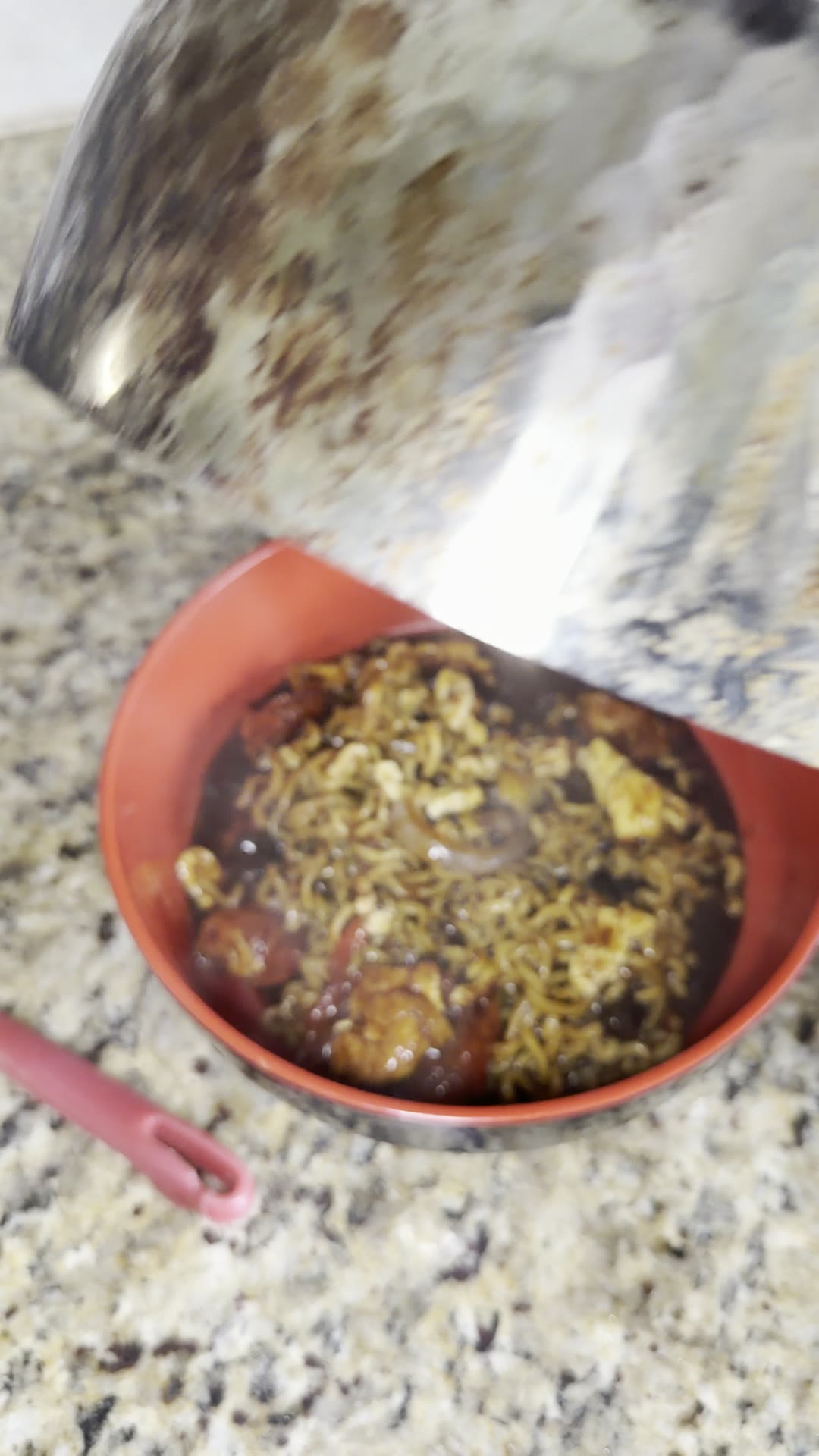
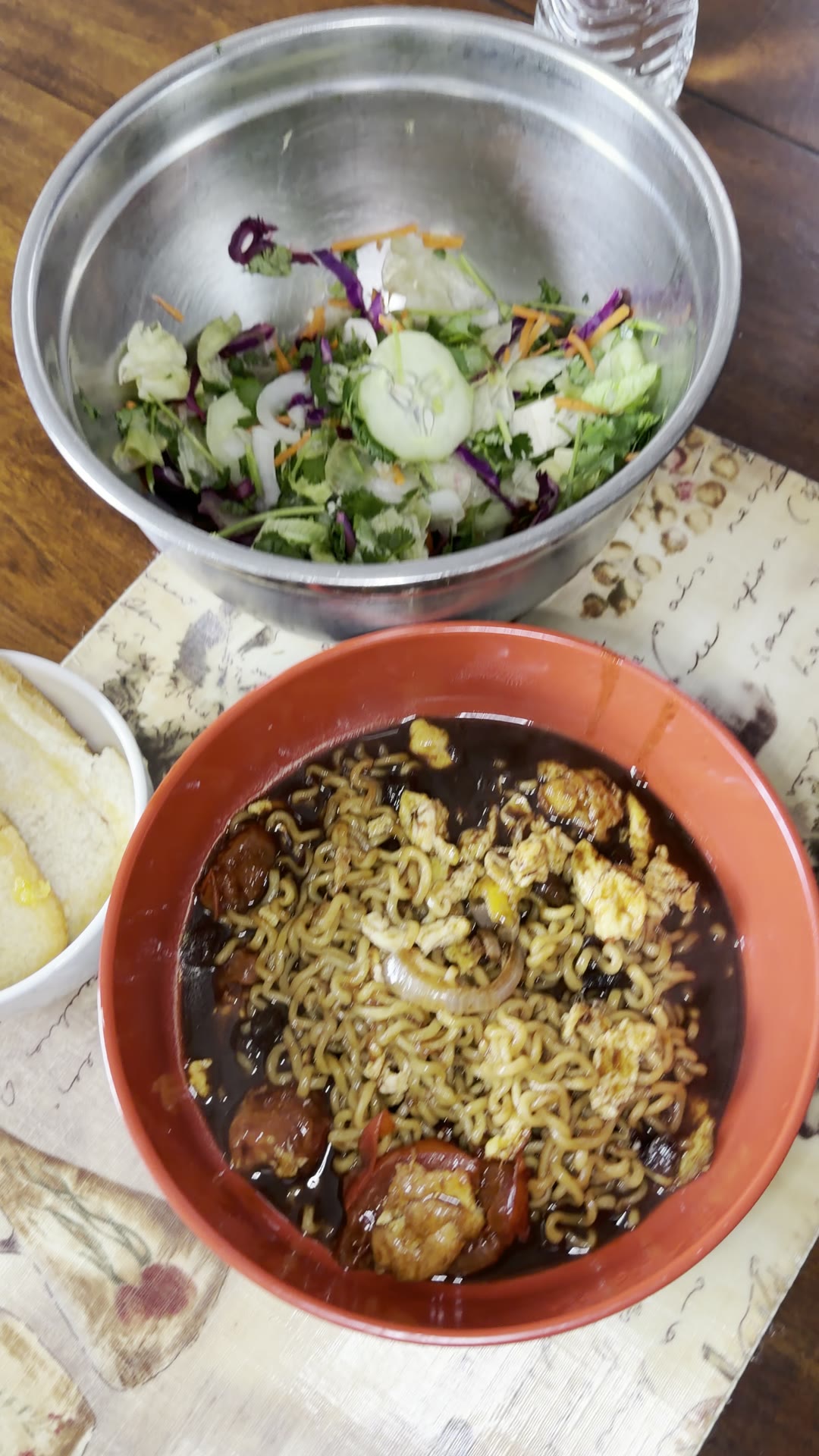
The whole pot tips into the serving bowl — noodles, sauce, tomato-egg and all. Steam still coming off it, the bowl goes to the table where, as on most days, his vegetable salad is already waiting beside it.
One pot, one bowl. The station ends the way his lunches end: at the table, not the stove.
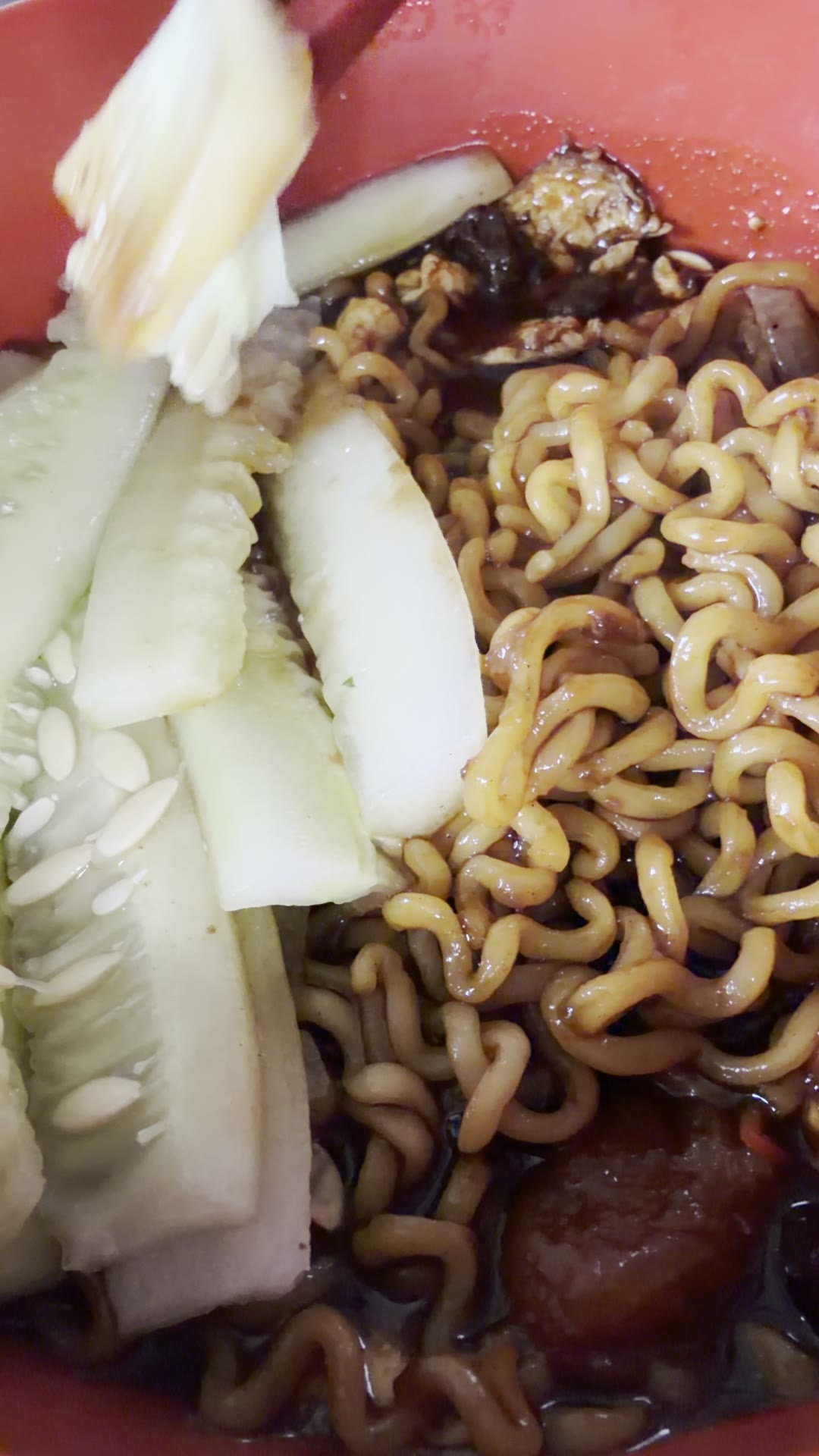
9. Cucumber strips over the top — and in
Now the step he calls the key one. The cucumber strips are laid over the hot noodles and then mixed down into them, crisp and cool against the dark, warm sauce. Not beside the bowl, not as decoration — in. His words: this is the normal way to eat it, and the bowl is not finished without it.
Hot sauce, cold cucumber — the contrast is the point of the whole station.
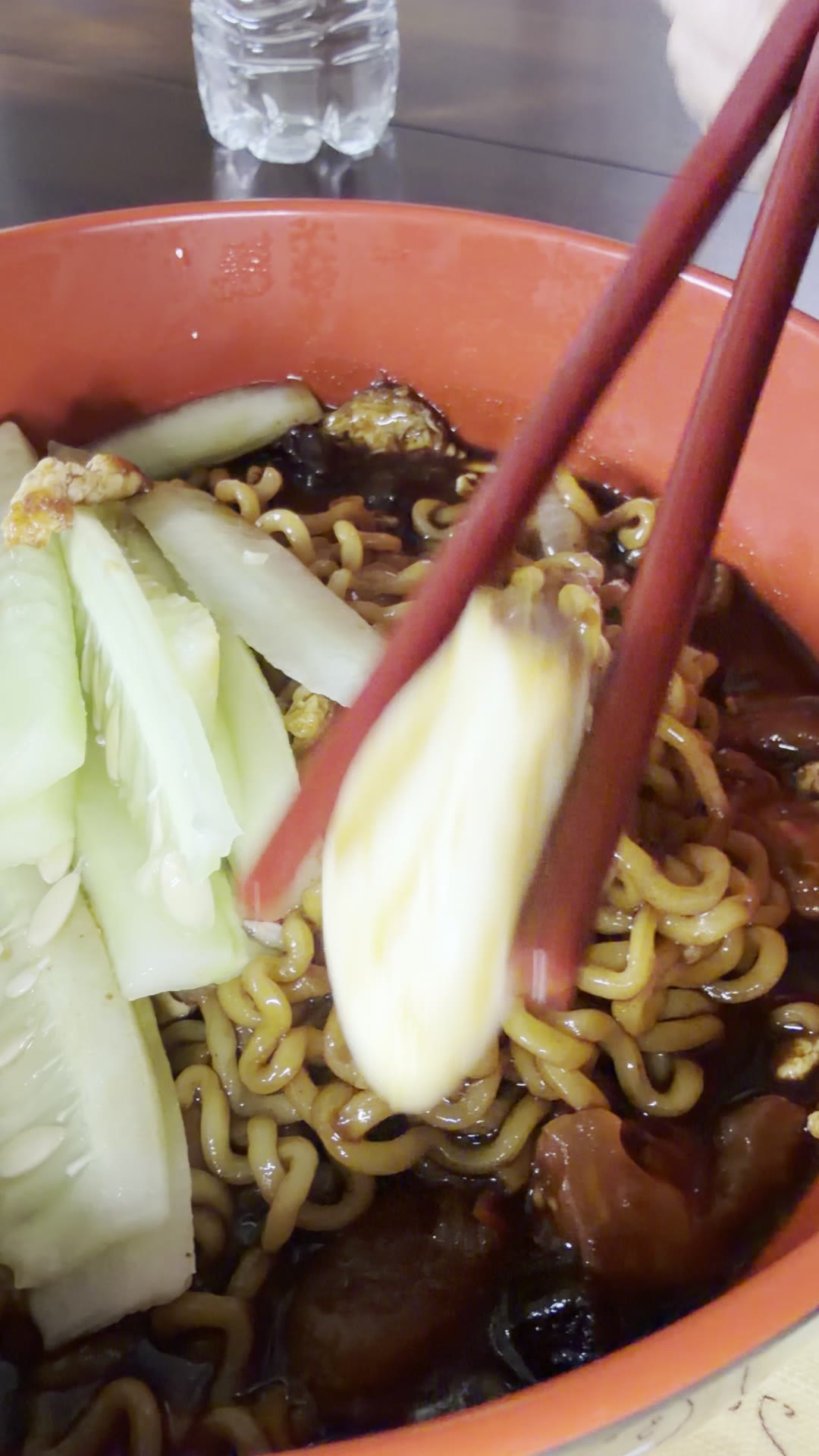
10. Eat it with raw garlic
The last rule is eaten, not cooked: a peeled clove of raw garlic, taken with the noodles bite for bite. His saying, word for word: noodles without garlic lose half their fragrance — the garlic is a must, a perfect match. And the first-timer's verdict on the bowl as a whole: great flavor, a little heat, different from his usual bowls — a pleasant surprise. His score: at least 8.5 out of 10, and he will buy this jjajang again.
The garlic is not a side. At his table it is half the fragrance of the meal.
On the side: the table as served
The bowl went to the table the way his lunches usually do: the fresh vegetable salad he eats most days in its steel bowl beside the noodles, bread alongside, water to drink. The salad arrives at the table on camera but its making was not filmed for this station, so this page describes it as served, not as a recipe — the same discipline as station No. 4.
Why this station is the first-timer's bowl
Six stations of favorites and inventions, and then this: a pack the cook had genuinely never opened. That is what makes station No. 7 the honest test of the roster. No habits to fall back on, no signature to protect — just a new sauce met with his simplest method and his two oldest rules, cucumber in and garlic beside. The bowl passed the way few first impressions do: 8.5 out of 10, and a promise to buy it again. The battle's black bean chapter opens with a keeper.
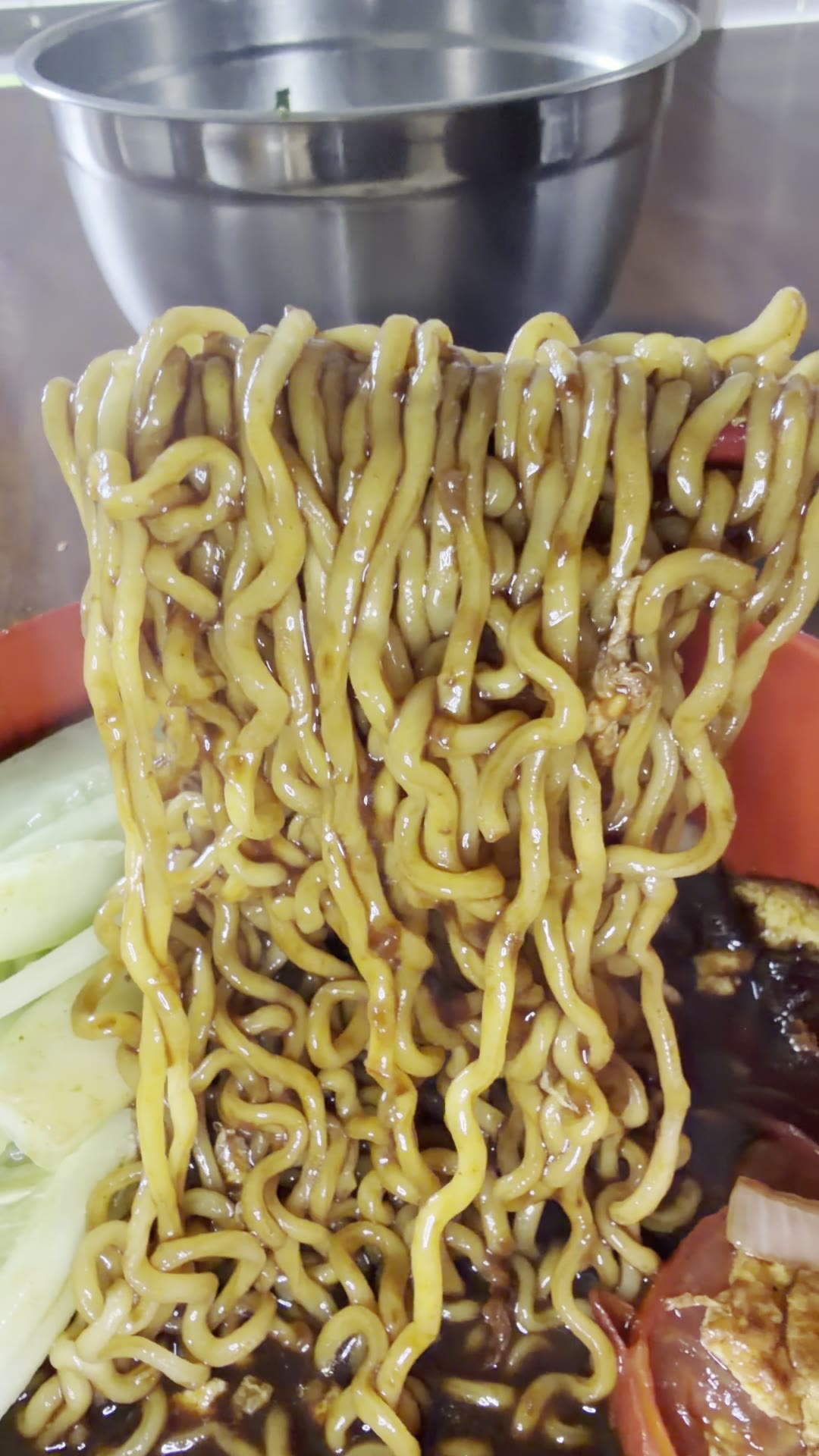
Watch the water. The whole method turns on one pour — most of the noodle water leaving the pot before the sauce goes in. Get that pour right and the sauce does the rest.: EP7 — Paldo Ilpoom Jjajang × Cucumber & Raw Garlic 🍜 The Great Ramen Battle
Where this bowl goes wrong
✕ Leaving the water in
Sauce into a full pot of water is soup, not jjajang. Most of the water — more than half — has to go before the sachet opens.
✕ Cucumber as decoration
Strips laid on top and left there miss the point. They get mixed in, crisp against the hot sauce, or the bowl is unfinished — his words, and his rule.
✕ Skipping the garlic
Noodles without garlic lose half their fragrance. One raw clove beside the bowl is not a garnish at his table; it is half the meal's aroma.
Asked at our table
How spicy is the spicy version, really?
His tasting note, first bite to last: a little heat — present, noticeable, and nothing like the fire packs elsewhere on this roster. It sits under the black bean sauce rather than over it. This page prints his palate, not the badge: the pack says Spicy; the cook says a little.
Why pour the water off instead of draining the noodles fully?
His way keeps a little of the noodle water in the pot, and on camera you can see why it works: the sauce loosens in it and coats every strand instead of sitting in clumps. Most of the water goes — more than half — but the bowl is mixed in the pot, not drained dry.
Tomato-egg in black bean noodles — really?
Really, and it was his call on the day: a little of lunch's leftover tomato-egg, folded through the sauced noodles. His verdict, in his own words: it tastes just as beautiful in there. The roster records it as his way, not as a rule for anyone else's bowl.
Sources & the cook's own words
- How Cook AI works — the method behind these guides (XingAI Cook)
- The Korean Ramen Roster — this noodle's row and the cook's verdict (XingAI Cook)
- Chapagetti — the Jjajang Duel, station No. 9: this pack against the traditional one (XingAI Cook)
- Namja Ramen — Ramen Battle station No. 4, his favorite bowl (XingAI Cook)
- Kimchi Fried Ramen — Ramen Battle station No. 3 (XingAI Cook)
Station No. 7, cooked and eaten Nov 9, 2026. Next in the battle: station No. 8 — a new bowl steps up. Pack facts on this page were read off the real pack on camera, Nov 9, 2026: Paldo Ilpoom Jjajangmyeon, spicy export version (label name 御膳炸醬麵(辣味)), net weight 190 g, product of Korea. The rest of that pack's label figures were not legible on camera and are not printed here. The method, the cucumber and garlic rules, and every verdict on this page are the cook's own, given Nov 9, 2026. Filmed at our table the same day.
Cooking ideas, not nutrition or medical advice. Check allergens and cook meat and eggs to safe temperatures.