XingAI Cook How-To — Ramen Battle, Station No. 3
Kimchi Fried Ramen — the Cheapest Plain Noodles, Kimchi Fried Until Fragrant, Never Fiery
Today's decision, made for you: skip the flavored packs. Take the cheapest plain noodle block in the store — the one with no seasoning packet at all — chop your kimchi fine, fry it until the aroma fully opens, and toss. Fragrant, not fiery; two cloves of raw garlic and a cold beer on the side.
The noodle brings nothing. The kimchi, chopped fine and fried until its aroma blooms, brings everything.
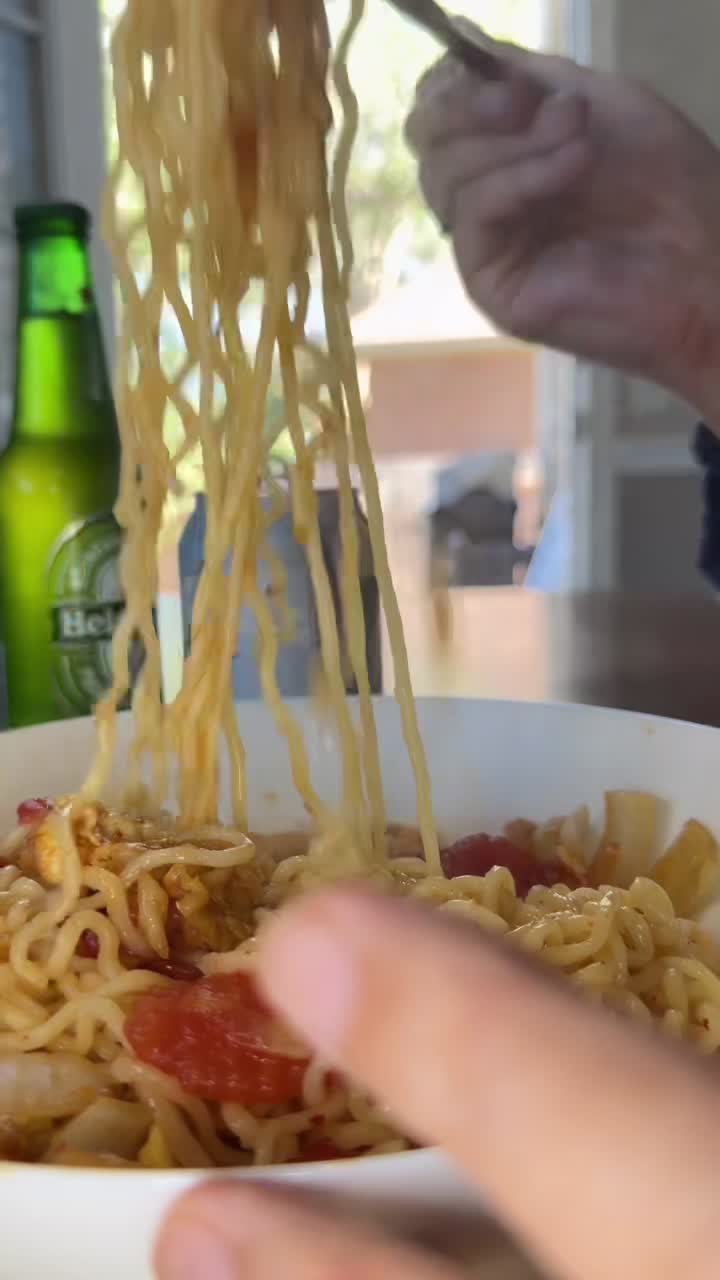
This is station No. 3 of our Ramen Battle, and it breaks the pattern: there is no flavored pack to judge. This bowl is my own invention, the lunch I make for myself more than any other — a plain, cheapest-possible noodle block with no seasoning packet inside, and a pan of kimchi doing all the flavor work. I have joked at home that I should patent it.
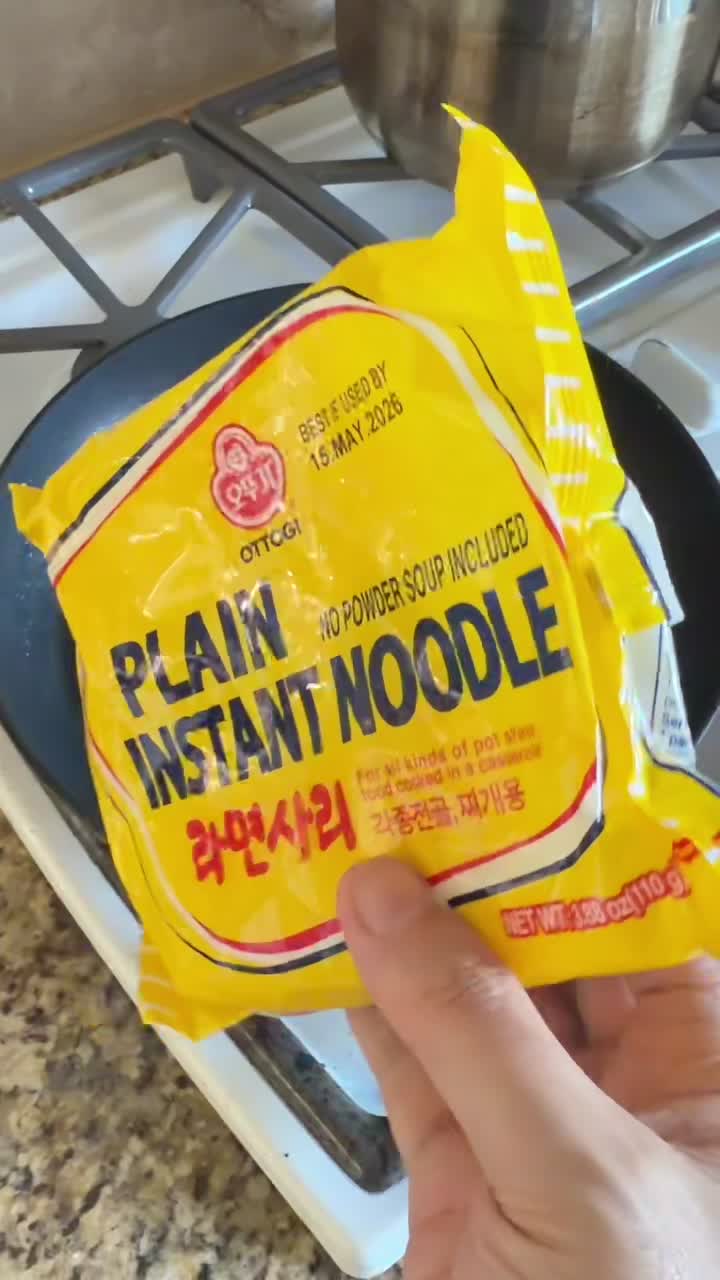
The noodle block itself is the plain kind Korean kitchens keep on hand for budae jjigae, the army-base stew — a bare block, sold to be flavored by whatever pot it lands in. In my kitchen it lands in fried kimchi. The pack in my hand the day this was filmed reads Ottogi PLAIN INSTANT NOODLE (라면사리) — no powder soup included, says the front, in so many words. The plain block I usually name is PLANET; both are the same idea: noodles with nothing on them, waiting for a cook to give them a flavor.
Watch the full lesson: The Great Ramen Battle EP3 — Cheapest Ramen, Transformed: Kimchi Fried Noodles, Fragrant Not Spicy
What you need
- 1 plain noodle block — the cheapest kind, no seasoning packet inside (the pack filmed here: Ottogi PLAIN INSTANT NOODLE, 라면사리; the block I usually buy, I call PLANET)
- Kimchi — well-fermented, and enough of it: it is the whole flavor of the dish
- Eggs
- A tomato, cut in chunks
- An onion, cut in wedges
- A little oil for the pan
- Water for the noodles — keep the pot: a few spoonfuls of its water join the pan
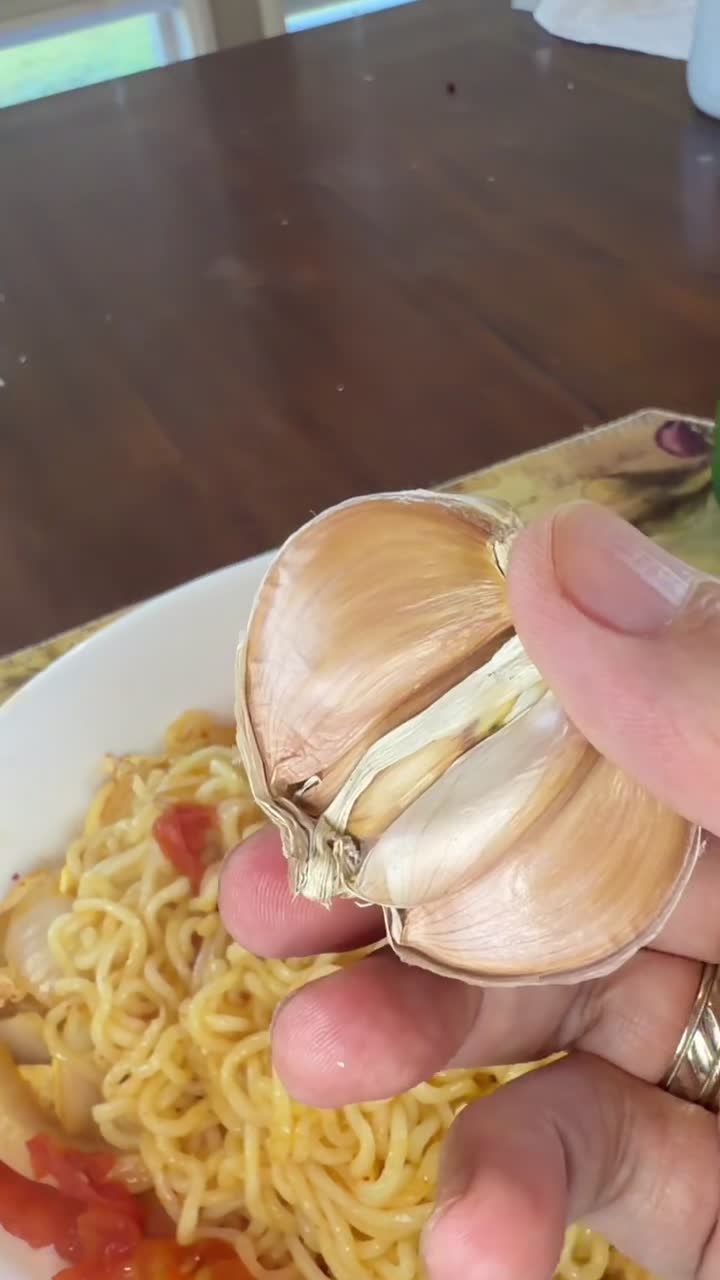
- To serve: 2 cloves of raw garlic and a bottle of beer
- A pot for the noodles, a wide pan, and tongs or chopsticks
My lunch, step by step
1. Meet the plain block
Start with the noodle itself: a bare block in a plain pack, and nothing else in the bag — no seasoning, no oil pack, no flakes. The front of this one says it outright: NO POWDER SOUP INCLUDED. Whatever this bowl tastes like, the pack will not decide it. You will.
Why: a plain block is a blank page. Korean home kitchens keep this kind stocked because budae jjigae and a hundred other pots flavor it their own way — this lunch is simply my way.
2. Chop the kimchi — the finer, the better
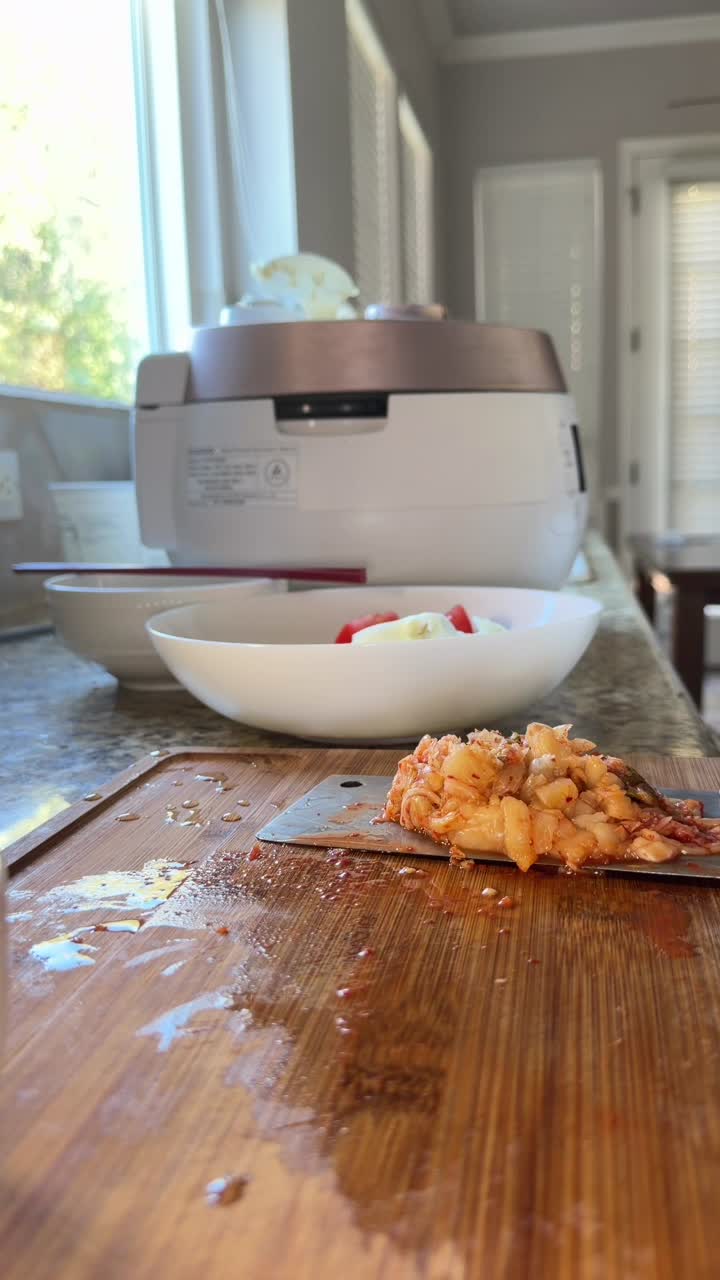
Take the kimchi to the board and chop it fine. Not sliced, not chunked — chopped down small, as fine as you have the patience for. This is not tidiness; this is the recipe. The soul of this bowl is decided here, before anything touches heat.
Why: fine-chopped kimchi gives up its flavor to the whole pan instead of sitting in it in pieces. Big pieces season themselves; small pieces season everything.
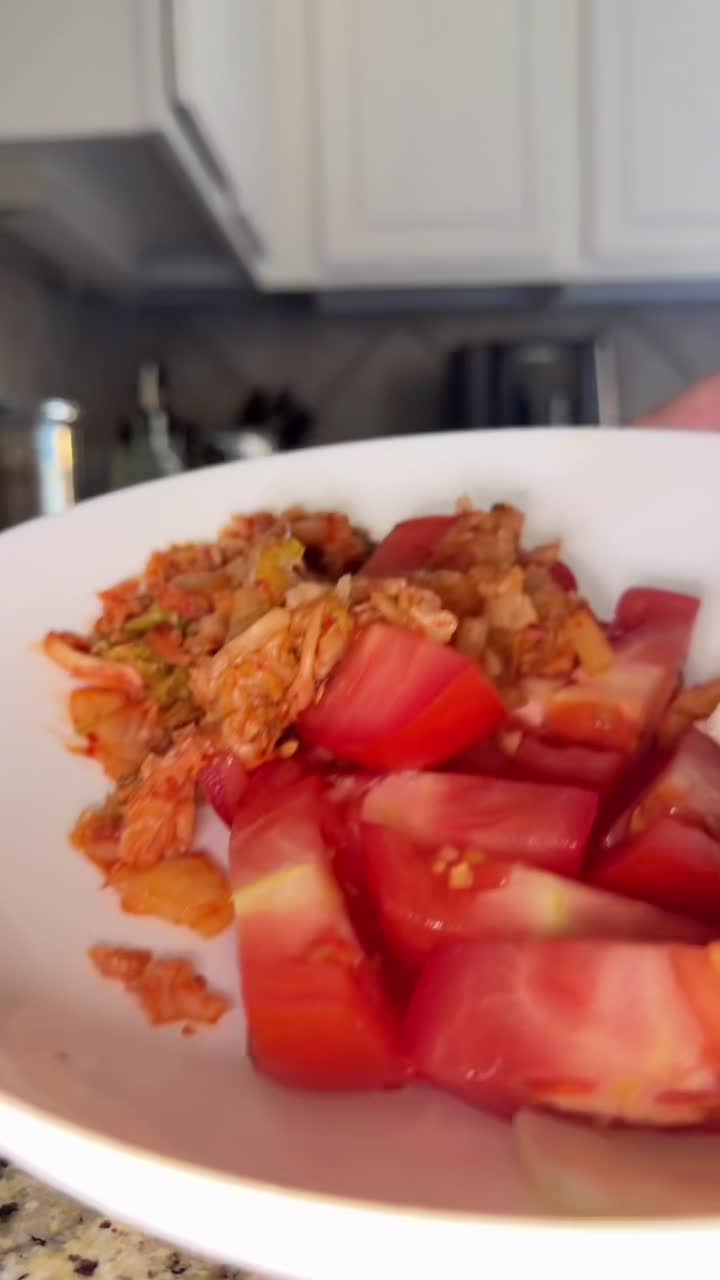
3. The prep bowl: kimchi, tomato, onion
Everything lands in one bowl before the stove gets busy: the chopped kimchi, the tomato in chunks, the onion in wedges. The tomato brings juice and a little sweetness, the onion brings its own sweetness as it fries — both are the standing supporting cast of this lunch.
Why: once the noodles start, both hands belong to the pan. A bowl that holds the whole cast means nothing gets forgotten at the fast moment.
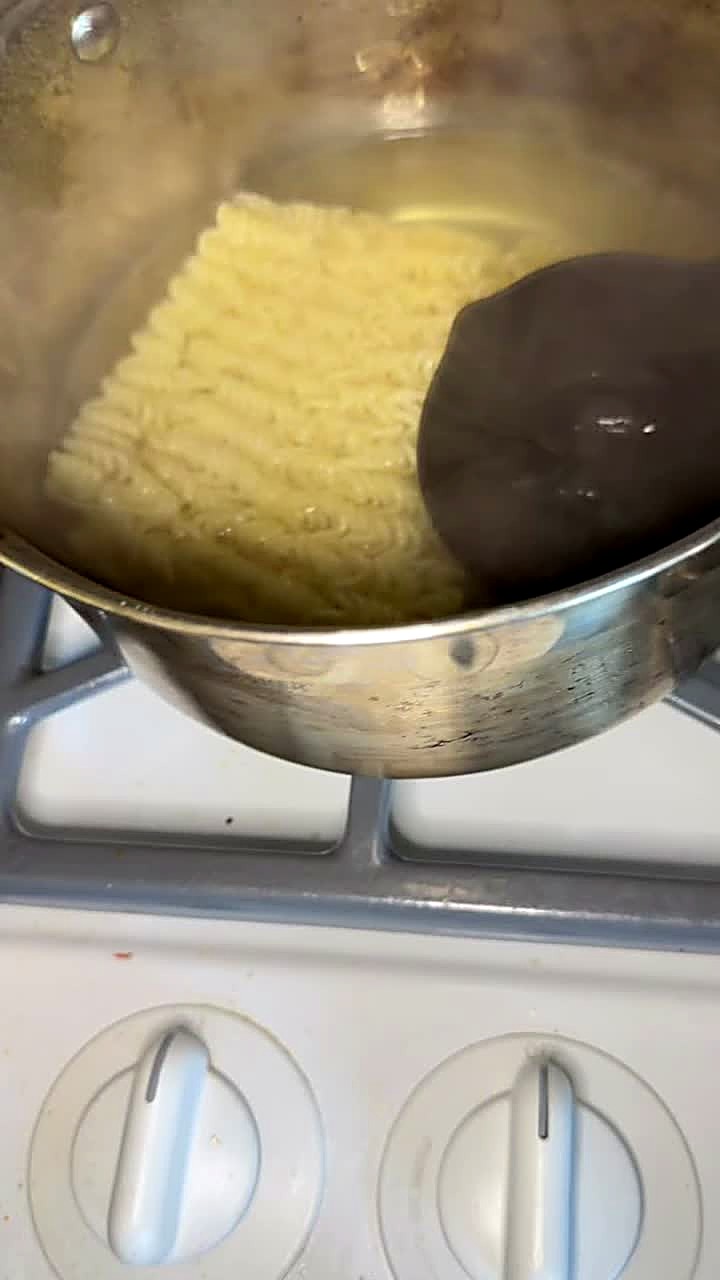
4. Noodles in — heat off — soak to half-done
Bring the water to a boil, lay the block in, and turn the heat off right away. The noodles sit in the hot water and soften on their own, only to half-done — still firm in the middle. Do not walk away from the pot's water when they come out: a few spoonfuls of it are part of the recipe.
Why: half-done is the whole trick. These noodles still have a pan-fry ahead of them; cooked through now, they would fall apart in the toss. The soak finishes them gently while your hands are free for the pan.
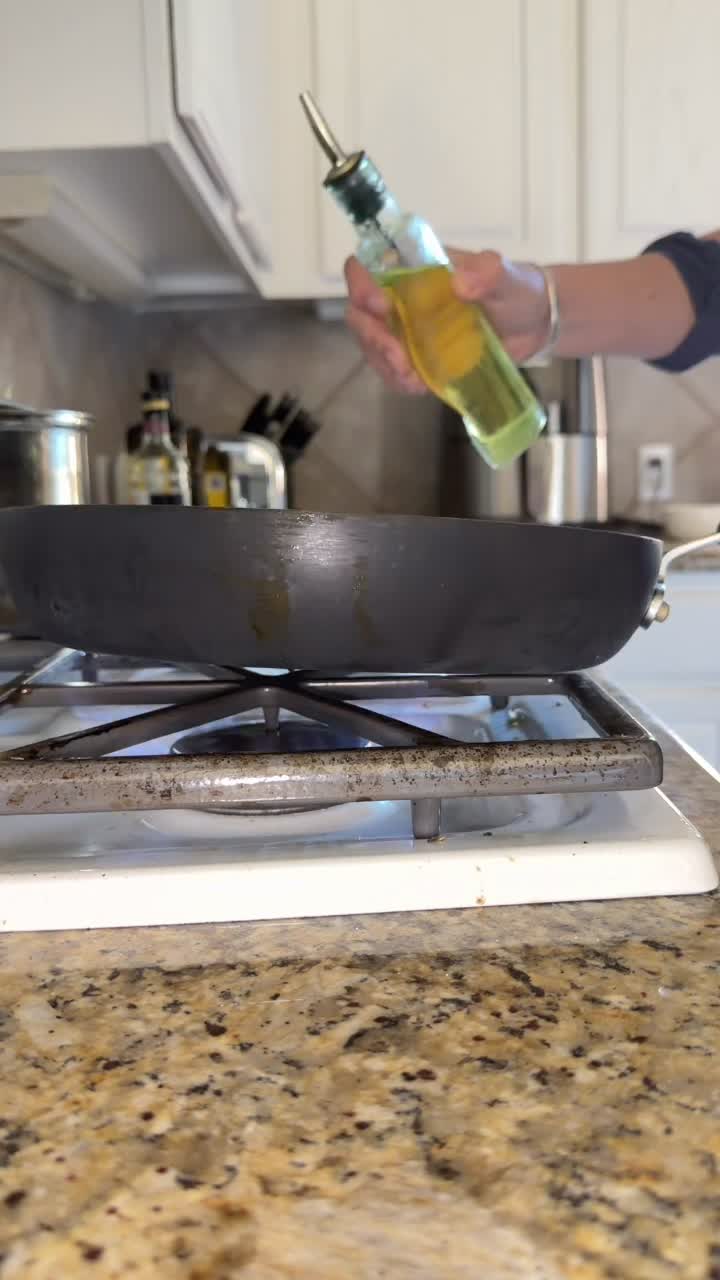
5. While the noodles soak: oil in the pan
The soak is not waiting time — it is pan time. The wide pan goes on the heat and the oil goes in. Everything that happens next happens fast, so the pan is ready before the first thing lands in it.
Why: two clocks, one cook. The noodles soften off the heat at exactly the pace the pan work needs; nothing in this lunch ever waits for anything else.
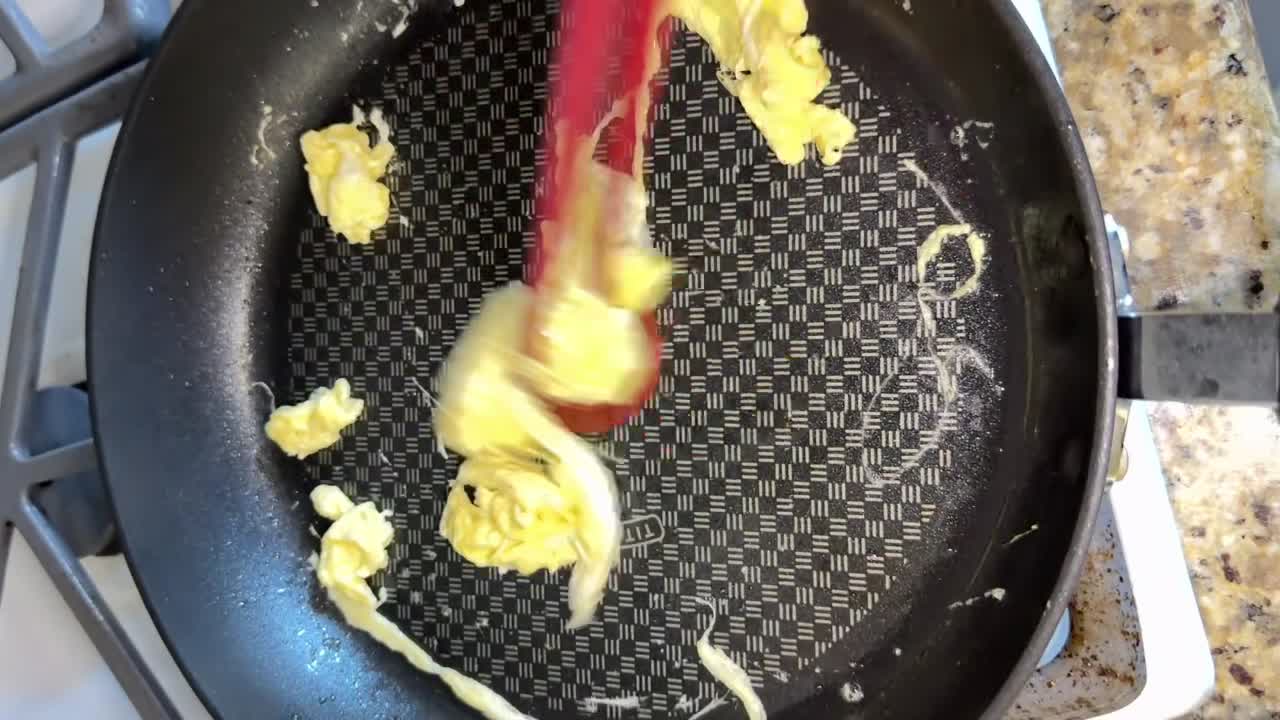
6. Eggs first — fry, then set aside
The eggs go into the oiled pan first and get fried on their own, then come out and wait at the side of the stove. They will be back — but they do not fry with the kimchi, and the kimchi does not wait for them.
Why: egg fried in a clean pan keeps its own soft, golden character. Fried in kimchi juice from the start, it would arrive as a garnish instead of a second flavor.
7. Kimchi in — fry until the aroma fully opens
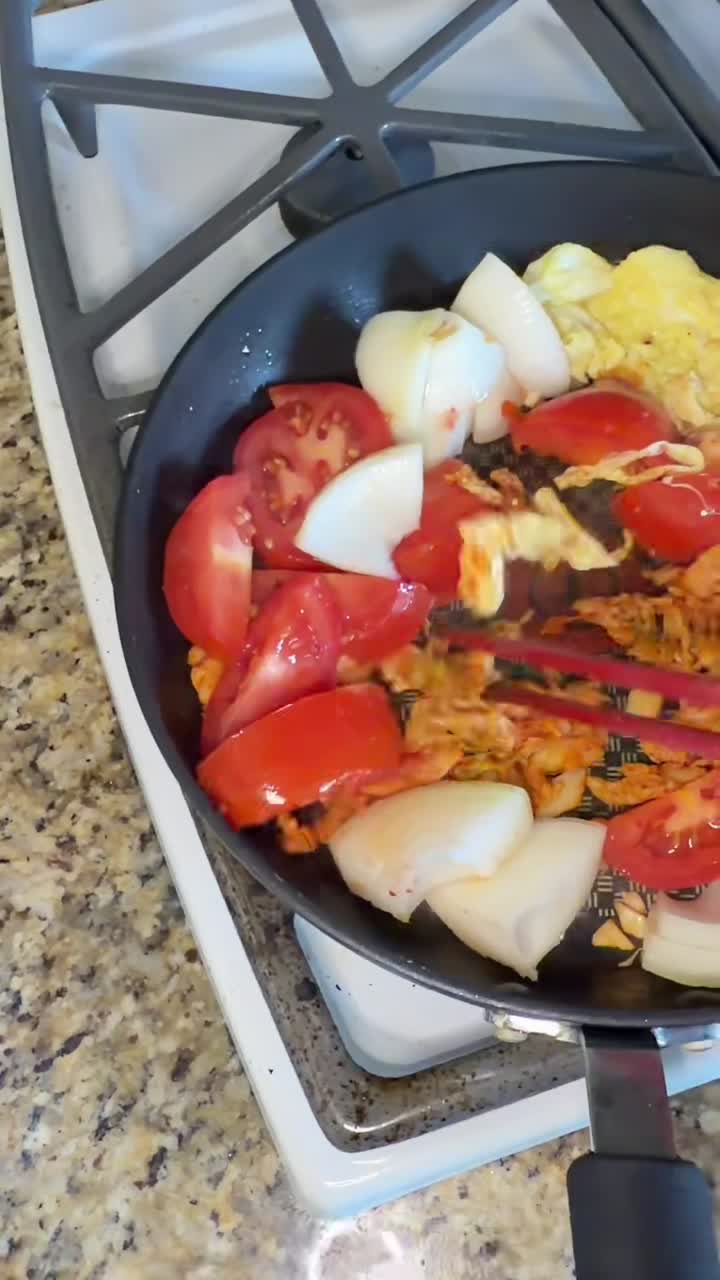
Now the main event. The chopped kimchi goes into the pan with the tomato and onion, and it fries — about half a minute to a minute of real frying, until the smell changes: raw and sharp at first, then deep and round as the kimchi's aroma fully opens. The fried eggs come back to the pan to join it all.
Why: raw kimchi on noodles is a topping; fried kimchi is a sauce. The fry is where this dish stops being spicy cabbage on noodles and becomes what it is — in my own words for it: fragrant, not fiery, the kimchi fried until its aroma completely blooms.
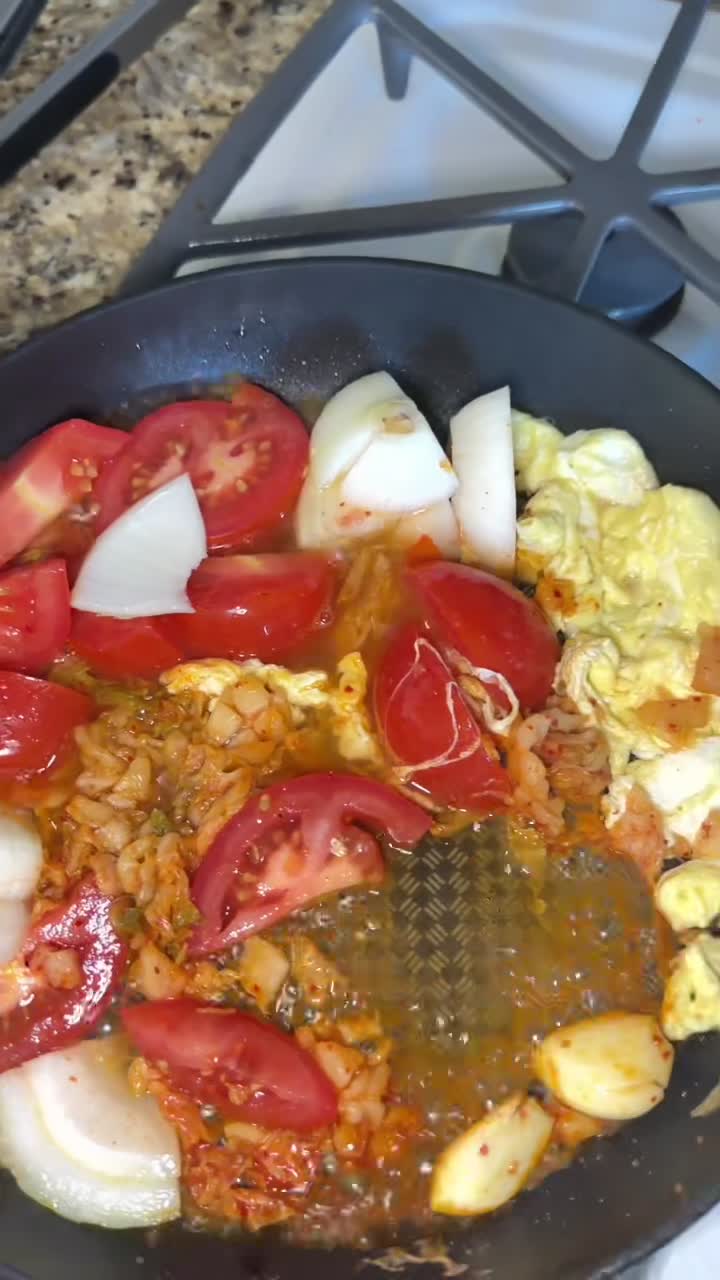
8. A few spoonfuls of noodle water, then the noodles in
Before the noodles move, the pan gets its loosening: two to four spoonfuls of the hot noodle water, as you like it — a little more for a looser bowl, a little less for a drier one. Then lift the half-done noodles out of their pot and lay them straight into the pan.
Why: the noodle water is starchy and hot — it lets the fried kimchi coat every strand instead of clumping on a few. It is the bridge between the pan's flavor and the noodles' surface.
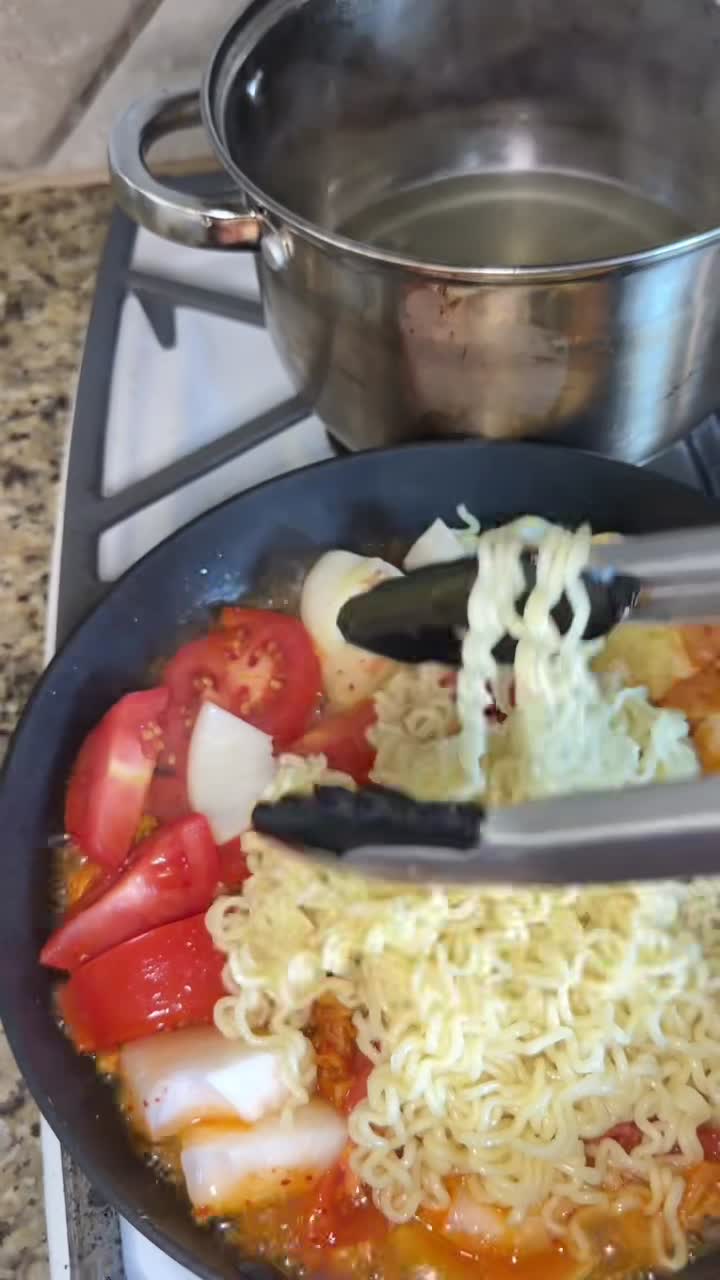
9. Toss until the juices fry dry
Toss everything together over the heat — noodles, kimchi, tomato, onion, egg — and keep it moving until the pan's juices are gone: fried dry, not drained, not soupy. The noodles finish cooking in this toss, drinking in the flavor as the last of the liquid disappears.
Why: dry is the destination. A bowl with liquid left at the bottom is a soup that failed; a bowl tossed dry is this dish — every strand carrying the pan's flavor on itself.
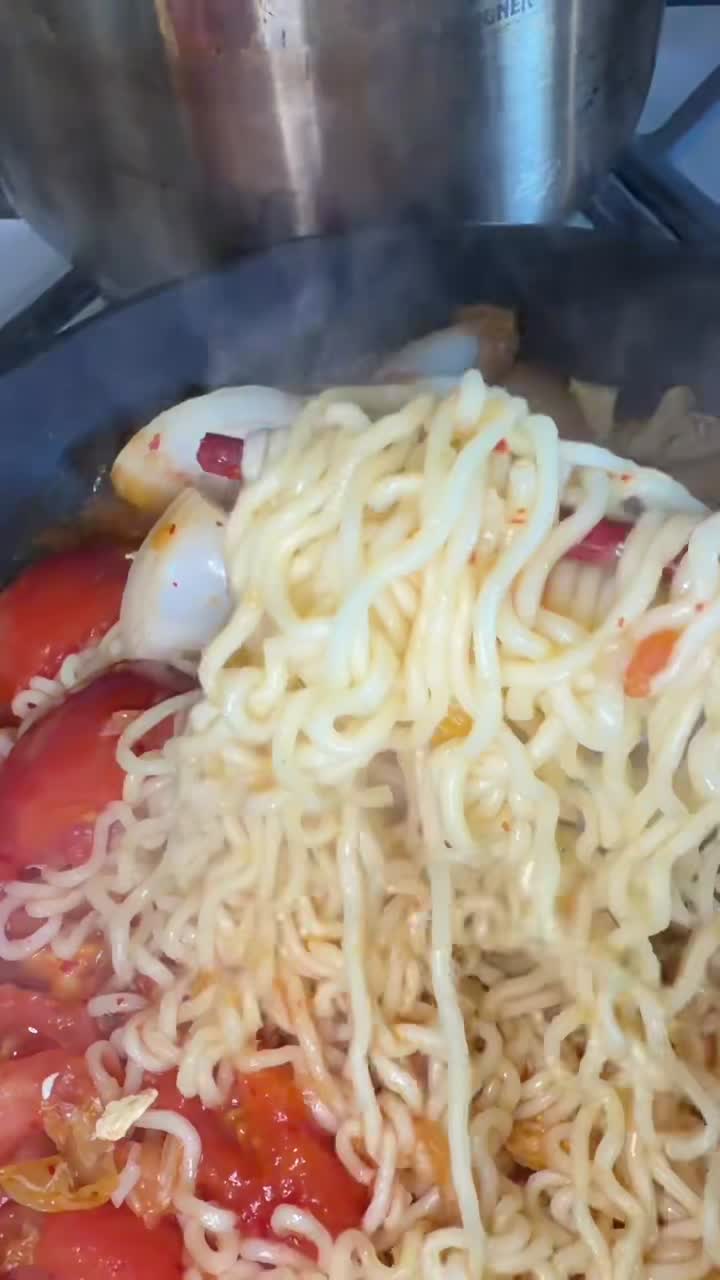
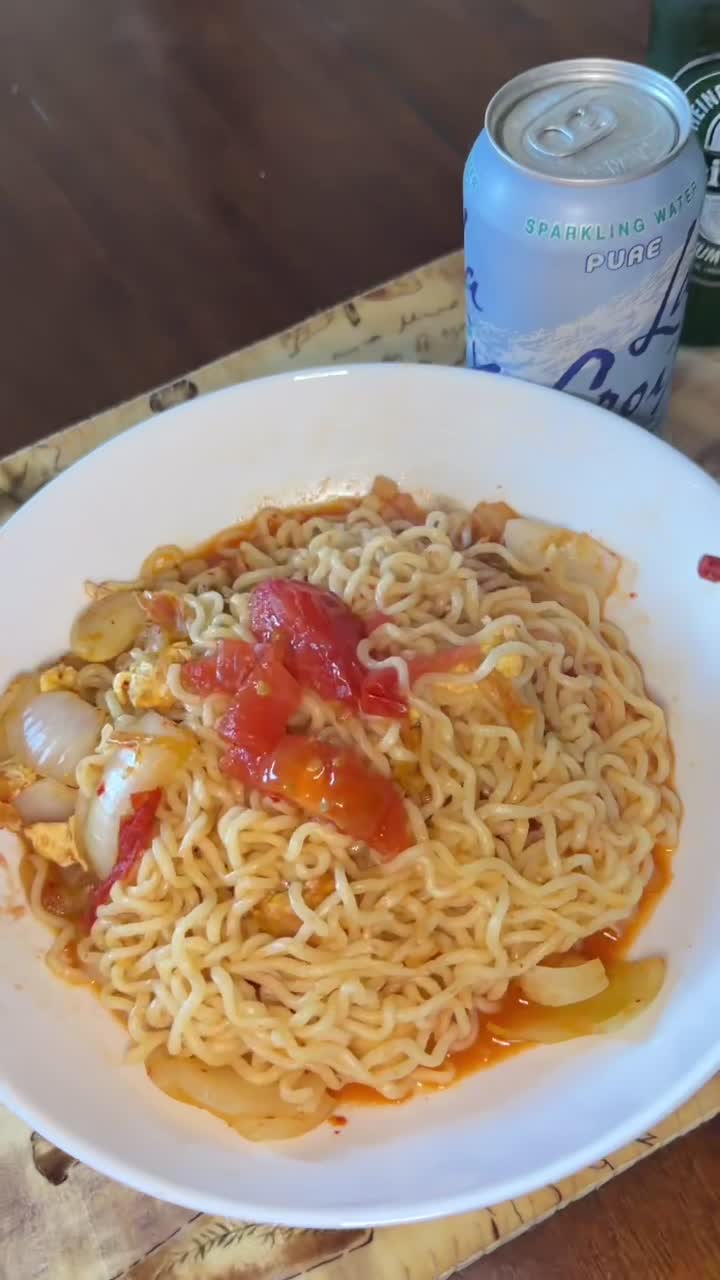
10. Into the bowl
Tip the pan over a wide bowl and let everything slide in. No garnish, no ceremony — the dish arrives exactly as the pan made it, tomato bright on top, the egg folded through.
Why: this is a working lunch, not a plating exercise. The pan did the composing; the bowl just receives it.
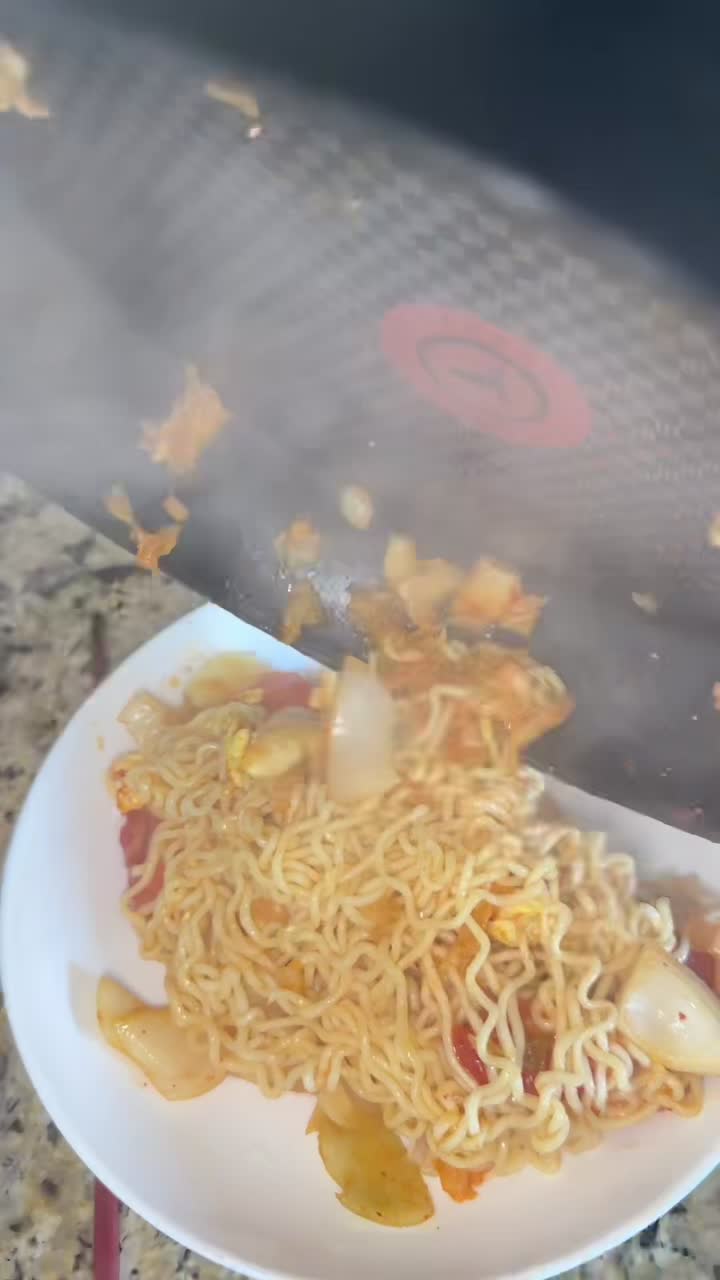
11. Two cloves of raw garlic, one bottle of beer
At the table, the bowl gets its standing company: two cloves of raw garlic, eaten as they are alongside, and a bottle of beer. The garlic is not cooked into the dish and never has been — it is bitten fresh between mouthfuls, sharp against the fried, fragrant noodles. And a family's word, said once and plainly: ramen runs high in sodium, so at our table this is a bowl for tasting and sharing — enjoyed properly, not piled up.
Why: raw garlic with rich, fried food is how this lunch has always been eaten at my table — the fresh bite resets the mouth, and the cold beer does the rest.
The cheapest noodle in the store
There is a small economics to this lunch that I love: the noodle is the cheapest one on the shelf precisely because it promises nothing. No seasoning scientist portioned its flavor; no marketing named its soup. It is the block Korean families buy for budae jjigae, the stew that flavors it in the pot — and a block like that puts the whole value of the meal where it belongs: in the cook's own kimchi, fried by the cook's own hand. The label of the pack filmed here, read off its back, says what a plain block costs the body: 470 kcal per 110 g pack, 620 mg of sodium, 10 g of protein — the numbers live in the roster, with their source written beside them. Everything else about this bowl, the pack had no say in at all.
The soul: kimchi, chopped fine and fried open
If this page has one sentence to keep, it is mine, said the day this was cooked: the soul of this bowl is fragrant, not fiery — the kimchi fried until its aroma completely blooms. Two moves make that sentence true. The chop: fine enough that the kimchi can coat, not just accompany. And the fry: long enough for the raw edge to leave and the deep, round smell to arrive, which at our stove is about half a minute to a minute in the pan with the tomato and onion. Skip either move and you have noodles with kimchi on them. Do both, and you have the lunch I keep coming back to — the one I joke could carry a patent, if lunch could be patented.
Watch this bowl come together: EP3 — Kimchi Fried Ramen, Fragrant Not Spicy 🔥 The Great Ramen Battle
Where this bowl goes wrong
✕ Kimchi not chopped fine, or not fried
Chunked kimchi tossed on at the end is a topping, and the bowl tastes like two separate things. Chopped fine and fried until its aroma opens, the kimchi becomes the flavor itself. There is no third version of this dish.
✕ Noodles cooked through before the pan
A fully cooked noodle has nothing left to give the toss — it breaks, goes soft, and turns to mush in the pan. Half-done in the soak, finished in the fry: that order is the texture.
✕ Juices left in the pan
Stop tossing early and the liquid pools at the bottom of the bowl — you have made a thin soup, not this dish. Keep it moving until the juices fry dry and every strand shines on its own.
Questions, answered
Which noodle block, exactly?
Any plain block with no seasoning packet — that plainness is the requirement, not a brand. The pack filmed for this guide is Ottogi PLAIN INSTANT NOODLE (라면사리), 110 g, 'NO POWDER SOUP INCLUDED', made in Korea; the block I usually name when I talk about this lunch is PLANET, 70 g with a halal mark. Both records stand in the roster note, marked to be confirmed — what matters at the stove is that the block arrives bare.
Is it spicy?
No — and that is the point of it. The fried kimchi gives up its raw edge in the pan; what reaches the bowl is aroma first. In the cook's own words: fragrant, not fiery, the kimchi fried until its aroma fully blooms. If you want fire, the Buldak shelf is two stations back in this series.
Why turn the heat off under the noodles?
Because the noodles only need to reach half-done, and hot water alone gets them there while the pan work happens. They finish in the toss, drinking the pan's flavor. Boiled through at the start, they would break apart before the bowl.
What are its numbers?
Off the back label of the pack filmed here (110 g): 470 kcal, sodium 620 mg, total fat 15 g (saturated fat 8 g), carbohydrates 75 g, fiber 2 g, sugars 2 g, protein 10 g, cholesterol 0 mg. The roster row keeps these with their 'read off our own pack' badge; they belong to that pack, not to any other plain block.
Can I skip the raw garlic and beer?
You can, and the bowl still stands — they are the table company, not the cooking. But they are how this lunch is eaten at its inventor's table: two raw cloves bitten fresh alongside, one cold beer. Try it once his way before you edit it.
Sources and related reading
- How Cook AI works — the method behind these guides (XingAI Cook)
- The Korean Ramen Roster — this noodle's row, its label numbers, and both brand accounts side by side (XingAI Cook)
- Watch the EP3 Short — Kimchi Fried Ramen in 31 seconds (XingAI Cook on YouTube)
- Neoguri Stir-Fry Seafood — Ramen Battle station No. 2 (XingAI Cook)
- Shin Green — Ramen Battle station No. 1 (XingAI Cook)
That is the whole invention: the cheapest block in the store, a pan of kimchi chopped fine and fried until it smells like itself completely, and a bowl that is fragrant instead of fiery. A lunch invented at one family's stove, eaten with raw garlic and a cold beer, and shared here the way it was shared with me by my own hands. Thank God for simple food that tastes like thought. — XingAI Cook: Never Wonder What's For Dinner.
Cooking ideas, not nutrition or medical advice. Check allergens and cook meat and eggs to safe temperatures.