
THE GREAT RAMEN BATTLE · STATION NO. 9 — THE JJAJANG DUEL
Chapagetti vs Ilpoom Jjajang — The Traditional One Meets the Spicy Newcomer
Two black bean packs, one table, one cook. The spicy first-timer from station No. 7 scored 8.5; the traditional pack answers with a five-minute bowl — cucumber in, garlic beside, three pieces of this morning's galbi on top. His verdict: 8.0 — and both packs stay in the pantry.
His brief for the challenger, in his own words: this one plays it simple, fast and traditional. Good — never showy, and it will never let you down.
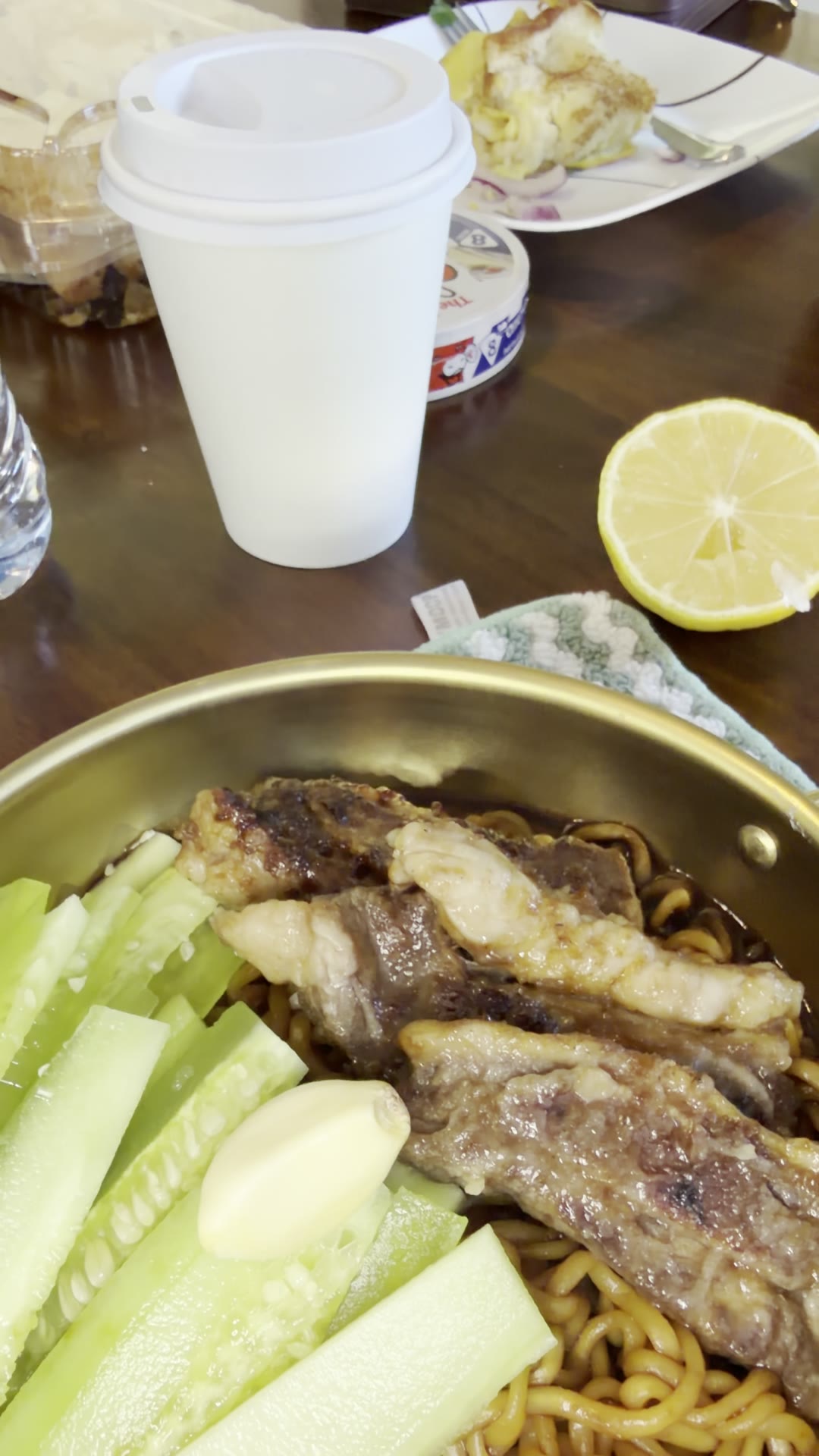
A duel needs two corners, and this one was days in the making. At station No. 7 he opened a black bean pack he had never eaten — Paldo's Ilpoom Jjajang, the spicy export version — and scored it 8.5. Two days later, lunch was the other kind of jjajang: Nongshim's Chapagetti, the pack he calls the very traditional way, cooked exactly the way he always cooks it and judged against a newcomer still fresh in his memory.
Nothing about the challenger is built to surprise, and that is the point of it. The method below runs on his own clock: three minutes of boiling, a steam rest that does not count, one minute of cucumber, thirty seconds of mixing — a bowl on the table inside five minutes. The duel is scored at the end of the page, and the half point between the two packs turns out to have a name.
Watch the full lesson: EP9 — The Jjajang Duel: Chapagetti vs Ilpoom, 8.0 vs 8.5 🍜 The Great Ramen Battle
What you need
- One pack of Nongshim Chapagetti (127 g) — the challenger at station No. 9
- Across the table, the title holder: one pack of Paldo Ilpoom Jjajang, spicy export version (190 g), from station No. 7
- A cucumber, cut into strips — at his table this is a requirement, not a garnish
- Raw garlic, a clove or more — the second requirement
- His way on the day: three pieces of grilled beef galbi, kept back from this morning's grill
- Water and a lidded pot — his is glass, so the noodles stay in sight
His five-minute method, as it happened
1. Meet the traditional one
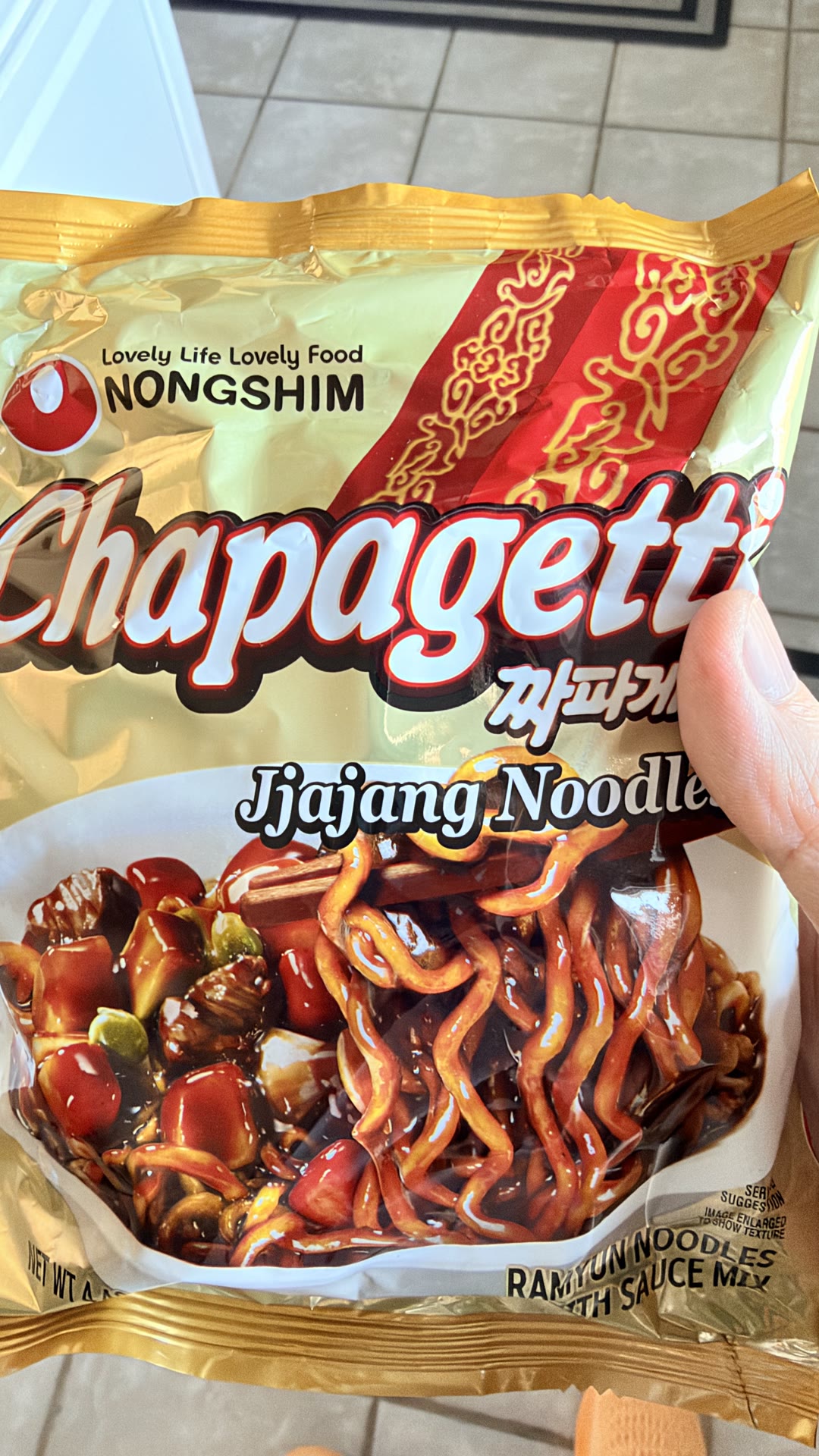
The gold pack is Nongshim's Chapagetti — 짜파게티, Jjajang Noodles, Ramyun Noodles with Sauce Mix, net weight 4.48 OZ (127 g). His word for it, before the water even boiled: the very traditional way. Across the table sits the Ilpoom at 190 g, half again as heavy and carrying heat. Two black bean packs could hardly be less alike.
Why: a duel is only fair when both corners are named properly. The weights are pack facts, read off the two packs themselves.
2. Water first, to a rolling boil
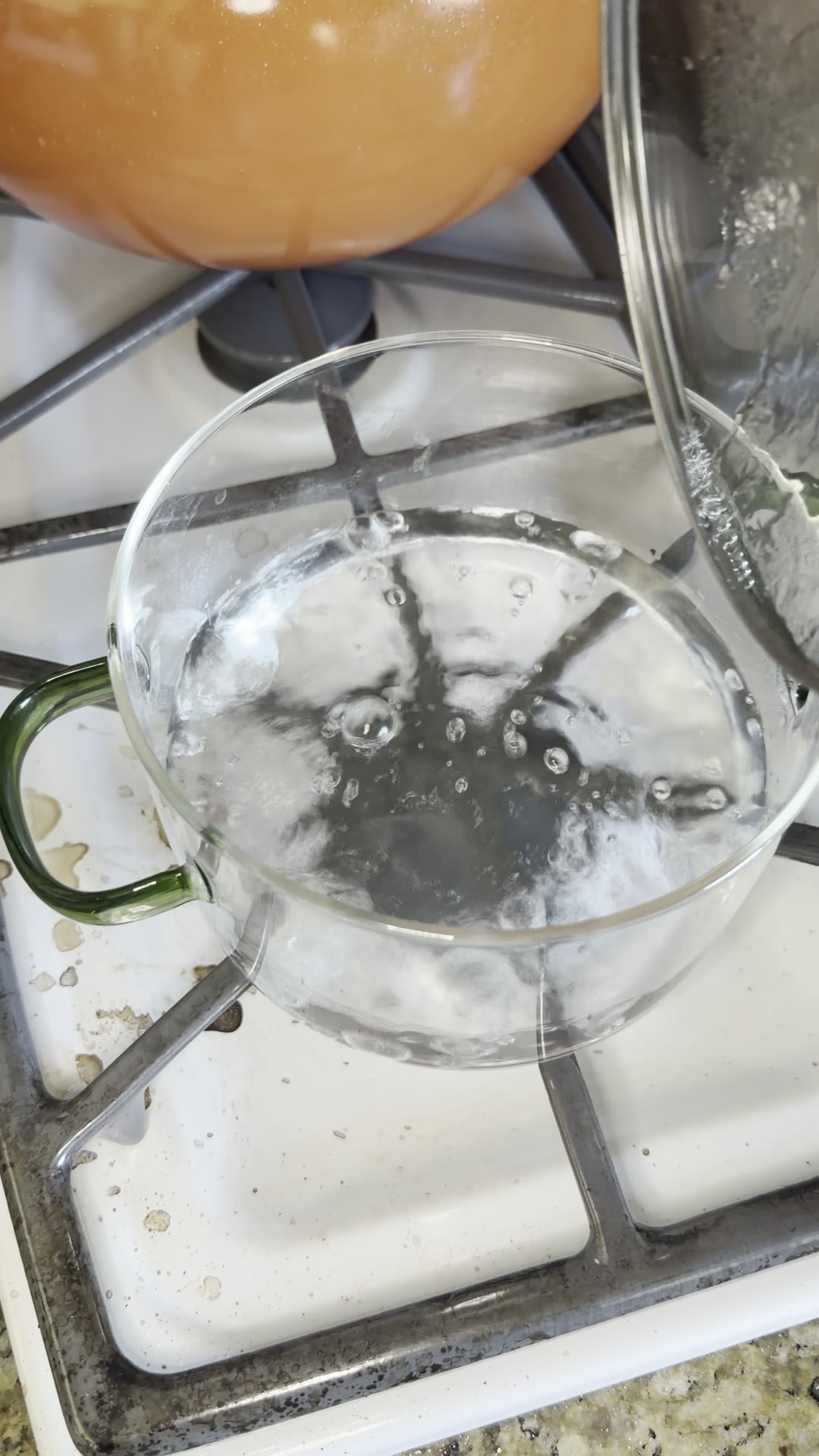
His clock starts with the water, not the noodles. The glass pot comes all the way to a rolling boil before the pack is even opened — nothing goes in early, nothing warms up slowly.
Why: a noodle that meets boiling water head-on cooks evenly from the first second. A lazy start makes a lazy noodle.
3. Noodles in — three minutes, one good loosen
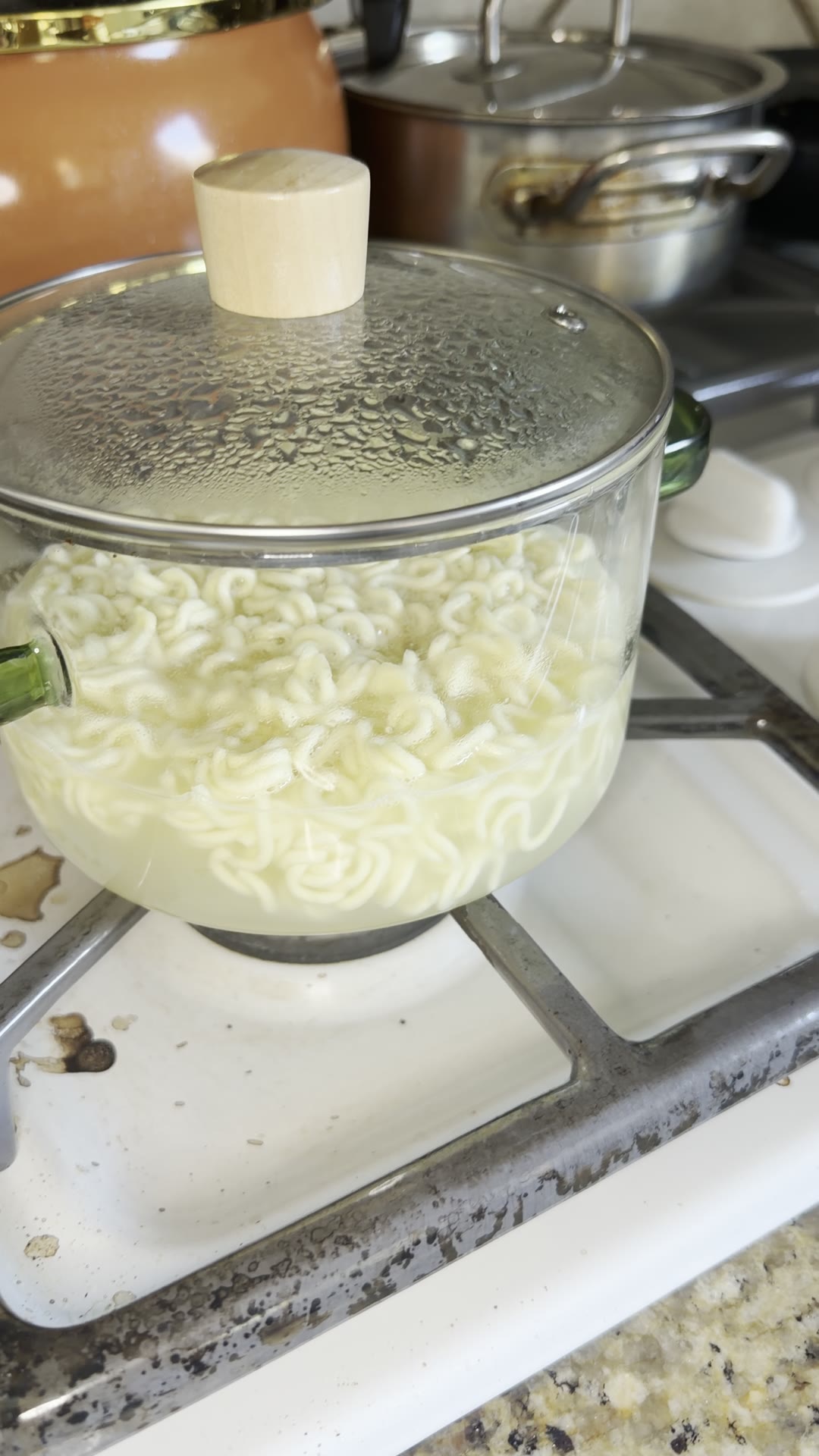
The cake goes in, and somewhere in the two-to-three-minute window he lifts the strands and loosens them once — his word for it is a pick-and-turn — so every strand cooks at the same rate. His count for this stage is three minutes, and he does not fuss with it beyond that one loosen.
Why: one loosen, not constant stirring. The strands separate without breaking, and the clock stays honest.
4. Heat off, lid on — the rest is free
At the end of the three minutes the heat goes off and the lid goes on. The noodles finish in the trapped steam, and this is the move his chew depends on. The rest does not count against the five minutes — while the lid is on, his hands are busy somewhere else.
Why: a noodle steamed off the heat stays springy. Boil it all the way through on the flame and the chew is gone.
5. While it rests: cucumber, one minute
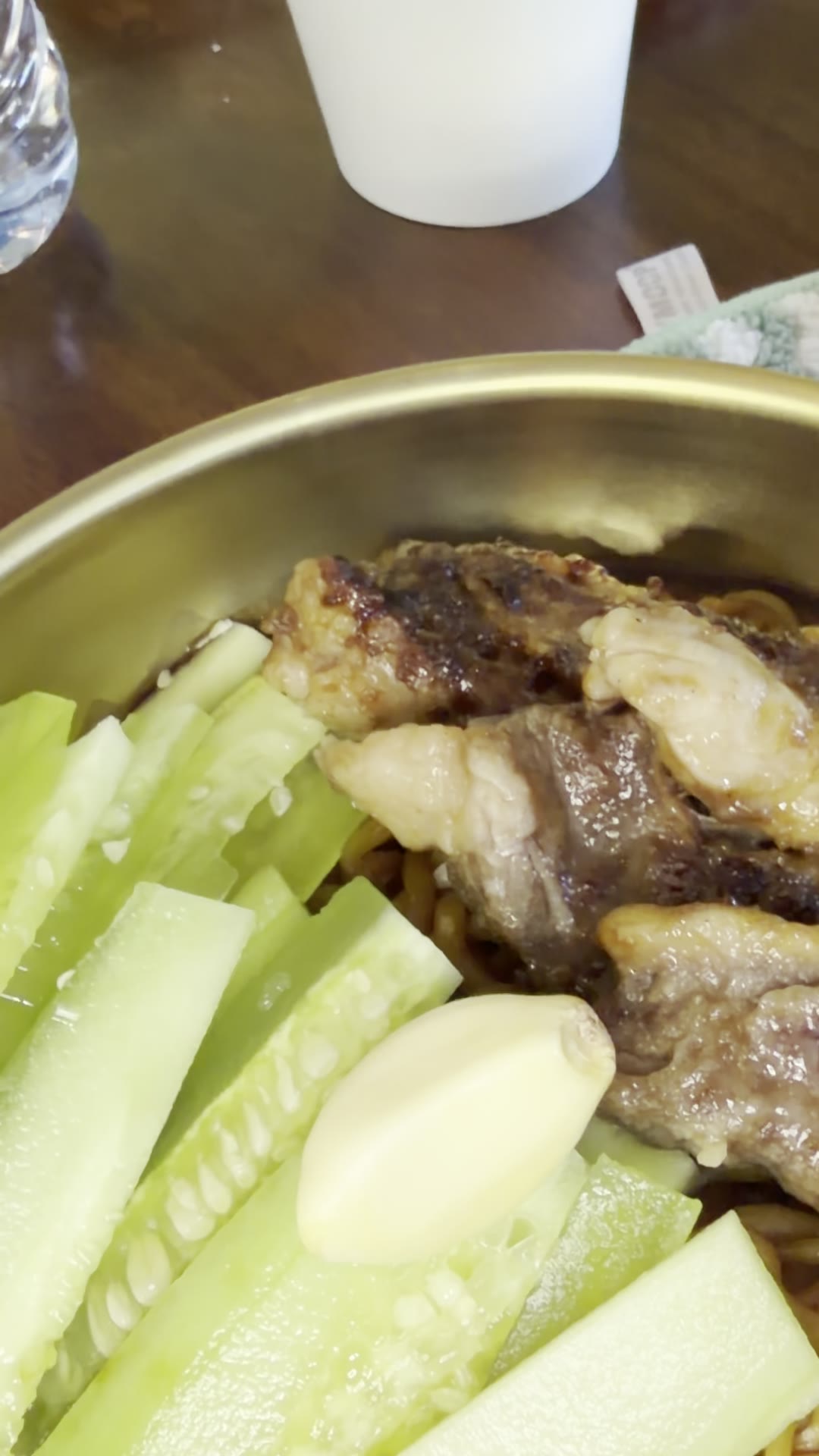
The resting minute is when the cucumber gets cut into strips. At his table, cucumber with jjajang is not decoration — it is a required part of the bowl, for this pack exactly as it was for the Ilpoom. One minute of knife work, done inside time the noodles were spending anyway.
Why: cold crunch against hot black sauce. Cut it during the rest and it costs the bowl no time at all.
6. Pour off two-thirds of the water
Lid off, and most of the cooking water leaves the pot — two-thirds of it, by his count. What stays behind is just enough to carry the sauce across every strand.
Why: sauce into a full pot of water is soup. Two-thirds out is what makes this a sauce bowl instead of a broth.
7. Sauce in — thirty seconds of mixing
The sauce mix goes in and the mixing is quick and complete: thirty seconds, until every strand is coated and dark. The camera caught the result rather than the motion — the bowl at the table, glossy under the galbi — but the count is his, given as he ate.
Why: thirty seconds, no more. The sauce is a coating, not a soup — mix until it clings, then stop.
8. His table: galbi, cucumber, garlic
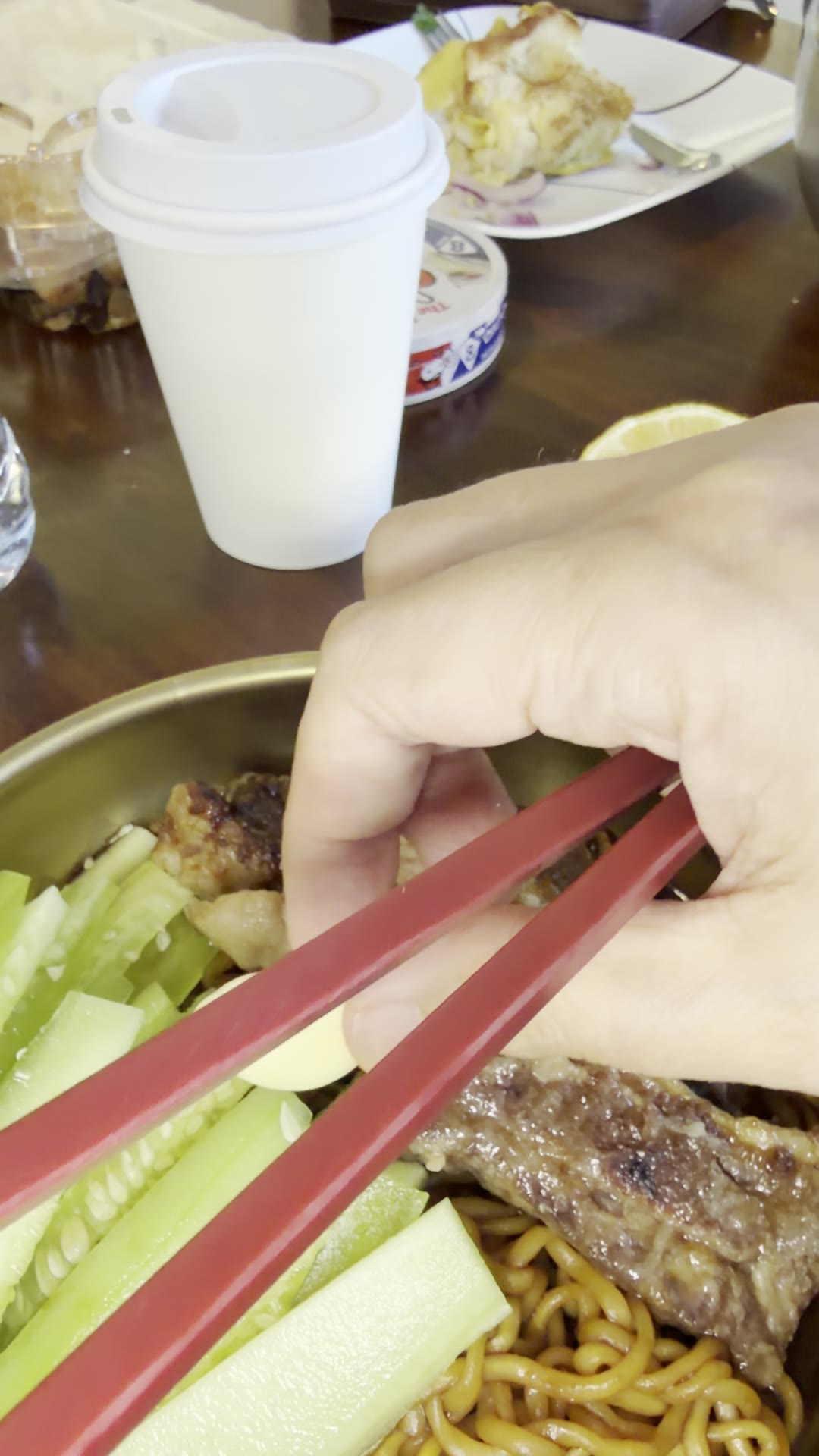
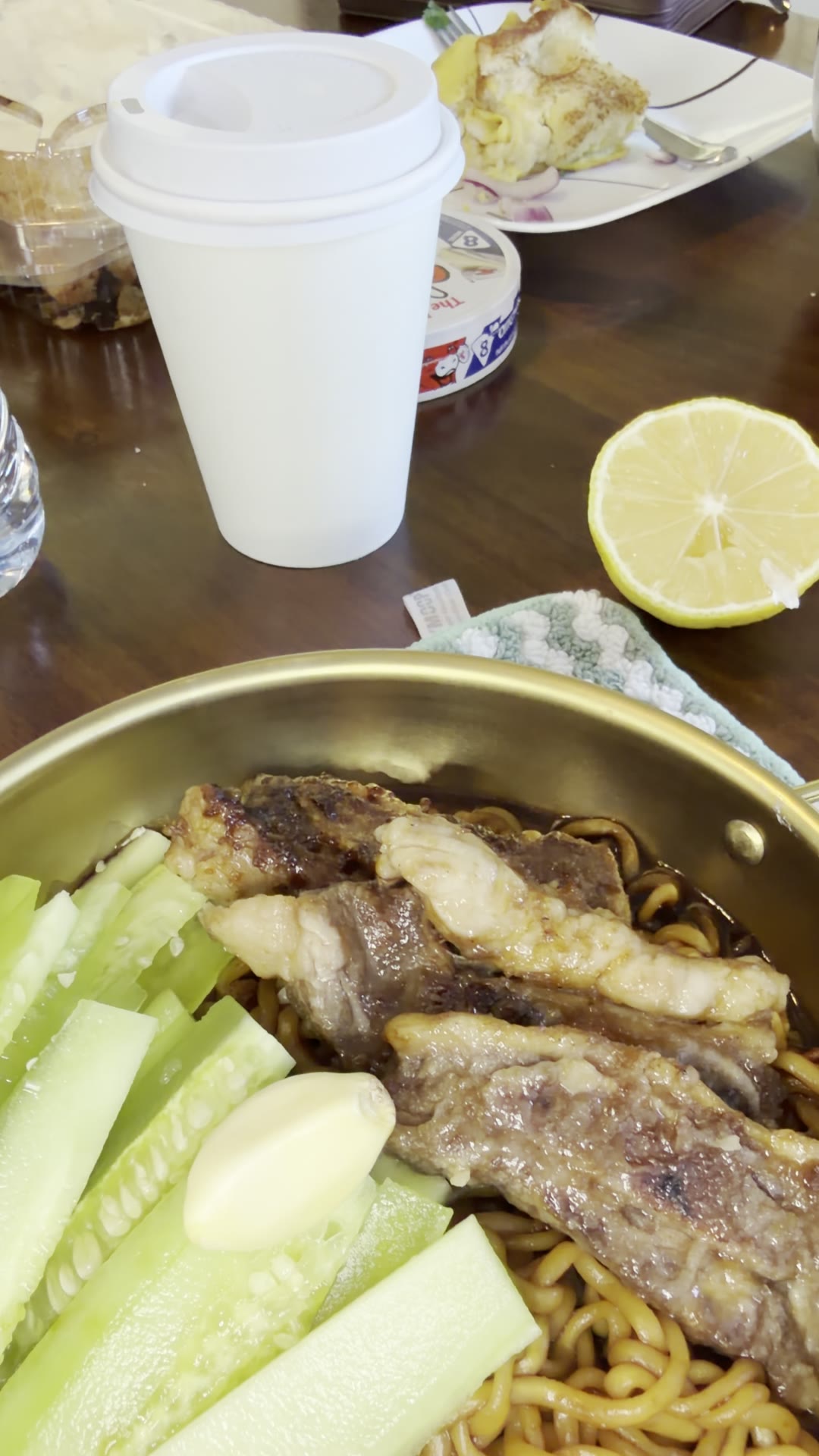
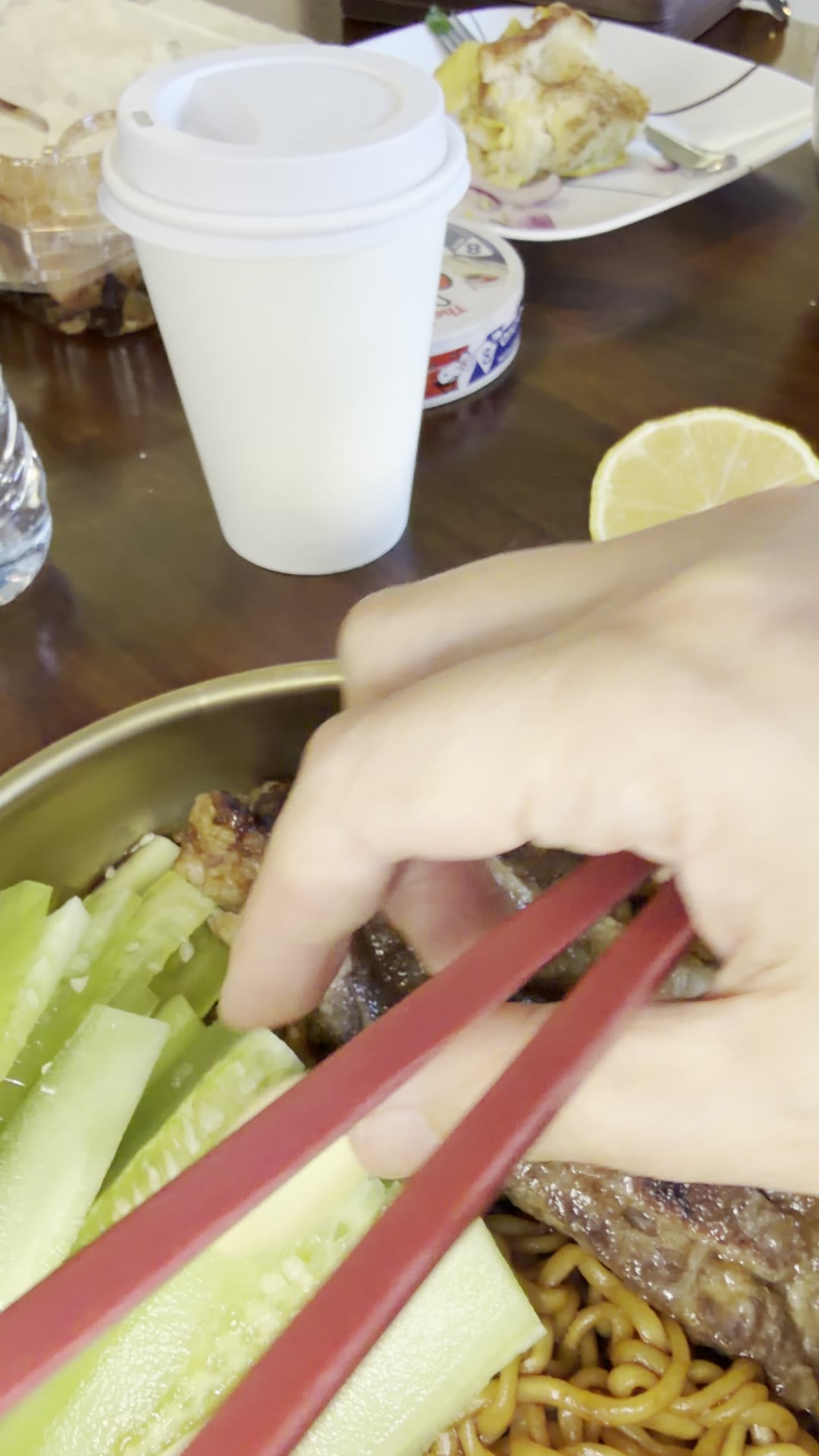
Onto the bowl go three pieces of beef galbi, grilled that morning and kept back for lunch — his verdict on the pairing was a perfect match. The cucumber strips and a raw garlic clove complete the bowl: the same two requirements he set for the Ilpoom at station No. 7, honored again here.
Why: the pack is the base, not the meal. Leftovers with a job to do are how this table has always eaten.
The other corner — station No. 7's Ilpoom
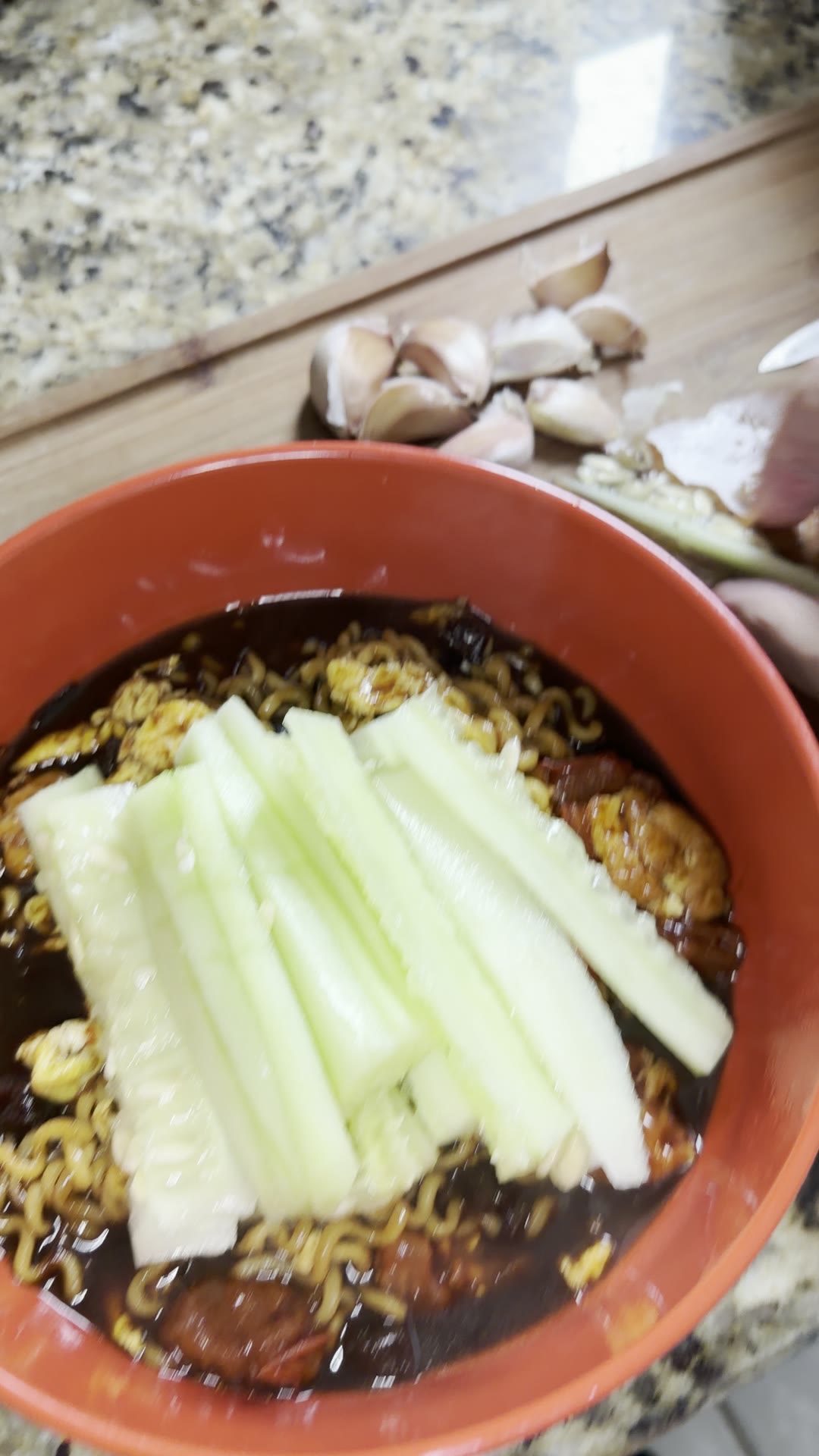
The Ilpoom arrived as a first-timer: the spicy export version, 190 g, with a real black bean sauce sachet rather than a powder. His method there was this method's cousin — boil, pour off more than half the water, sauce in and mix until it shines — with lunch's leftover tomato-egg folded in. His two jjajang rules were set at that table: cucumber strips get mixed in, the normal way; and a raw garlic clove goes with the bowl, because noodles without garlic lose half their fragrance. It scored 8.5 out of 10, with a promise to buy it again. Its full record lives on station No. 7's page, linked below.
The verdict — where the half point lives
Ilpoom 8.5, Chapagetti 8.0 — and the half point is not about which bowl tastes better. The Ilpoom wins on surprise: a little heat under the black bean sauce, a flavor he had never met, the pleasure of a first time. The Chapagetti is not trying to surprise anyone. What it wins on is everything else — five minutes from pot to first bite, the traditional flavor, a bowl gentle enough for kids and grandparents and anyone who does not eat spicy food. His ruling, and this page's: both packs are recommended. Both are pantry staples — the one you reach for when you want a small thrill, and the one you reach for when you want lunch to simply be right.
Where this bowl goes wrong
✕ Boiling it all the way through
Skip the off-heat rest and the chew goes with it. The steam finish is the method itself, not a pause in the middle of it.
✕ Leaving the water in
Two-thirds of the water has to leave before the sauce goes in. Sauce into a full pot is soup wearing a jjajang costume.
✕ Cucumber and garlic as garnish
At his table both are requirements, not decoration — the cucumber for the crunch, the garlic for half the fragrance. Leave them off and you have cooked a different, lesser bowl.
✕ Judging it against the fire packs
This pack is not chasing the Buldak end of the roster. Score it on speed, tradition and kindness to the whole table — that is the game it is playing, and it wins that game.
Asked at our table
Two black bean packs — what is actually different?
Size, heat and temperament. The Ilpoom is the spicy export version at 190 g with a real black bean sauce sachet, met for the first time at station No. 7. The Chapagetti is the traditional one at 127 g with no heat at all, cooked his five-minute way. Same family, different jobs.
Which one is spicy?
Only the Ilpoom, and only a little — his note was heat under the sauce, not over it. The Chapagetti carries no heat, which is exactly why he recommends it for kids, grandparents and anyone who does not eat spicy food.
Do the cucumber and garlic rules apply to every jjajang?
At his table, yes — both packs got the same treatment. On the Ilpoom the cucumber strips are mixed right into the bowl, which he calls the normal way; on today's Chapagetti they went over the finished bowl with the galbi. The raw garlic stands beside both. The rule travels; only the pack changes.
What goes with the traditional bowl in summer?
His suggestion: cucumber first of all, especially in summer — and the bowl also sits well with Korean sweet radish (danmuji) or a little kimchi on the side. Neither was on today's table; both are his standing recommendations for this pack.
Sources & the cook's own words
Station No. 9, cooked and eaten Nov 11, 2026. Next in the battle: station No. 10 — a new bowl steps up. Pack facts on this page were read off the real pack, Nov 11, 2026: Nongshim Chapagetti (짜파게티), Jjajang Noodles, Ramyun Noodles with Sauce Mix, net weight 4.48 OZ (127 g). The Ilpoom figures are station No. 7's, read off that pack on Nov 9, 2026: spicy export version, net weight 190 g. Label figures beyond those were not fully legible and are not printed here. The five-minute method, the cucumber and garlic rules, the galbi pairing, both scores and the verdict are the cook's own, given Nov 11, 2026. Filmed at our table the same day.
Cooking ideas, not nutrition or medical advice. Check allergens and cook meat and eggs to safe temperatures.