
THE GREAT RAMEN BATTLE · STATION NO. 4
Namja Ramen, His Favorite — One Pot, Lid Checks, Salad on the Side
The cook's own favorite of the whole roster, cooked the way he cooks it for himself: one pot, the lid lifted about once a minute, greens and eggs in — and his daily salad beside the bowl. Under ten minutes, prep to eating.
Of the forty packs on this table, this is the one he reaches for when nobody is filming. His verdict before we cooked a thing: the flavor is light and clean, and the noodles are the chewy ones. We cooked it his way and checked.
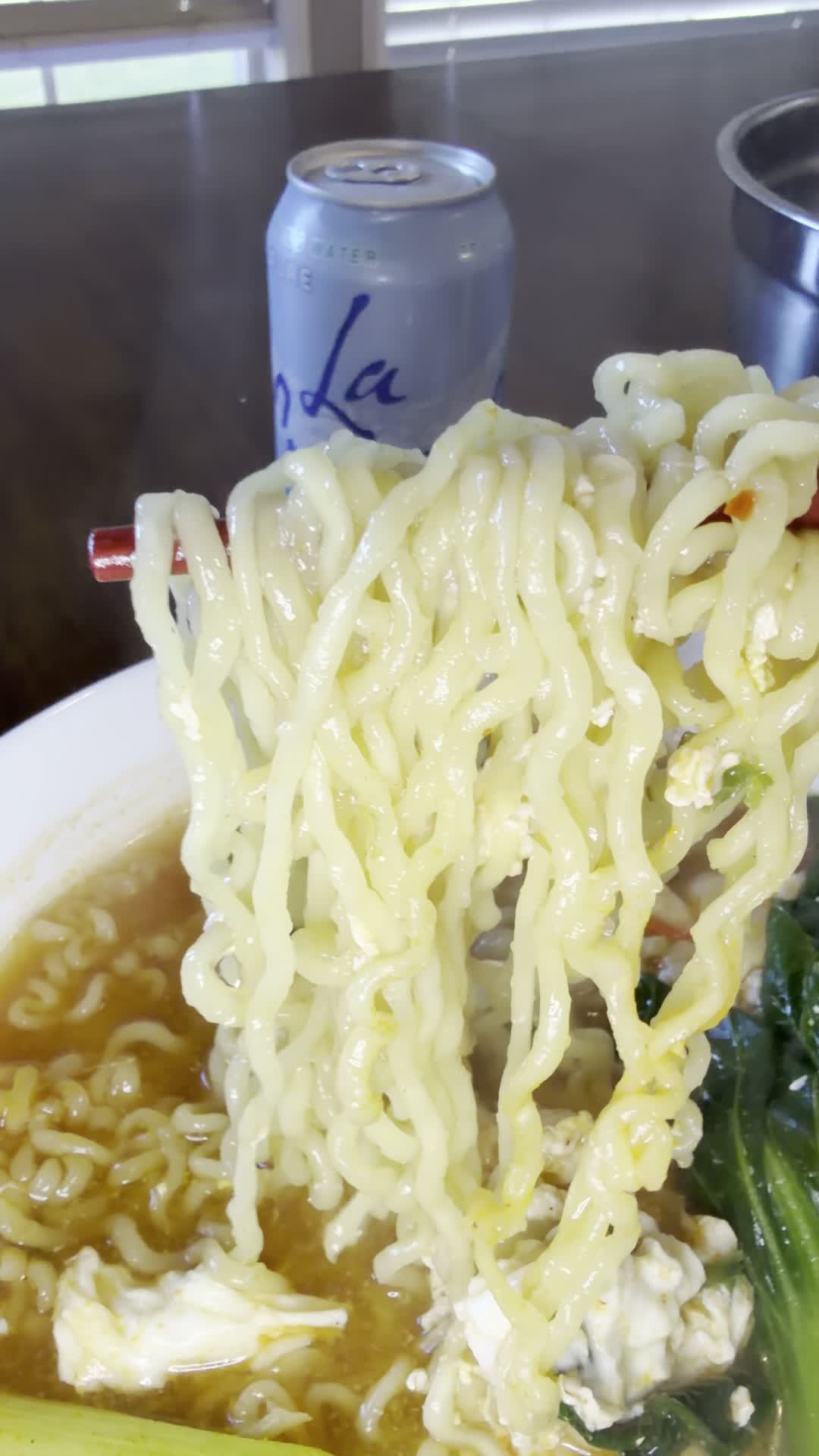
Every battle lineup has a home favorite, and this is his. Paldo's Namja Ramen — the black pack with the baseball player — is the ramen he has eaten most over the years, the one he names first when the camera is off. So station No. 4 gets no reinvention and no upgrades: his ordinary lunch, filmed as it happened, in the order it happened.
The method is the simplest on this site. Water on, cake in, greens in, soup base in, eggs cracked in — one pot, start to finish, with one personal rule running through it: he lifts the lid about once a minute to look at the noodles, because that is how he knows. Beside the bowl, as on most days, sits the vegetable salad he makes for lunch — the noodles are only half of his midday meal.
Watch the full lesson: How to Make Simple Namja Ramen at Home in Under 10 Minutes
What you need
- One pack of Paldo Namja Ramen (115 g) — noodle cake, soup base and flakes
- Water — the pack's own measure is 500 mL
- Baby bok choy, washed — a small handful of leaves
- Eggs — raw ones for the pot, a boiled one for the salad
- Green onions, cut in lengths
- For the side, as served at our table: tomato, cucumber and lemon with the boiled egg
The cook's own way, filmed as it happened
1. Meet the pack
Paldo Namja Ramen, the U.S. label, 115 g. Read on camera off the back of the real pack: 490 kcal a pack, sodium 1,760 mg, total fat 18 g, carbs 74 g, protein 9 g. The printed name carries a green badge — Garlic Spicy — and the printed method is as plain as it gets: noodles and packets into 500 mL of boiling water, 3 minutes 30 seconds, stir and eat.
The pack promises a 3½-minute soup. His way keeps the promise and adds a lunch around it.
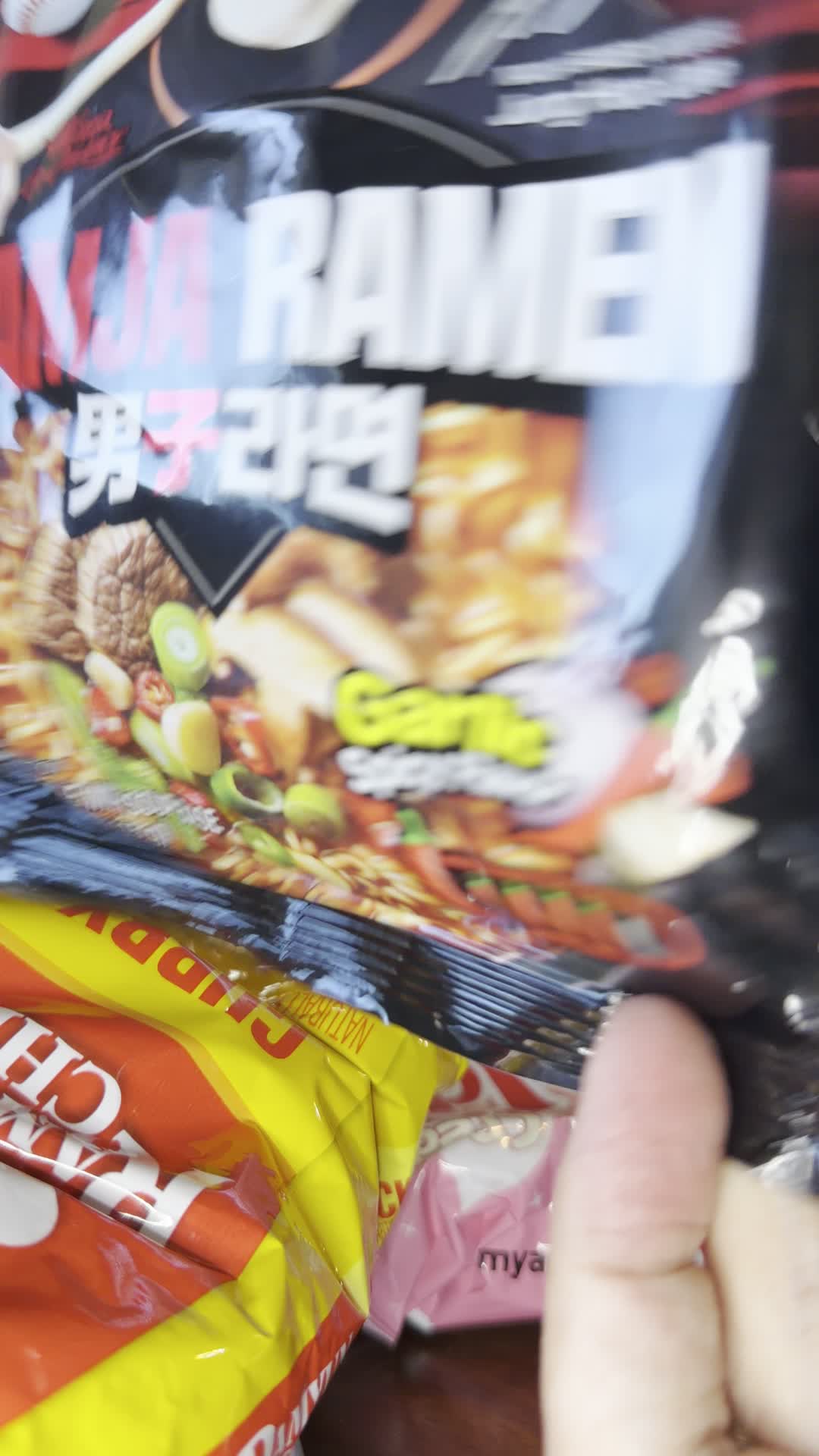
2. Open it over the bowl
He opens the pack over the serving bowl: the noodle cake comes out first, and the two packets — soup base and flakes — are laid on top of the cake to wait. Nothing is torn open yet; everything for the pot now sits in one bowl, in reach.
A one-pot lunch runs on having nothing to hunt for once the water boils.
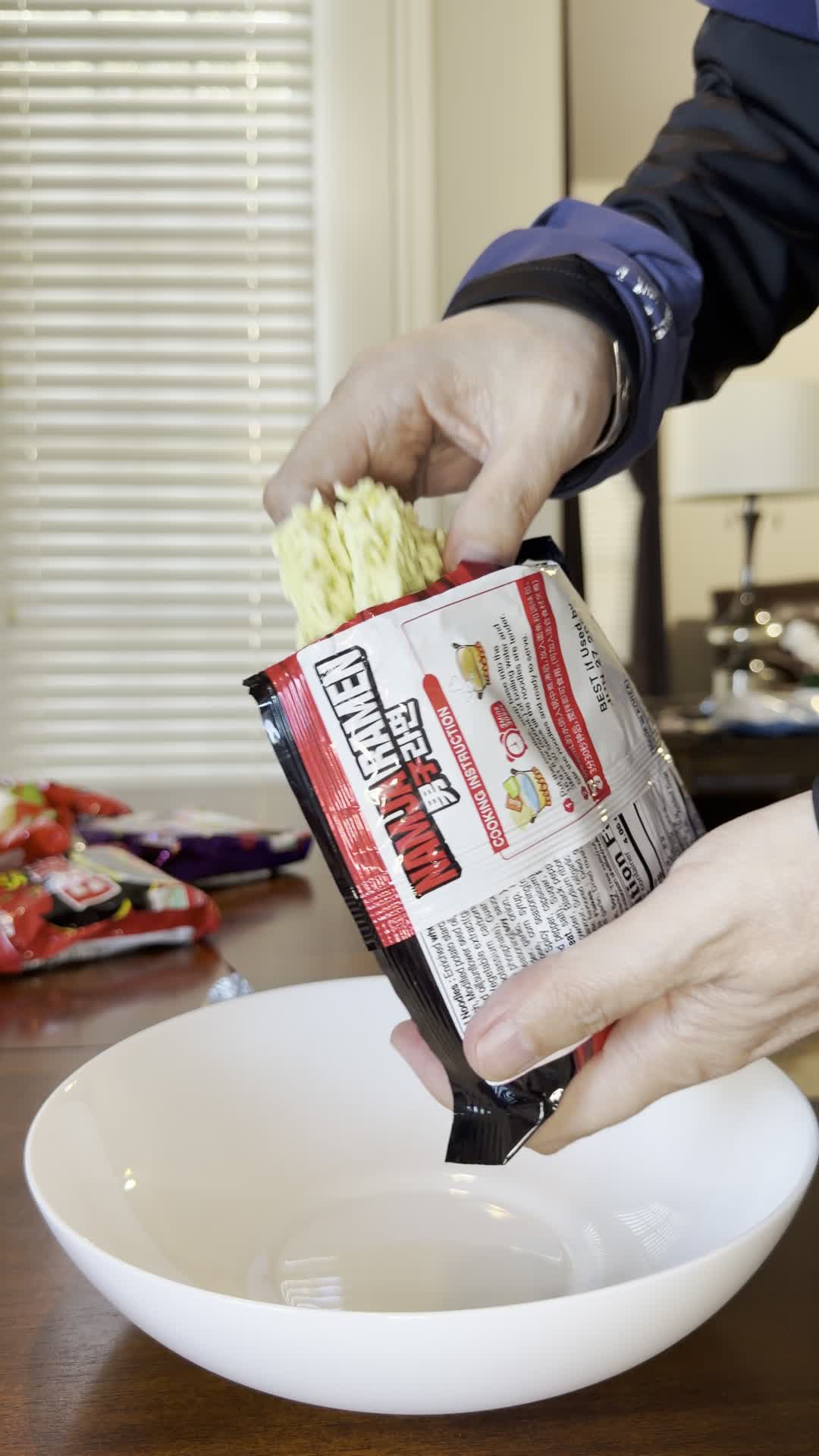
3. Water on, lid on, board ready
The pot of water goes on the stove and the lid goes on it. While it heats, the board comes out: baby bok choy washed and ready, eggs — boiled ones halved for the salad, raw ones waiting for the pot — and green onions cut in lengths. The salad he eats most days is assembled in the same few minutes, off to the side.
His whole lunch — noodles and salad both — is built inside the time the water takes to boil.
4. Cake in at a rolling boil
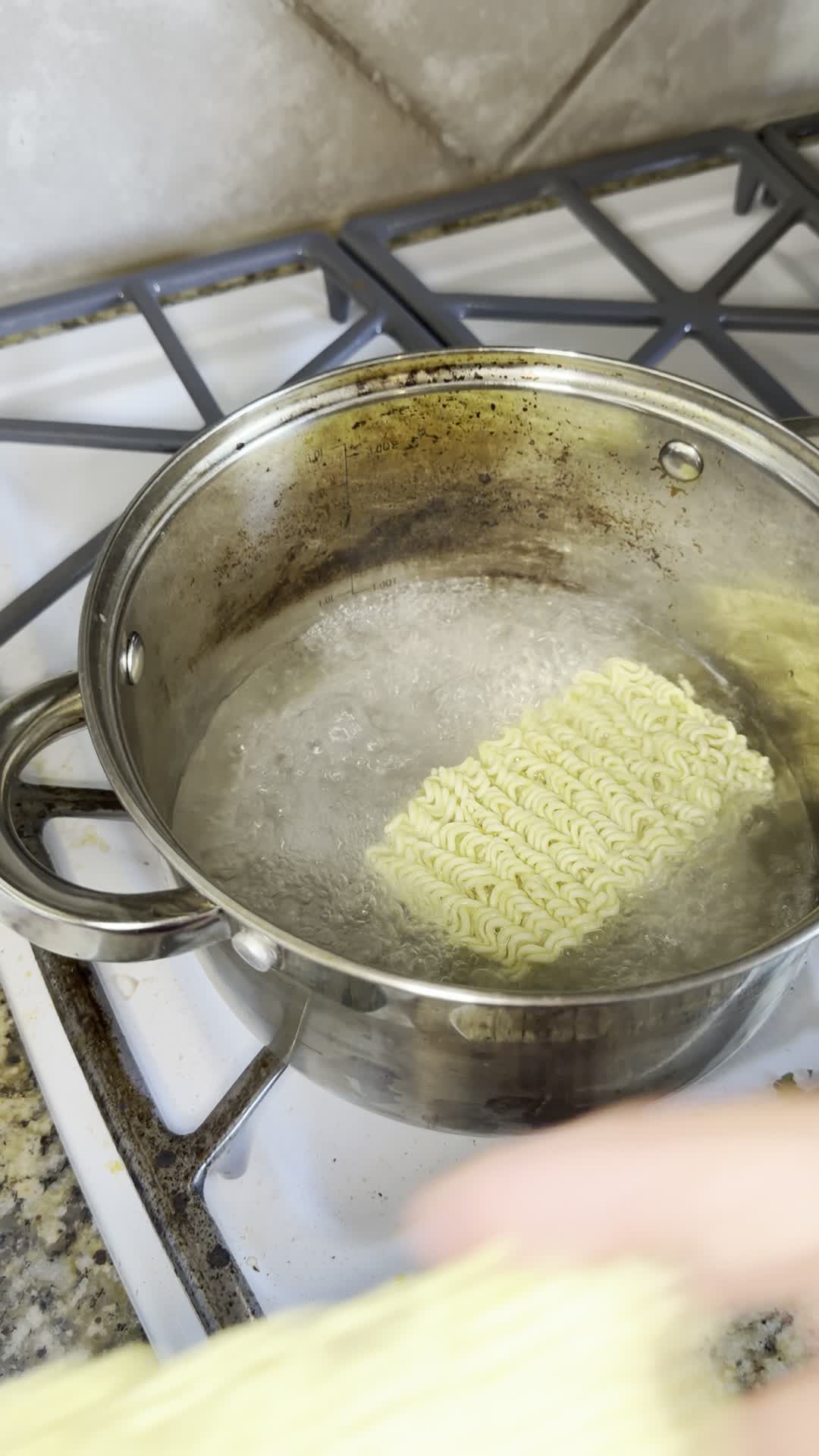
Lid up: the water is at a full rolling boil. The noodle cake goes in — it lands in the pot in two pieces — and the boil closes over it. No seasoning yet, no stirring yet; the noodles get their first minute alone in the water, exactly as the pack's own method starts.
A rolling boil, not a simmer — the chew he loves starts with water at full force.
5. Greens in, lid on — and check, about once a minute
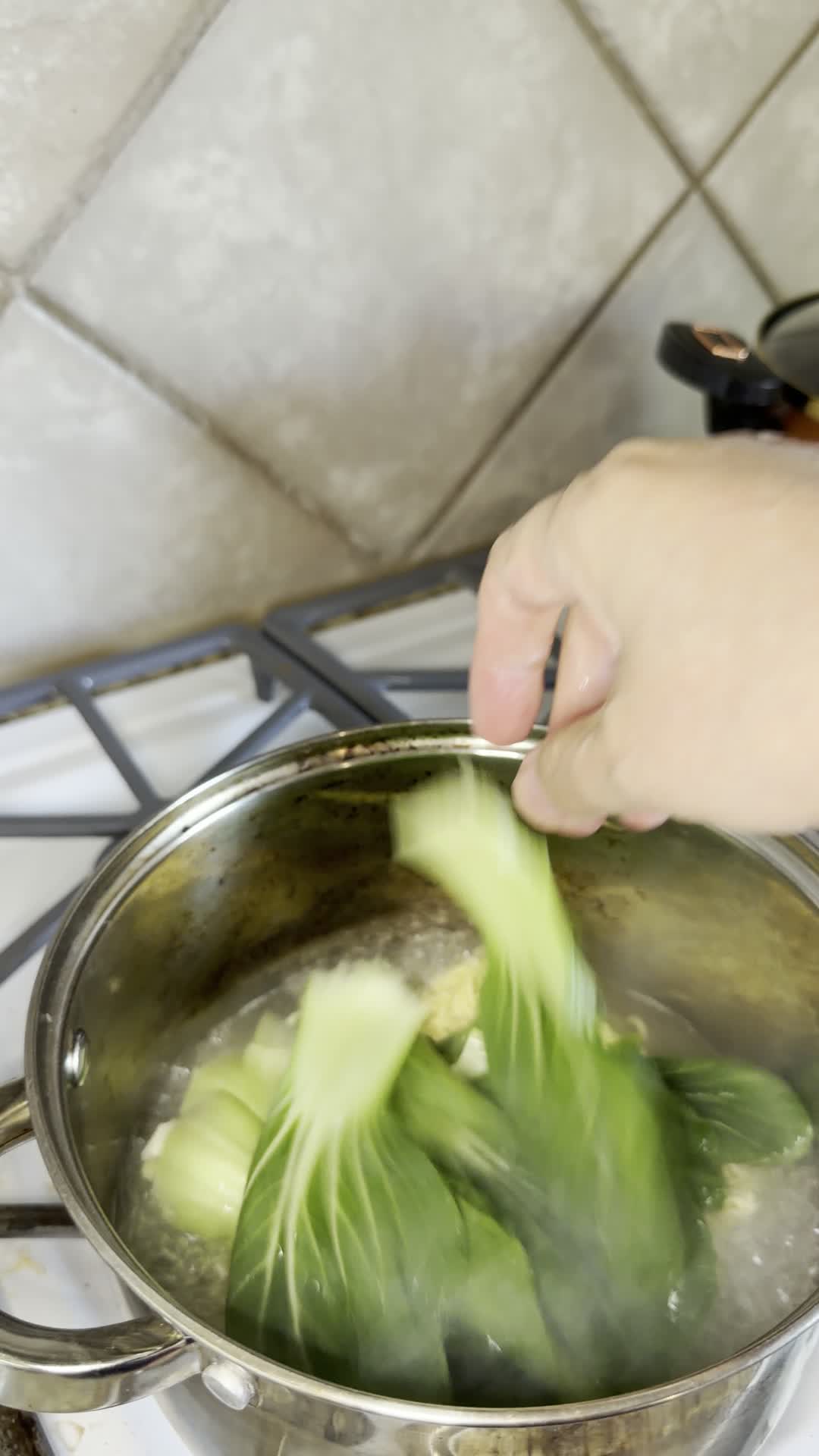
The bok choy goes in by hand, leaf by leaf, and the chopsticks settle everything under the surface. Then the lid goes back on — and here is his one real rule. He does not time this pot by the clock; he lifts the lid about once a minute and looks. The glass lid comes up fogged, the noodles get a glance, the lid goes back. That rhythm, not the printed 3 minutes 30 seconds, is how he decides.
His words: he lifts the lid about once a minute to check the doneness. The look is the timer.
6. Soup base in, and stir
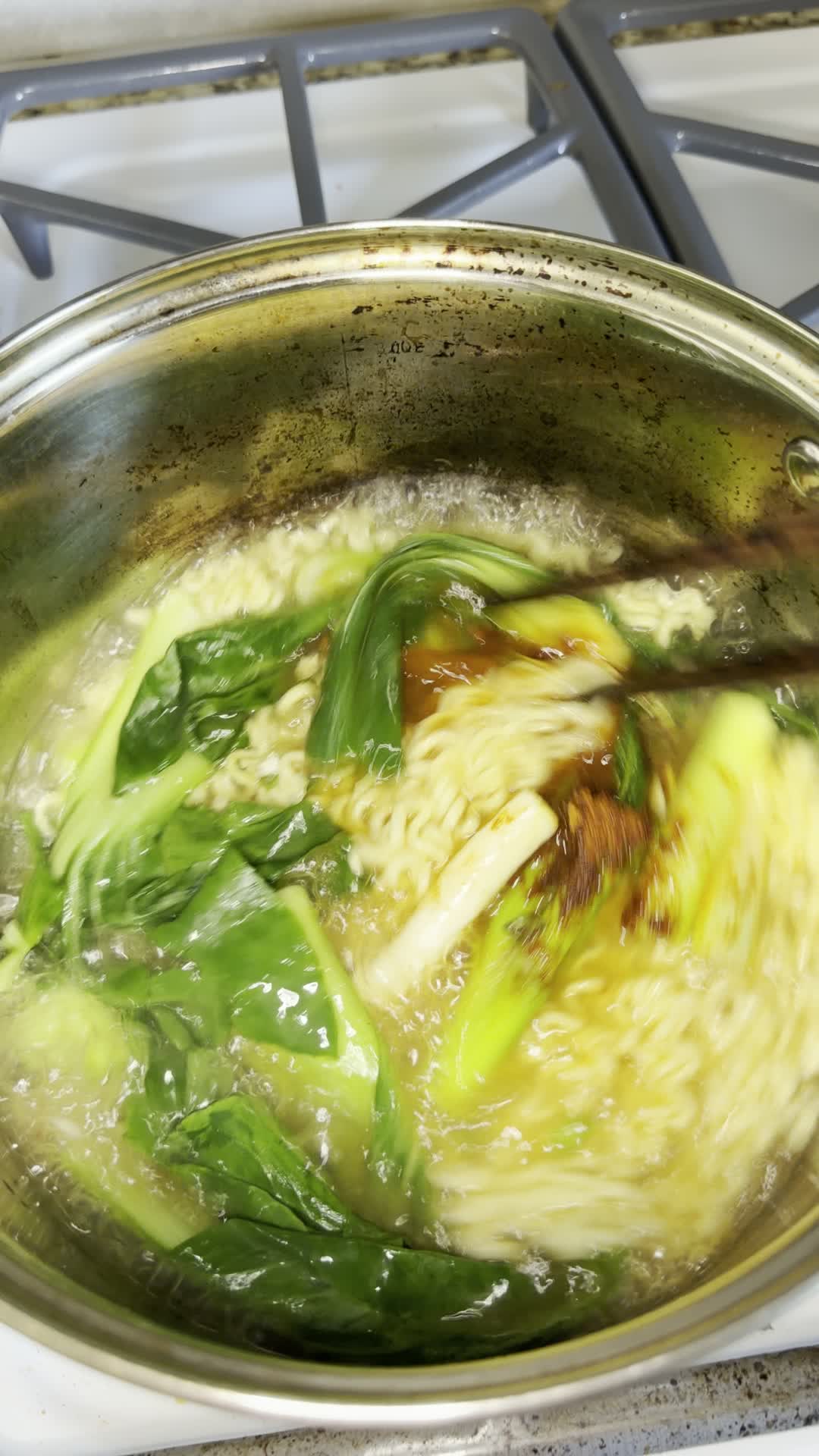
Only now does the soup base go in — the packet is torn open over the pot and the powder scattered across the top, the flake packet with it. The broth turns as the chopsticks stir: pale water to a seasoned, golden soup in a few turns, the greens and noodles moving through it together, the green onions already in from the board.
Soup last, not first — the noodles and greens cook in plain water, and the seasoning meets a pot that is nearly done.
7. Crack the eggs in
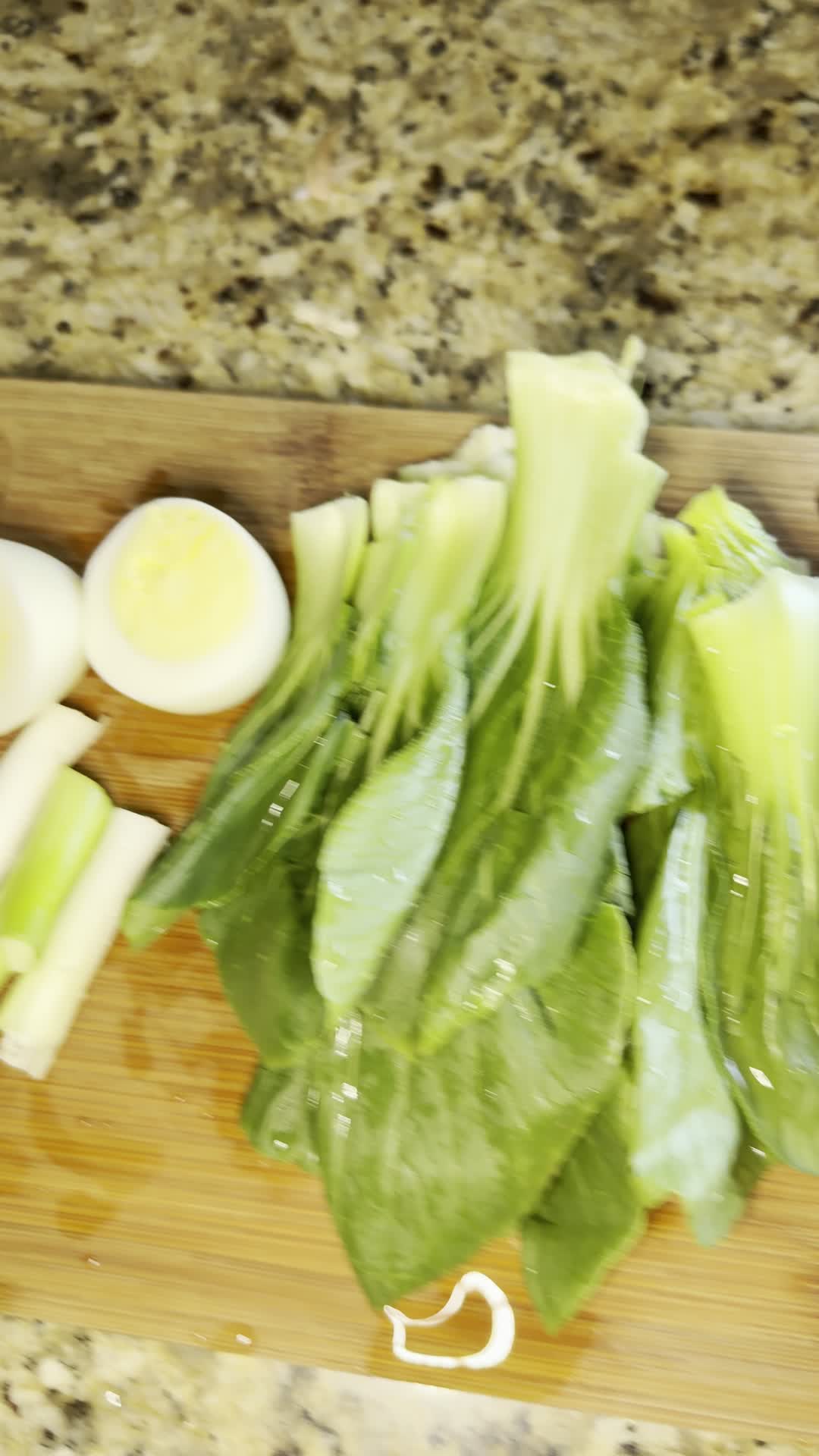
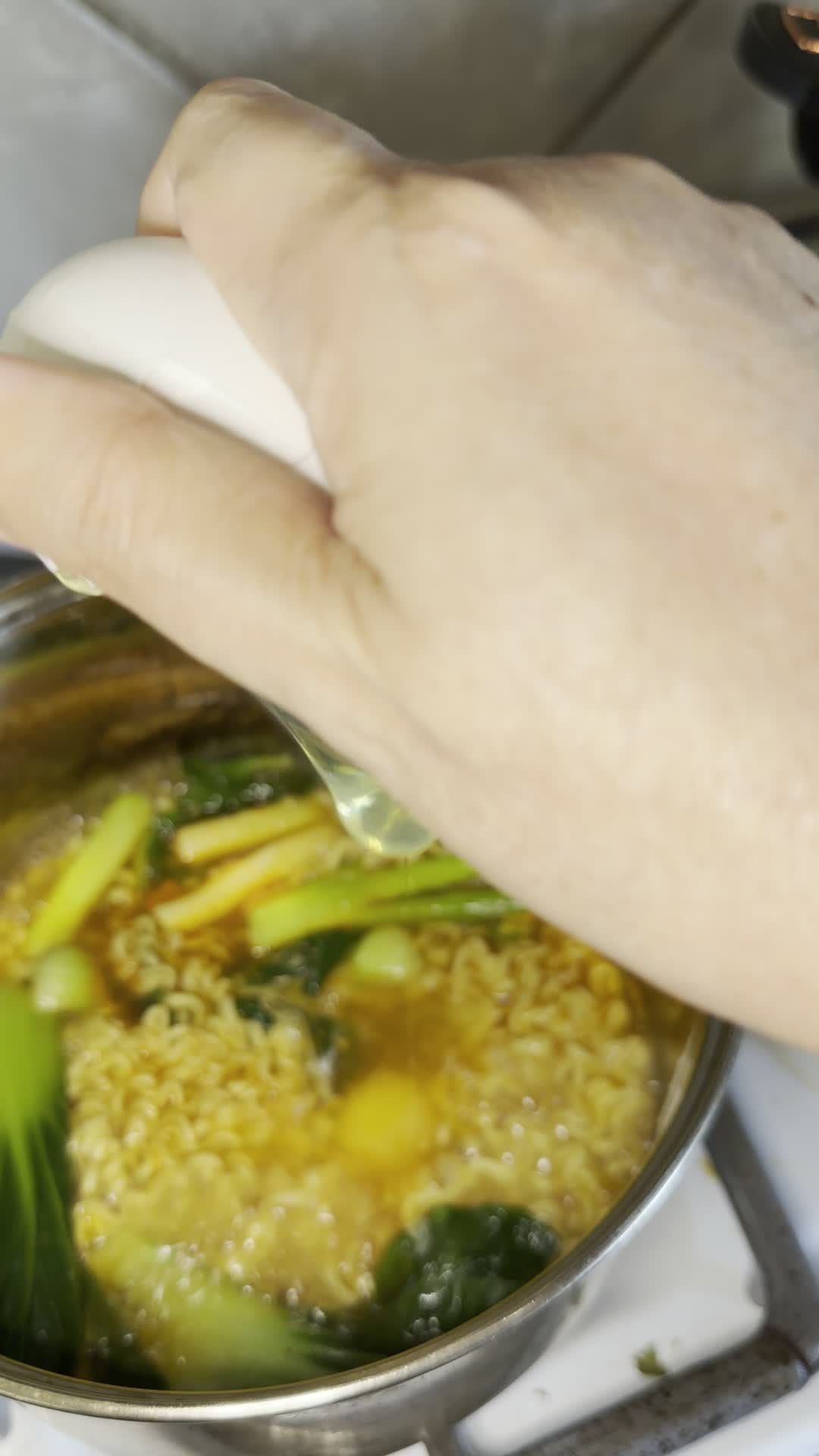
Two eggs are cracked straight into the pot, one after the other, and left to set in the hot broth among the noodles — egg-drop style, the whites feathering, the yolks holding. A last lift of the chopsticks brings up a full pull of noodles to check: glossy, springy, holding their wave.
The eggs go in at the end so they set in the soup instead of disappearing into it.
8. Bowl it — salad beside it
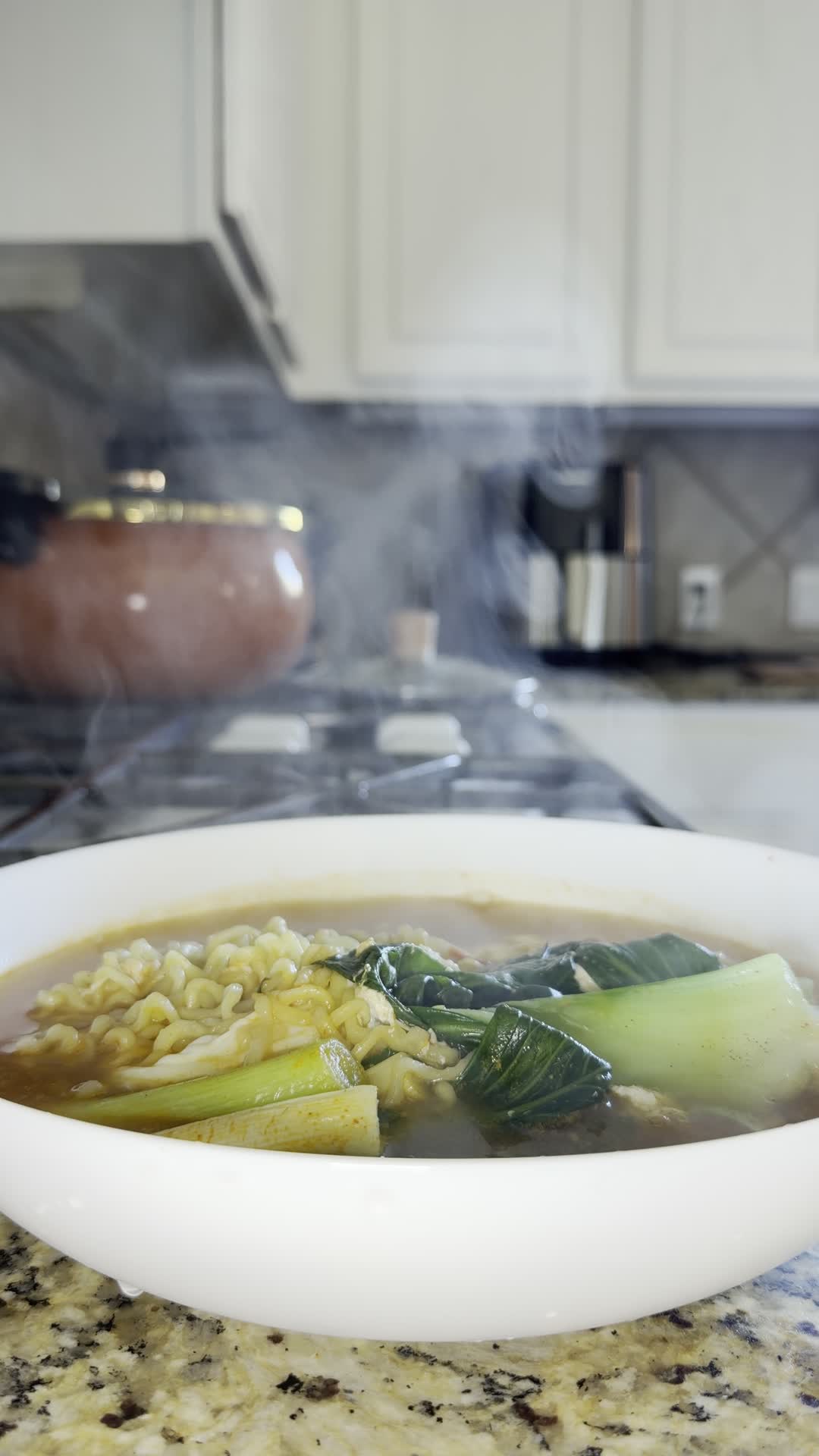
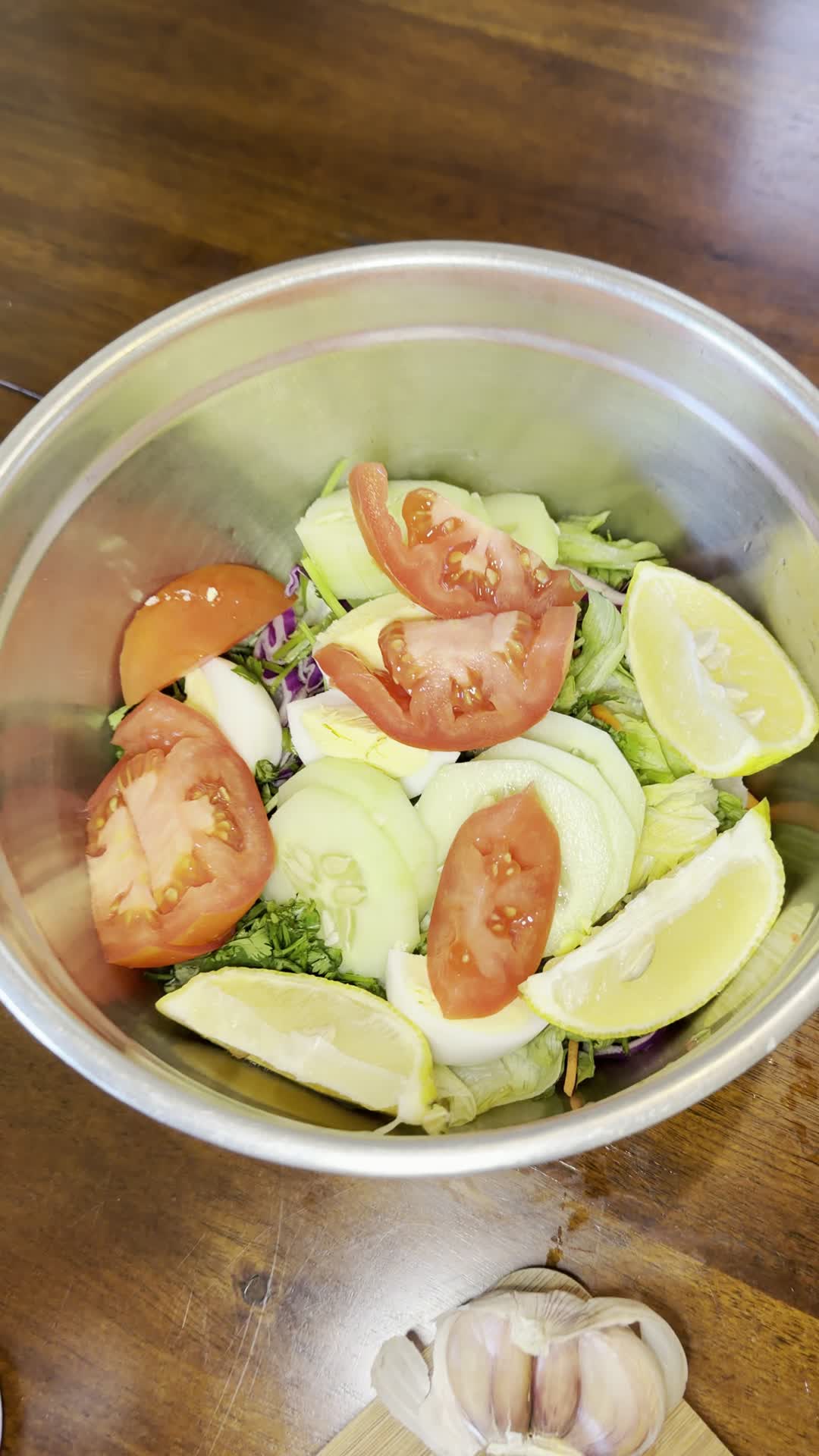
The whole pot pours into the bowl, steam still coming off it, and the bowl goes to the table where the salad is already waiting — tomato, cucumber, boiled egg and lemon in its own bowl, a bulb of garlic and a cold drink beside them. From the first prep to this moment: under ten minutes, by his count and by the clock on the footage. His verdict, in his own words: this is his favorite ramen — the flavor light and clean, the noodles especially chewy.
Noodles plus salad is the lunch. Either half alone is not how he eats it.
On the side: the daily salad
Most days, his lunch is two bowls, not one: the ramen, and a fresh vegetable salad he throws together in the same few minutes — at this sitting, tomato, cucumber, a boiled egg and a wedge of lemon in a steel bowl. The salad's making was not filmed, so this page describes it as served rather than as a recipe. What is on the record is his habit, in his own words: noodles + salad is his regular lunch combo.
Why this station is the honest one
The battle so far has had a century egg of a first station, a seafood duel and an inventor's own kimchi fried noodles. Station No. 4 is different in kind: it is the control bowl. This is what the cook actually eats, on an ordinary day, when the only audience is himself — the simplest method he owns, the pack he reaches for first, checked once a minute by eye. If the roster has a baseline, a bowl every other contender is quietly measured against, it is this one: not the fanciest pack on the table, just the favorite.
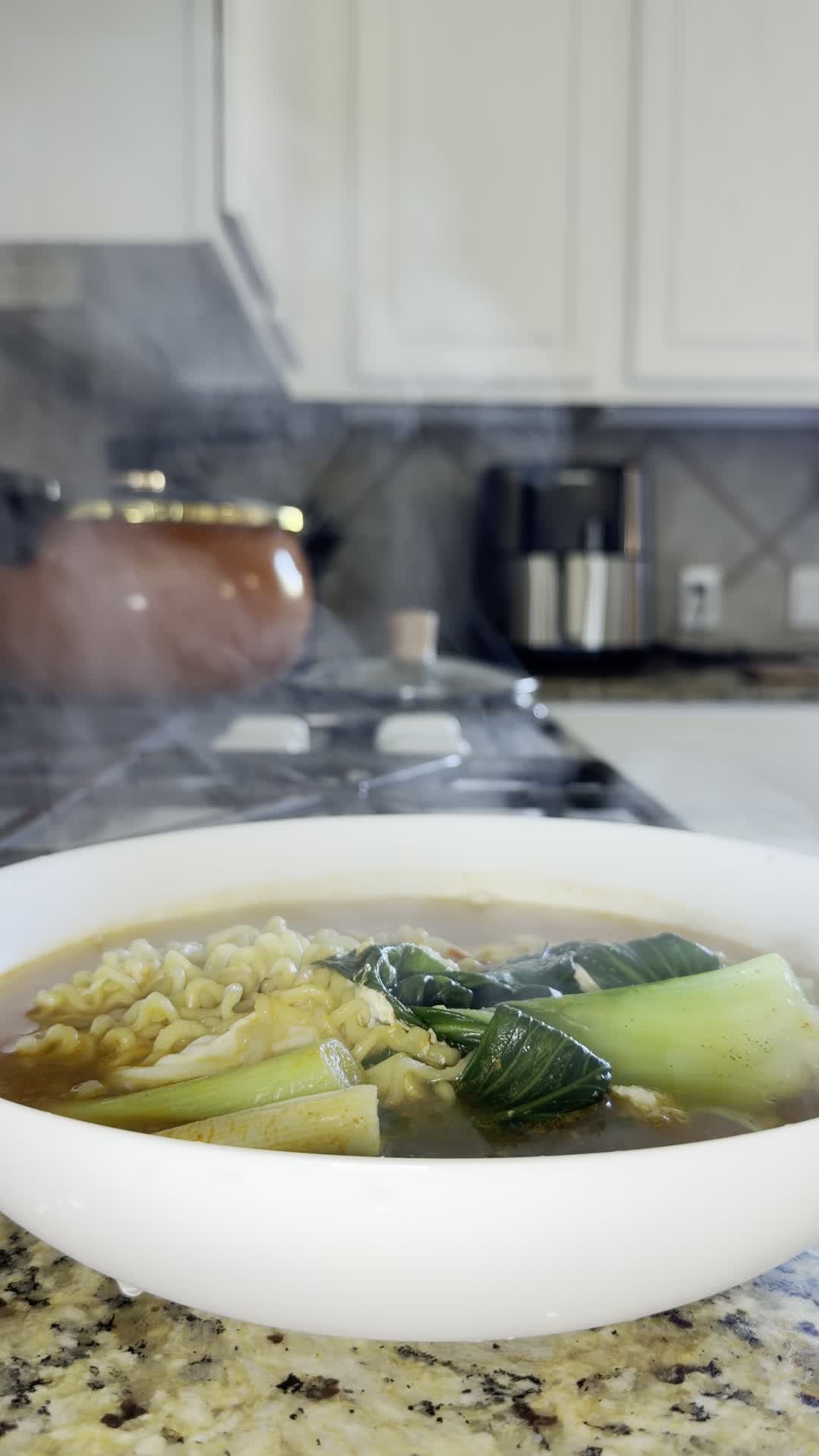
Watch for the lid. Three times in one short cook the glass lid goes on or comes up — water on, boil checked, noodles checked. That little rhythm is the whole technique.: EP4 — Namja Ramen, His Favorite Bowl 🍜 The Great Ramen Battle
Where this bowl goes wrong
✕ Walking away from the pot
His method is the lid check, about once a minute — a pot left alone sails past the chew he is after.
✕ Seasoning first
The soup base goes in late at his table, after noodles and greens; powder in at the start is a different, heavier bowl.
✕ Skipping the salad
The bowl alone is not his lunch — noodles + salad is the combo, and the fresh half is what keeps it light.
Asked at our table
The pack says Garlic Spicy — how hot is it, really?
His tasting note, after years of eating it: light and clean. The garlic is in the name and in the ingredient list — garlic powder and a garlic-flavoured oil are both printed on the back — but at his table this bowl is the gentle one, the everyday bowl. The name is the pack's; the verdict is his.
Why lift the lid instead of using a timer?
Because the look is the timer. He lifts the lid about once a minute and judges the noodles by eye — how far the wave has loosened, how the strands lift. The pack prints 3 minutes 30 seconds; his pot answers to his glance, and the glance has had years of practice.
Is it really under ten minutes?
By his words and by the footage both: prep to eating in under ten minutes. The pack itself only asks 3½ minutes in the water; the board work and the salad happen inside the boil, not after it.
Sources & the cook's own words
- How Cook AI works — the method behind these guides (XingAI Cook)
- The Korean Ramen Roster — this noodle's row, its label numbers, and the cook's verdict (XingAI Cook)
- Watch the EP4 Short — Namja Ramen in 31 seconds (XingAI Cook on YouTube)
- Kimchi Fried Ramen — Ramen Battle station No. 3 (XingAI Cook)
- Neoguri Stir-Fry Seafood — Ramen Battle station No. 2 (XingAI Cook)
Station No. 4, cooked and eaten Nov 5, 2026. Next in the battle: station No. 5 — Paldo Gompaghetti, the beef-broth spaghetti of the roster. Every pack figure on this page was read off the back label of the real pack, on camera, Nov 5, 2026 (U.S. label, 115 g): 490 kcal, sodium 1,760 mg, total fat 18 g (saturated 8 g), carbs 74 g, fiber 3 g, sugars 15 g, protein 9 g; printed method 500 mL, 3 min 30 sec. The method, the lid-check rhythm, the under-ten-minutes count and every verdict on this page are the cook's own, given Nov 5, 2026. Filmed at our table the same day.
Cooking ideas, not nutrition or medical advice. Check allergens and cook meat and eggs to safe temperatures.