
XingAI Cook How-To — from our family kitchen
Oil-Splashed Noodles — a Cold-Water Start, Oil Settled to Seventy Percent, for a Saturday Night
Start the frozen noodles in cold water, lift the greens out at the first boil, settle the smoking oil back to seventy percent before it hits the chili — and you get the bowl his daughter drives home for every Saturday: glossy, bright red, fragrant, never greasy.
The whole dish turns on ten quiet seconds: the oil comes off the heat at smoking point, rests, and only then meets the chili powder.
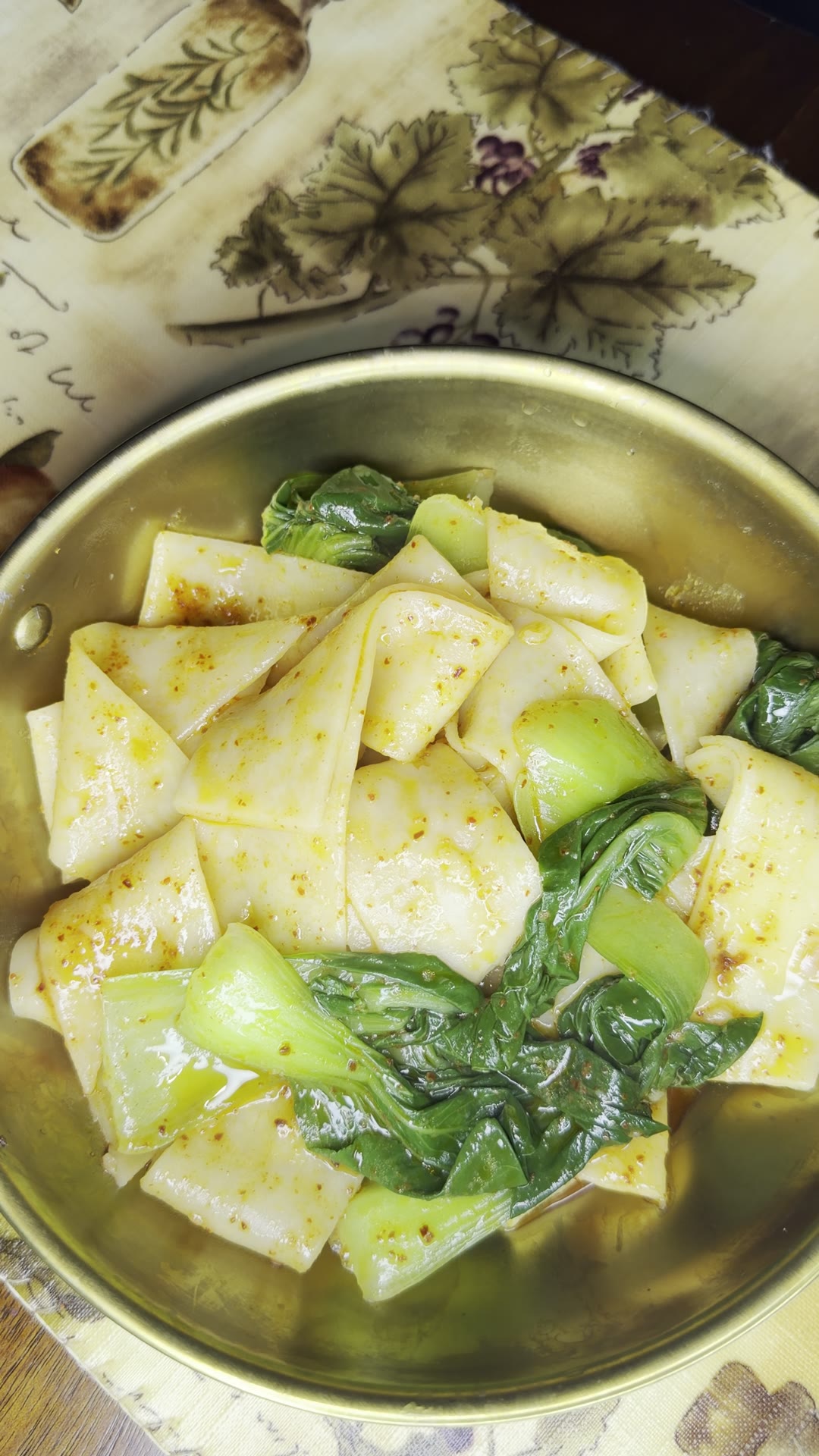
His daughter comes home once a week, on Saturdays. So on Saturday nights he tries to make the things she loves — and this bowl of oil-splashed noodles is the one she loves most. He makes it often, the same way every time, and this page is that way, written down exactly as he cooks it: no hand-pulled noodles, no shortcuts with the oil, and a spoon of white vinegar at the very end.
Nothing here is fancy, and that is the point. The noodles are a store-bought pack of pre-cut noodles from the freezer. The craft is in the order of things — greens in early and out early, two ladles of cold water, oil that is smoked and then calmed down — small decisions that decide whether the bowl is bright and fragrant or dark and heavy.
Watch the full lesson: Oil-Splashed Noodles — Dad's Saturday Bowl for His Daughter | 油潑麵
Tonight's bowl, as filmed
- One pack of store-bought pre-cut noodles, frozen — he does not make his own; rolling noodles at home costs too much time and too many tools
- A bunch of leafy greens, washed — at his table the greens are not optional: the bowl is rich, and they cut the grease
- Rapeseed oil — the everyday oil of this kitchen
- Korean red chili powder, the ground kind — bright red, not very hot; he usually uses two kinds, tonight one
- Chicken bouillon powder and salt
- A little white vinegar for the finish — never a dark or fragrant vinegar
- A pot with a lid for the boil, and a big basin or wide plate for the toss — big, so the noodles turn easily and the sauce stays in
His method — cold water first, oil last
1. Buy the noodles — do not roll them
The noodles come from a pack: Shanxi pull noodles — the wide belt-style kind, 38.8 oz (1,100 g) a bag — pre-cut, ready to cook, taken straight from the freezer. Rolling and cutting noodles at home is a project — too much time, too many tools — and on a Saturday night with his daughter home, the project he cares about is the bowl, not the dough.
A good home bowl starts with an honest decision about where the effort goes. His goes into the oil and the timing.
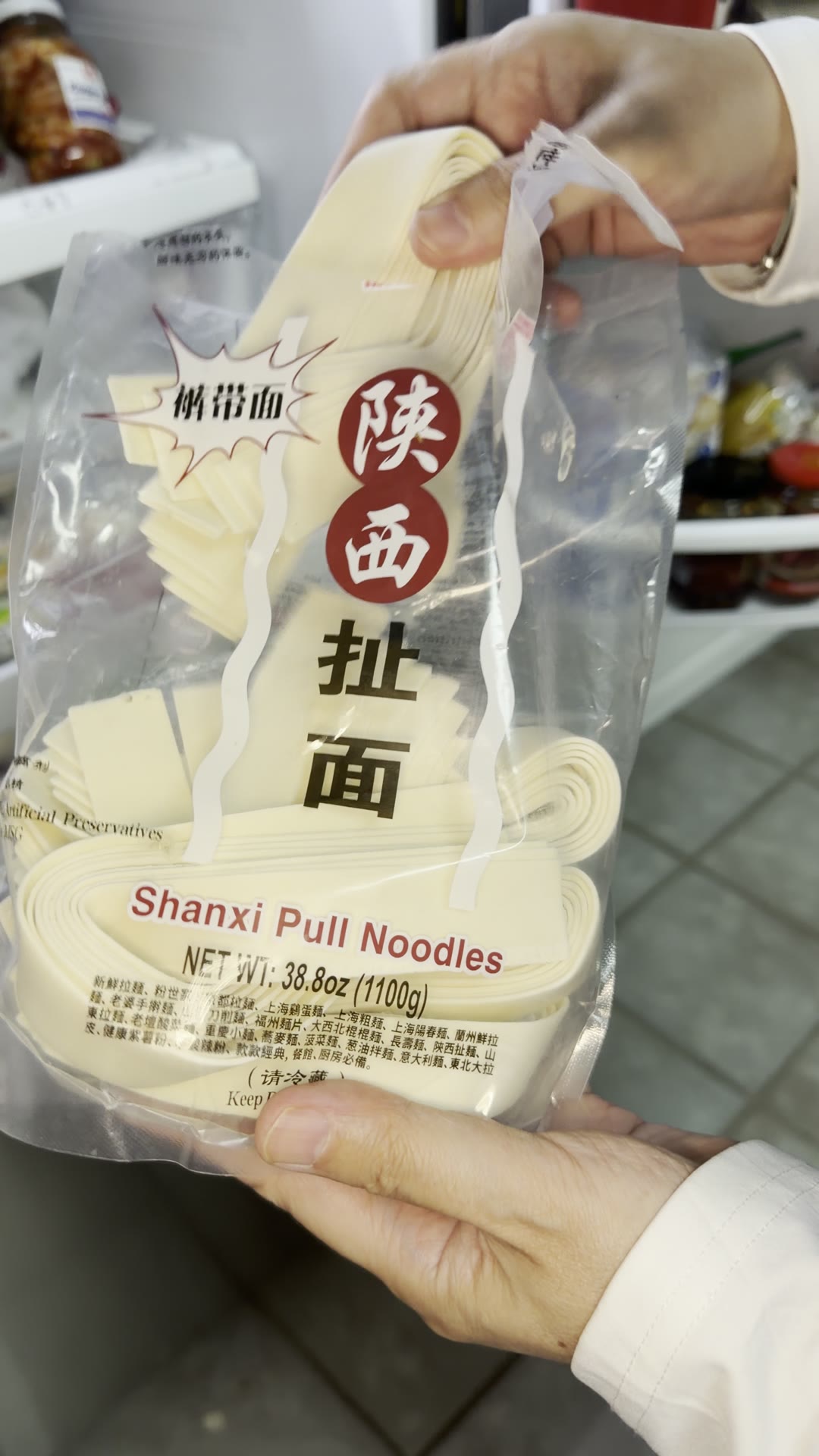
2. Frozen noodles into cold water
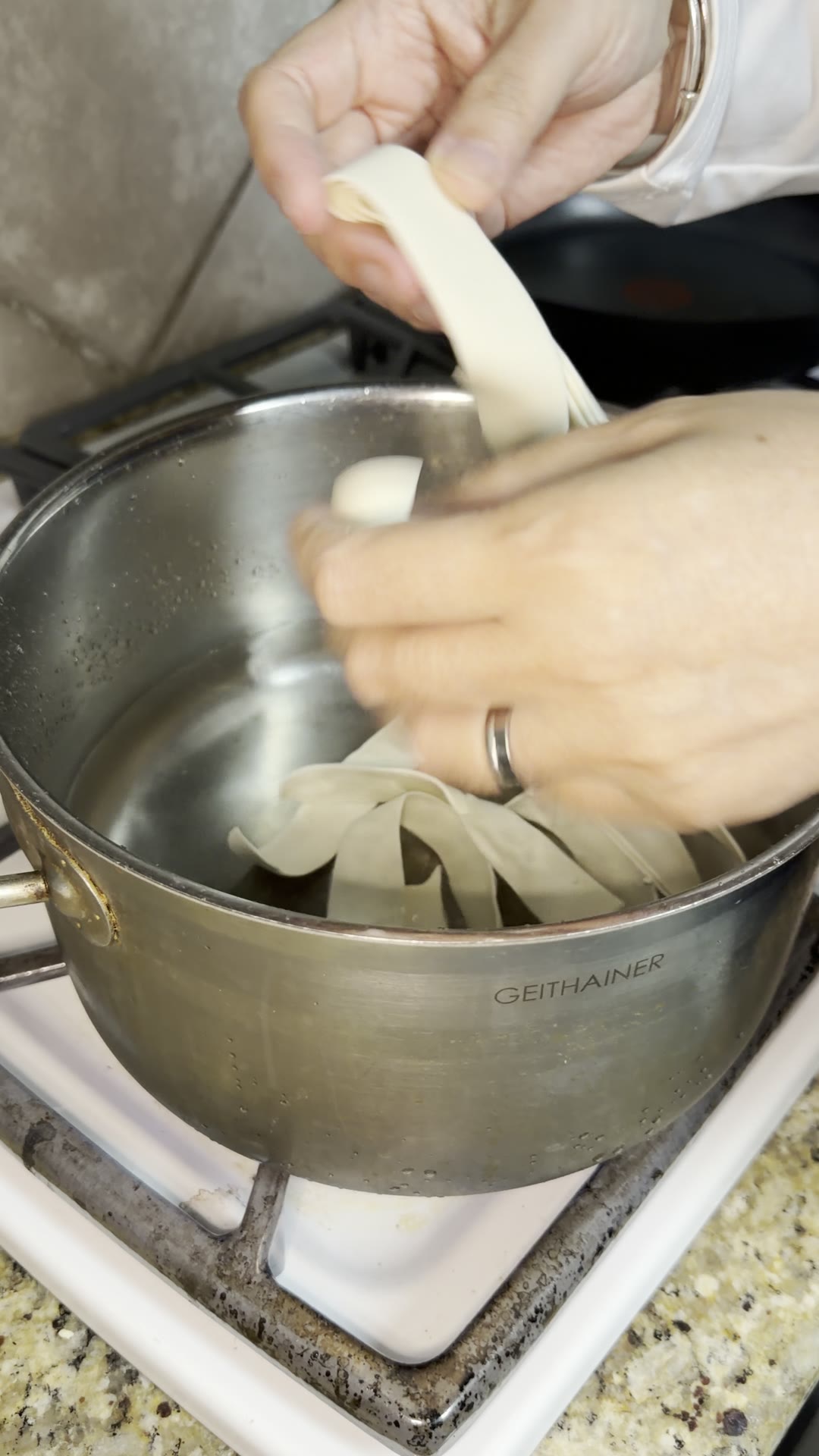
The frozen noodles go into cold water, not boiling. Straight from the freezer, they need the slow warm-up — the water heats gradually and the noodles thaw and loosen gently on the way up, instead of being shocked at the surface while the middle stays frozen.
His rule for frozen noodles: cold water in, always. The slow thaw is what keeps the texture even from the first strand to the last.
3. Greens in as the water warms
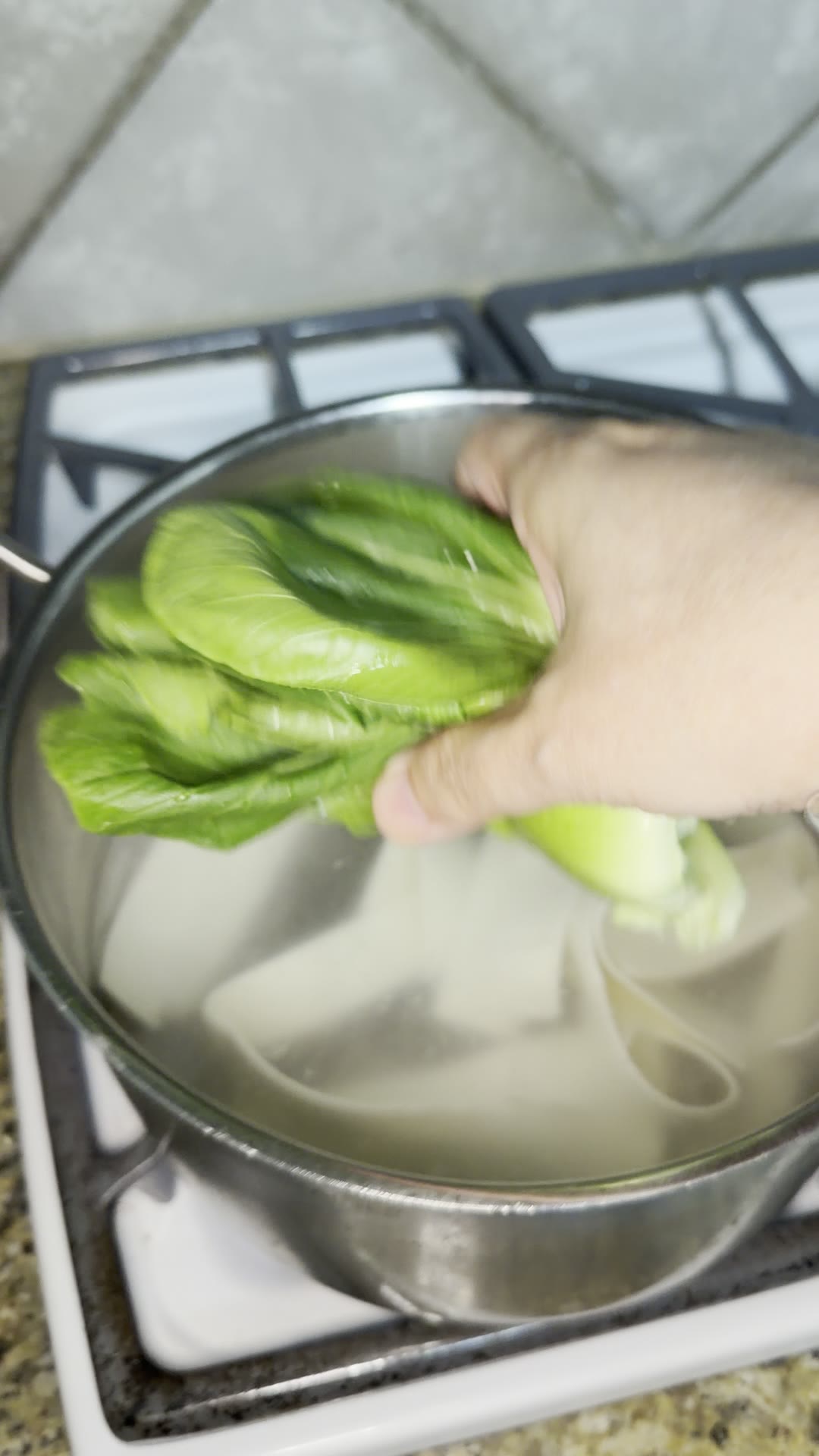
Before the water boils — as it starts to warm — the washed greens go in. They cook alongside the noodles in the same pot, just long enough to turn tender and bright. At his table the greens are a must: oil-splashed noodles are rich, and without something green the bowl tastes flat and heavy.
The greens do two jobs: they balance the grease, and they make the bowl a meal instead of a pile of noodles.
4. First boil — greens out
The moment the pot reaches its first boil, the greens come out. Not later, not 'a little longer to be safe.' They are done the second the water rolls, and they wait in a bowl while the noodles finish.
Greens left in past the first boil go dull and overcooked. Out early, they stay green and keep their bite for the toss at the end.
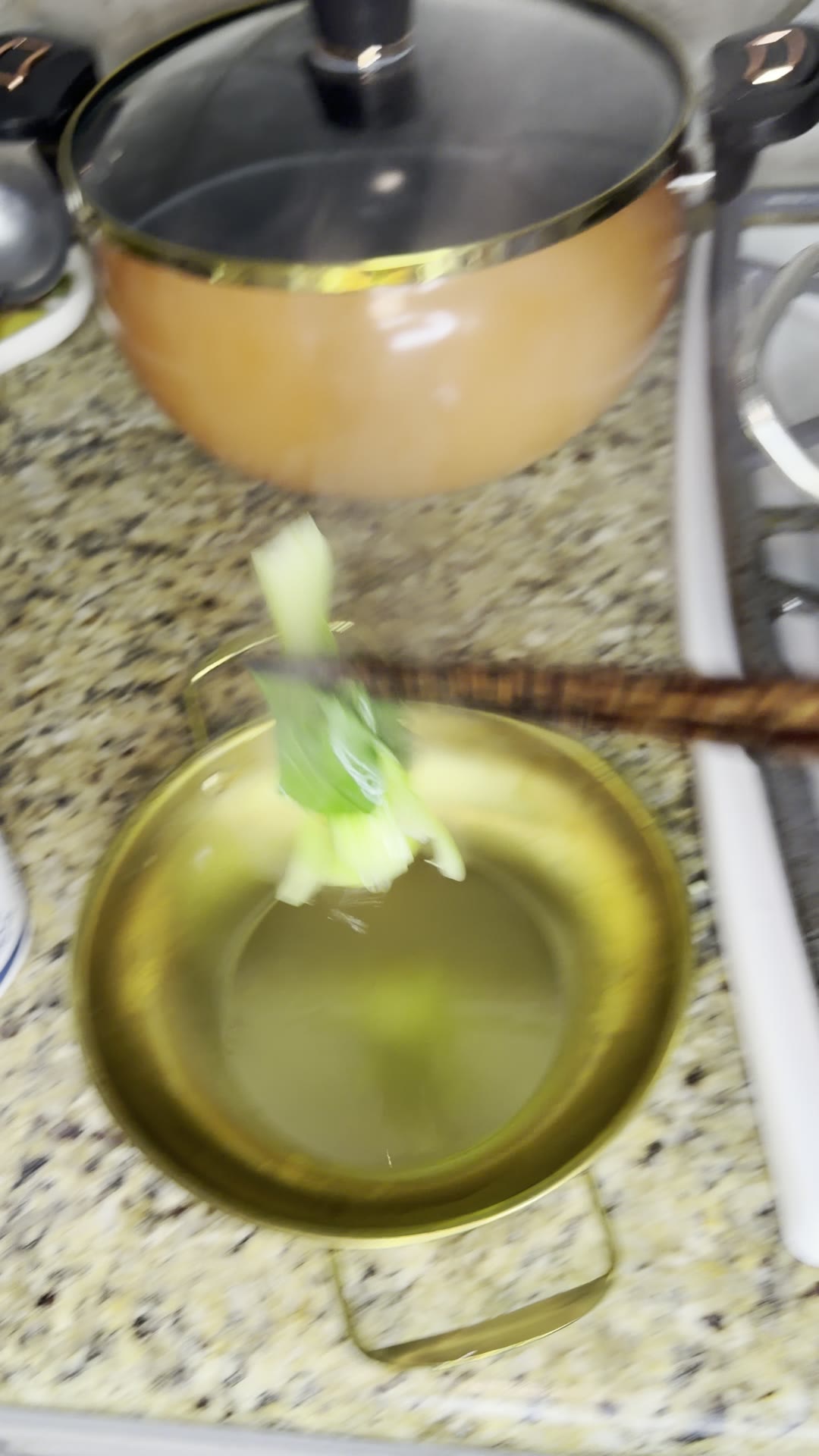
5. Two rounds of cold water — then the noodles are done
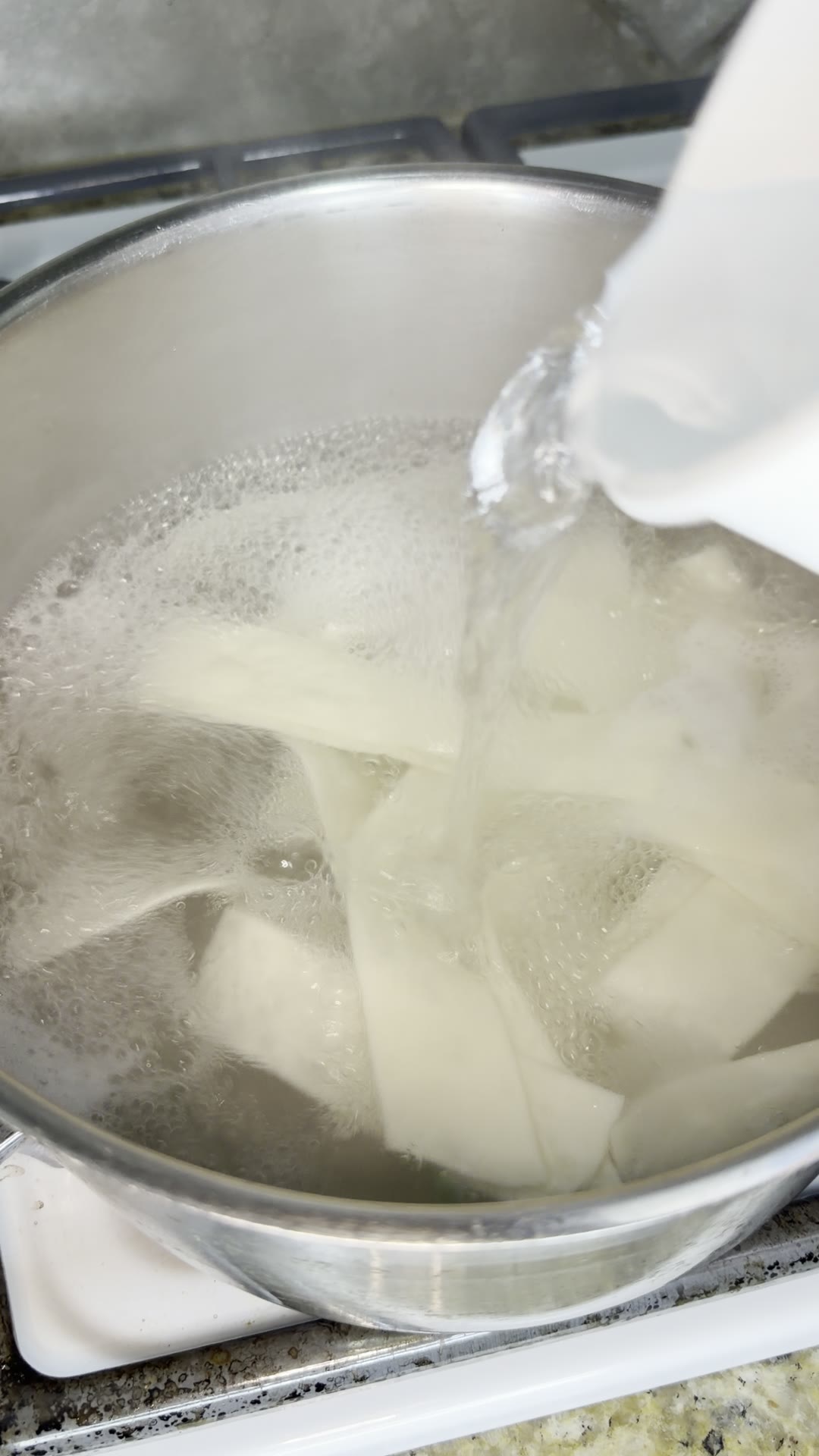
With the greens out, the first round of cold water goes in. Lid on, back up to the boil. Then the second round of cold water — and when that comes back up, the noodles are cooked. No timer, no tasting strand by strand: two cold-water rounds is his measure, and it has never missed.
Each cold-water round pulls the pot back from the boil and lets the noodles finish evenly instead of blowing past tender while the water rages.
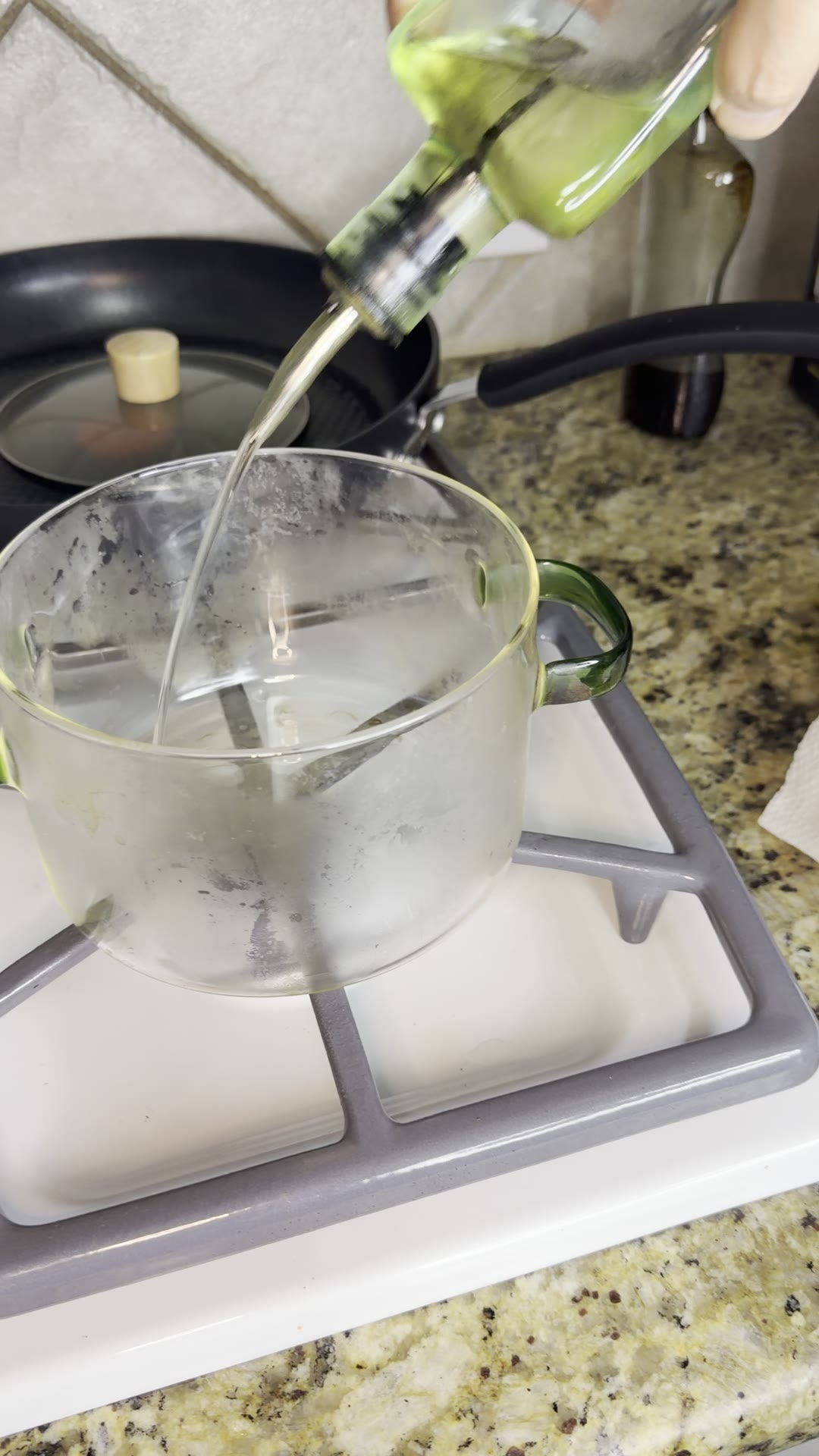
6. The oil: smoke it, then settle it to seventy percent
While the second round of water comes back up, the rapeseed oil goes on the heat. He takes it all the way to smoking — then kills the flame and waits a moment, letting it settle back to about seventy percent heat. That pause is the whole technique: smoking-hot oil straight onto chili powder would scorch it; oil that never smoked would taste raw.
His thermometer is his eyes and his patience: smoke first, then rest. Seventy percent is where the chili blooms red and fragrant instead of burning black and bitter.
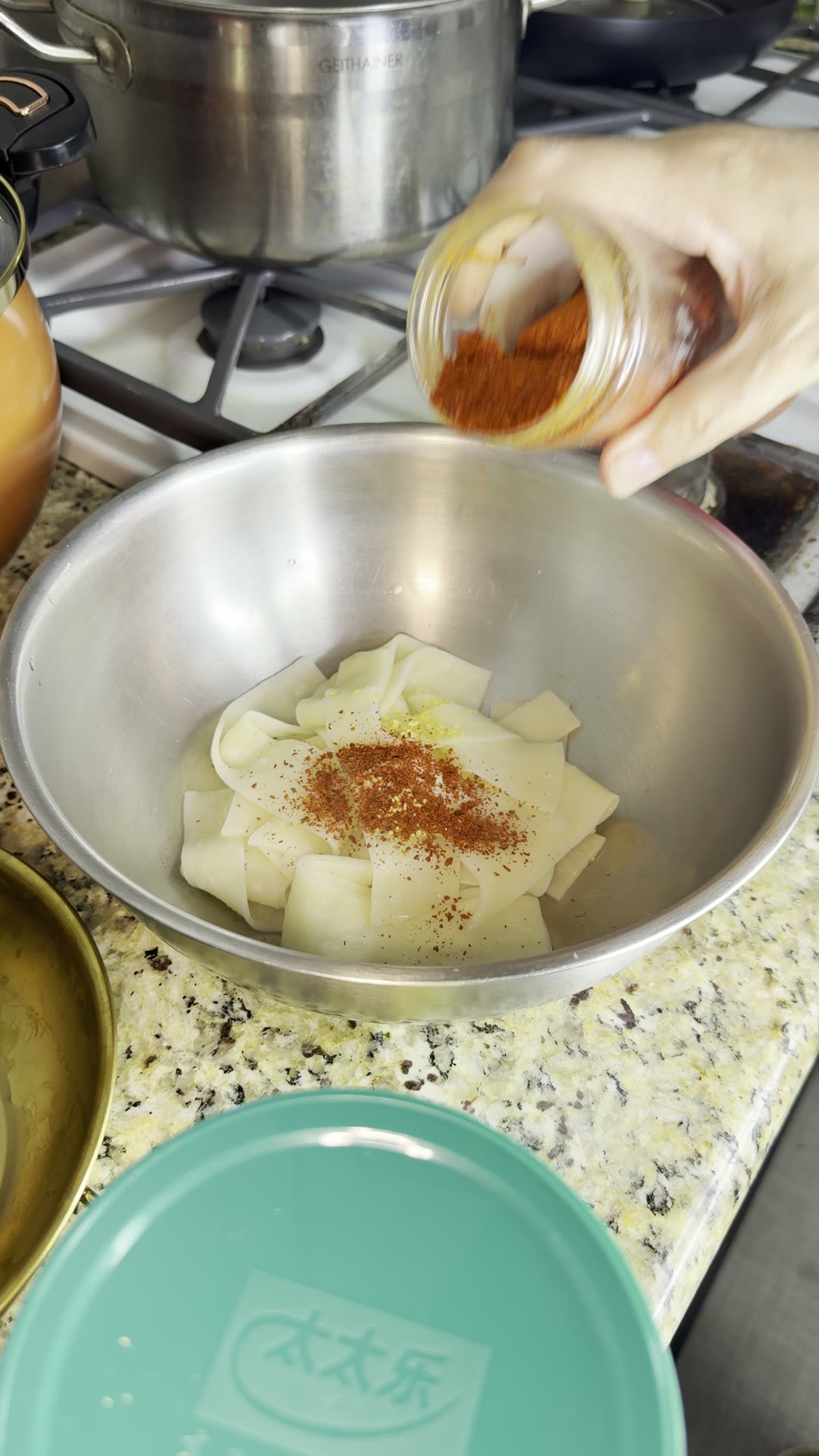
7. Noodles into the big basin, seasonings on top
The cooked noodles are lifted out into the big basin — wide, roomy, easy to toss in, nothing splashing out. Over the top go the seasonings in a little mound: chicken bouillon powder, salt, and the Korean red chili powder, bright as paint. He usually lays down two kinds of chili powder; tonight, one — and because the Korean powder is vivid but gentle, he is generous with it.
Everything waits in one place for the oil: the seasonings sit on top, dry, so the hot oil can wake them all at once.
8. Pour the oil — and listen
The settled oil goes over the seasonings in one pour, and the bowl answers with a sizzle — the sound this whole dish is named for. The chili reddens, the fragrance jumps up, and the noodles take the oil like they were waiting for it. This is the moment the kitchen goes quiet and everyone leans in.
The sizzle is the receipt: oil at the right heat, on the right second. Too cool and there is no sound and no fragrance; too hot and the chili is ash.
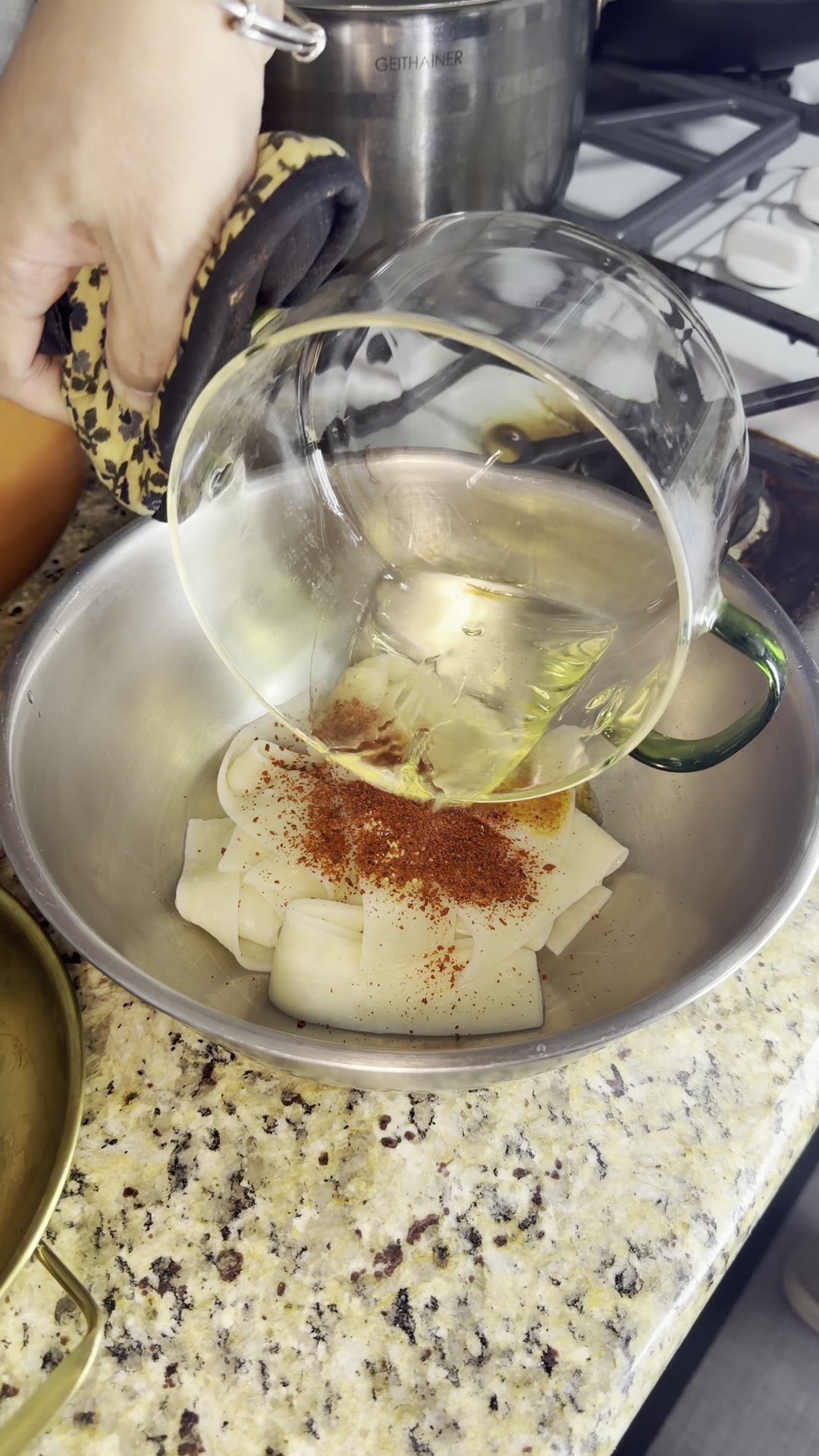
9. Greens back in, toss, white vinegar to finish
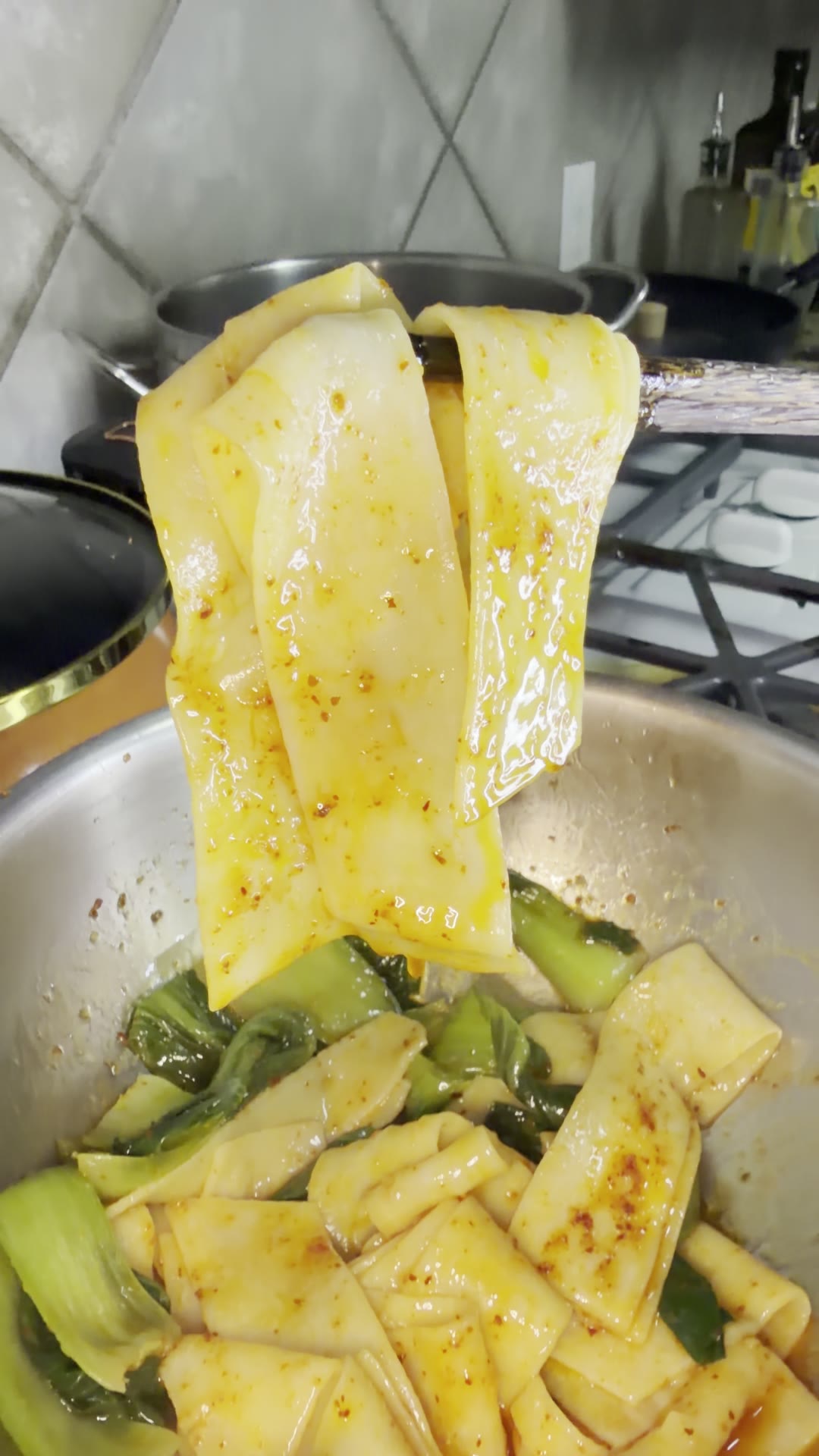
The reserved greens go back over the noodles and everything is tossed until each strand shines. Then the last move, easy to miss: a small splash of white vinegar, tossed through at the very end. Not fragrant vinegar, not a dark one — white, so the noodles stay bright and the chili stays red. Into bowls, and to the table.
White vinegar lifts the bowl without staining it. The color is part of the dish: glossy noodles, red chili, green leaves — exactly as it went in.
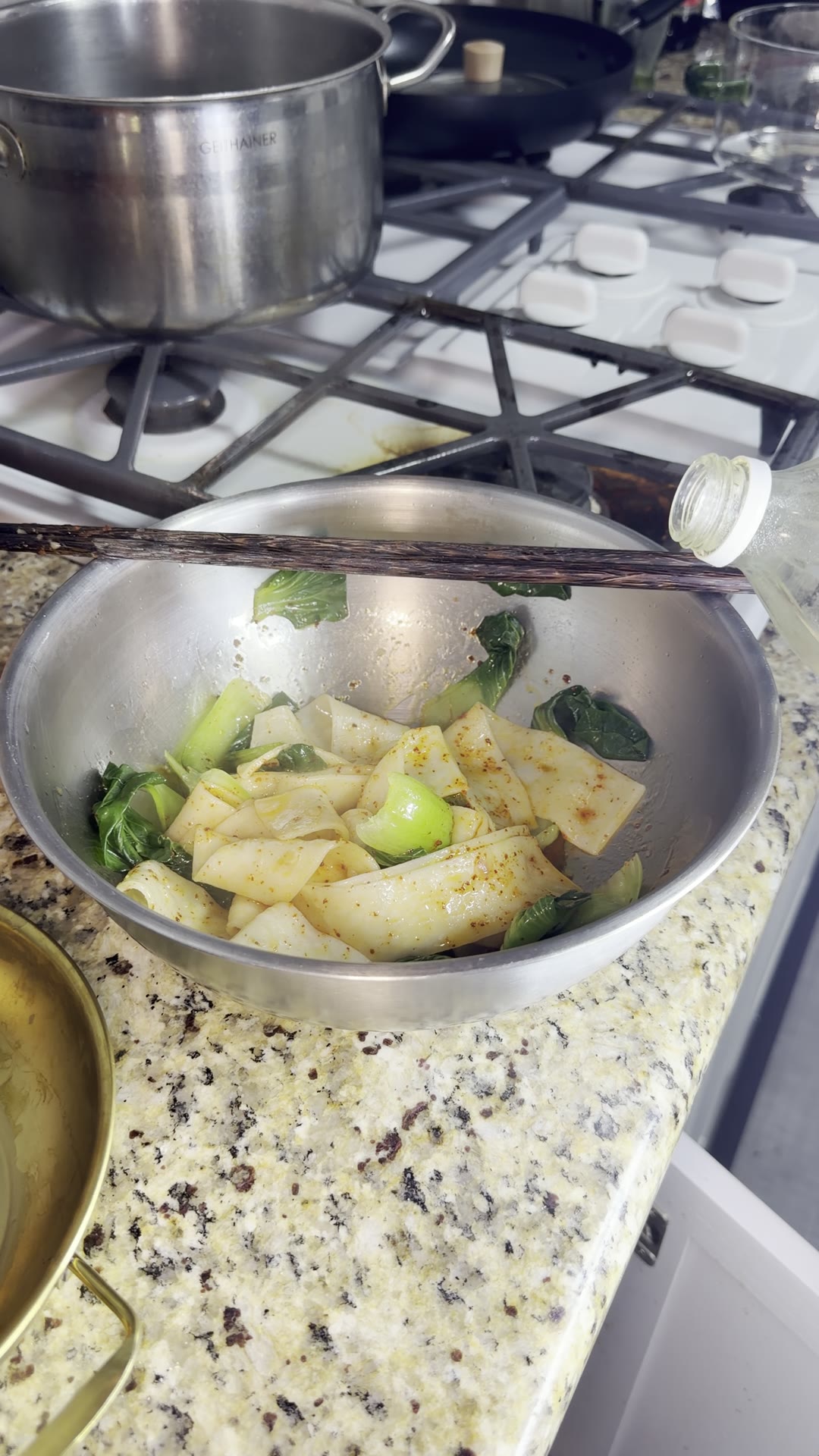
Why the greens are not a garnish
Ask him what makes this bowl work and he starts with the greens, not the oil. Oil-splashed noodles are rich by design — hot oil is the sauce — and a bowl of pure noodles and oil wears out its welcome halfway down. The greens are cooked in the same water, lifted out at the first boil so they stay bright, and folded back at the end. They cut the grease, they stretch the bowl, and they are the reason his daughter can finish the whole thing and ask for it again next Saturday.
The one lesson of this bowl: oil has a temperature, and the temperature has a pause
Everything else in this dish is patience — cold water, two rounds, greens out early. The oil is the opposite: one fast, exact decision. Rapeseed oil heated to smoking is at its most fragrant and its most dangerous. Poured straight off the flame, it would scorch the chili powder black and turn the bowl bitter. His method is to take it to the smoke, cut the heat, and let it fall back to roughly seventy percent — hot enough to make the chili sing, calm enough not to burn it. No thermometer hangs in this kitchen. The smoke is the signal to stop, and the short wait is the measurement.
Where this bowl goes wrong
✕ Dropping frozen noodles into boiling water
The outside goes soft while the middle is still frozen, and the strands cook unevenly. His way is cold water from the start — the slow warm-up is the method, not a shortcut missed.
✕ Leaving the greens in
Greens that ride through both cold-water rounds come out dull and limp. They are done at the first boil — out they come, and back in only for the toss.
✕ Pouring the oil straight off the smoke
Smoking oil scorches chili powder on contact: black flecks, bitter bowl. Off the heat, a short rest, seventy percent — then pour.
✕ Reaching for the dark vinegar
Fragrant or colored vinegar stains the bowl and muddies the chili. A little white vinegar keeps the noodles bright and the red red — that is its whole job.
✕ Tossing in a small bowl
A cramped bowl folds noodles instead of turning them, and the sauce ends up on the counter. The big basin is equipment, not presentation.
Quick answers
Why do the frozen noodles start in cold water?
So they thaw slowly and evenly as the water heats. Dropped into a rolling boil, frozen noodles cook on the outside while the middle is still ice — cold water is his rule for any noodle out of the freezer.
How does he judge the oil temperature without a thermometer?
By the smoke and the pause: heat the rapeseed oil until it just smokes, take it off the flame, wait a moment for it to settle to about seventy percent, then pour. Too hot scorches the chili; too cool never wakes it up.
Why do the greens come out at the first boil?
Because that is when they are done — bright and just tender. Left in, they overcook while the noodles finish. They go back in at the end for the toss, still green.
What chili powder does he use?
Korean red chili powder, the ground kind. Its character is color first: vivid, bright red, and not very hot — which is why he can be generous with it. He often uses two kinds; tonight's bowl used one.
Why white vinegar and not black or fragrant vinegar?
Color. White vinegar lifts the flavor without staining anything — the noodles stay bright and the chili stays red. A dark vinegar would muddy the whole bowl.
Do I really need the greens?
At his table, yes. Oil-splashed noodles are rich, and the greens cut the grease — without them, he says, the bowl tastes noticeably less. They are cooked in the same pot, so they cost nothing but timing.
Keep reading
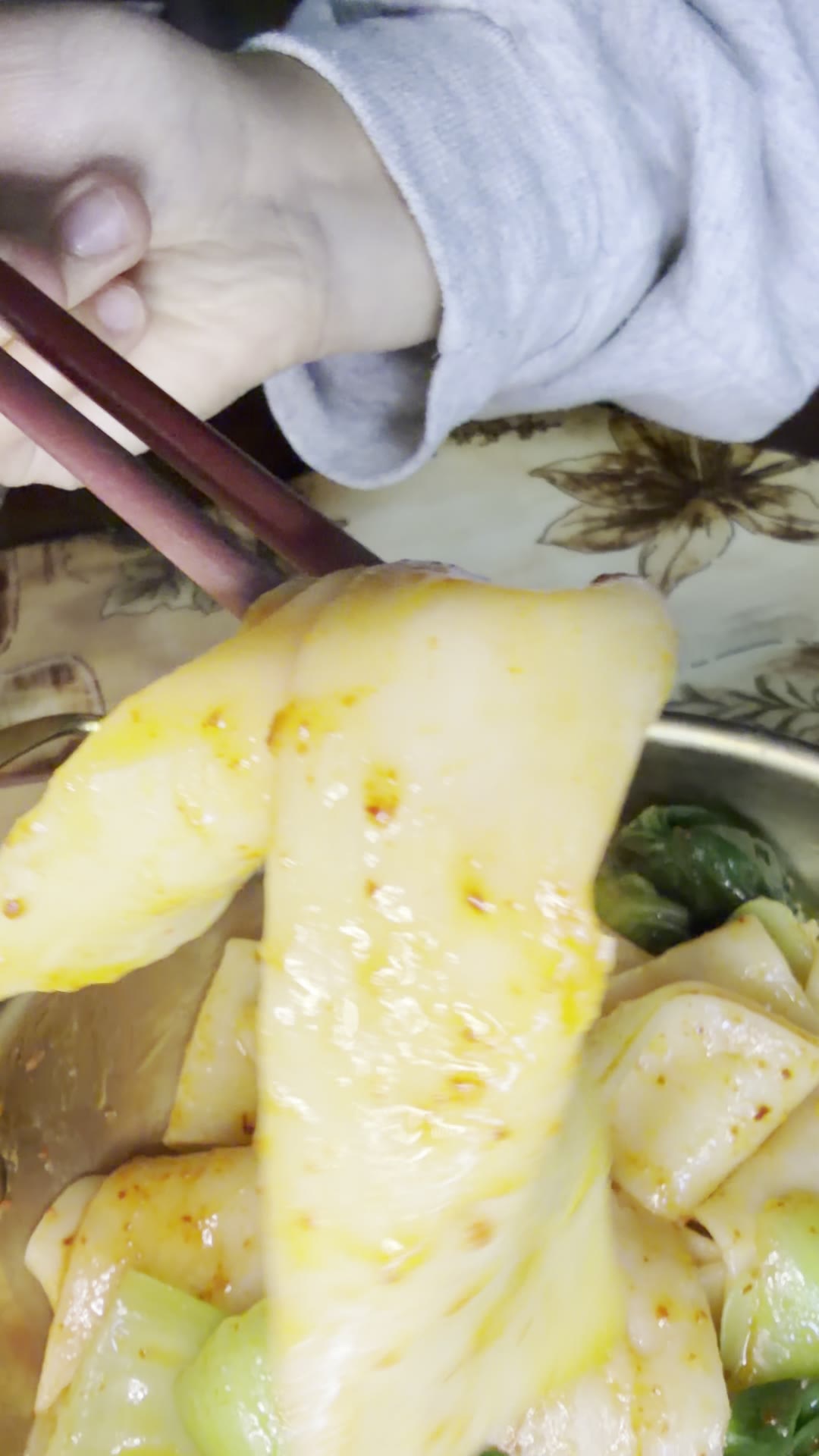
Her verdict, in her own words: "It tastes amazing — Dad's level is just like always. His oil-splashed noodles are my favorite. A big like for Dad's love." She comes home once a week. On Saturday nights, this is what home tastes like. — XingAI Cook
Cooking ideas, not nutrition or medical advice. Check allergens and cook meat and eggs to safe temperatures.