
Food Showdowns
Korean Bento vs Japanese Bento
Kimbap box vs makunouchi — two lunch traditions?
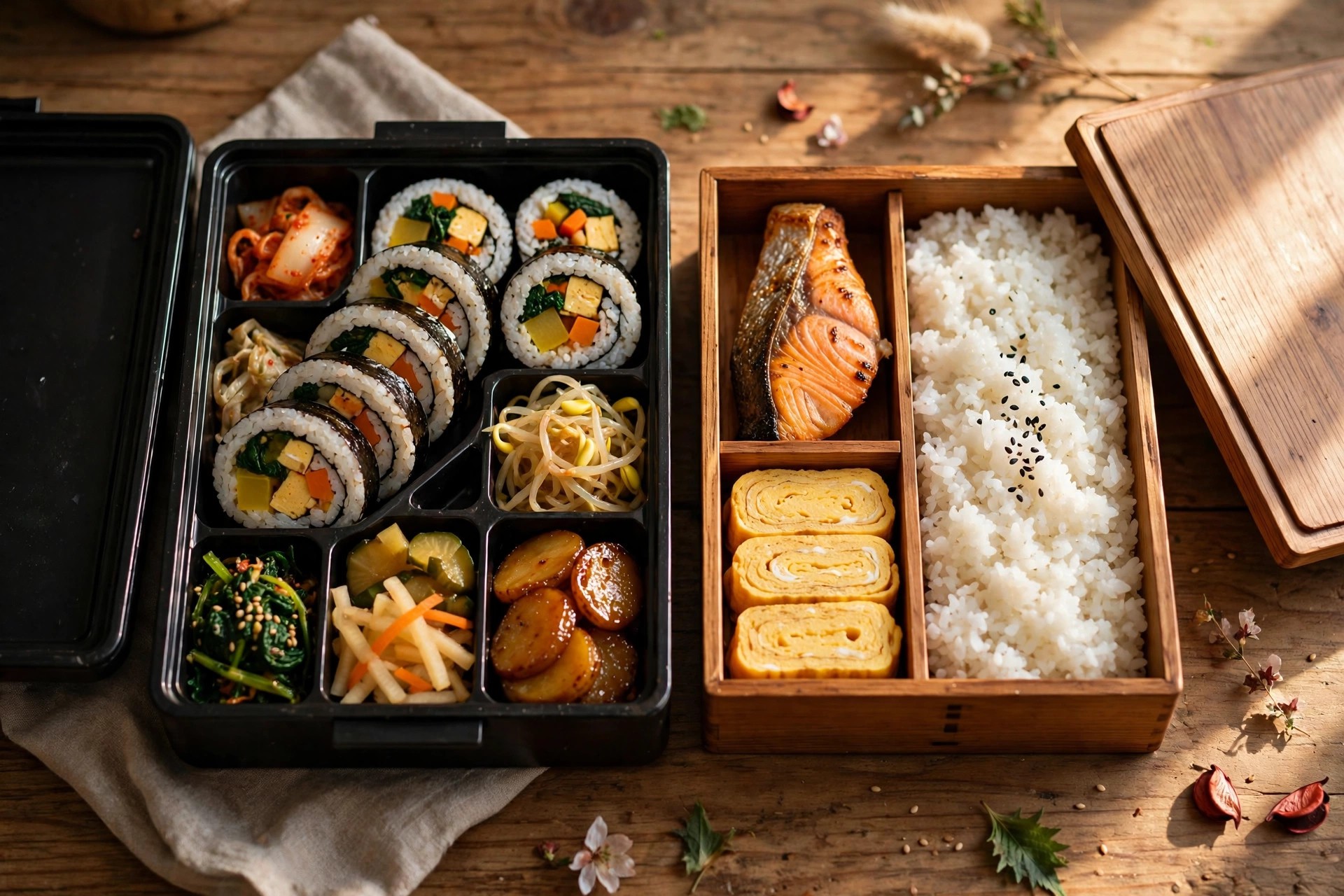
Two packed-lunch traditions. Korean is the kimbap box — rolls, banchan, a little of everything. Japanese is makunouchi — rice, fish, egg, all in its place.
Our scores
Our own judgment — no outside rankings.
Korean Bento
Japanese Bento
Head to head
| Korean Bento | Japanese Bento | |
|---|---|---|
| The centre | Kimbap rolls, made to share | Rice and grilled fish, each in its place |
| Sides | Banchan — many small dishes | Rolled egg and pickles, neat and few |
| Flavour | Sesame oil and gochujang kick | Soy and dashi, quiet and clean |
| Eating | With hands or chopsticks, casual | Chopsticks, tidy and deliberate |
Our pick: Japanese Bento
Our pick: Japanese bento. The Korean box is generous and fun, but it's a picnic that happens to be lunch. Makunouchi is lunch as craft — every piece in its place, the rice still warm, the egg still sweet — and it eats like a small ceremony.
Questions
Is kimbap the same as sushi rolls?
No. Kimbap uses sesame oil and cooked fillings; sushi uses vinegared rice and often raw fish. They look alike, they taste nothing alike.
What is makunouchi?
The classic Japanese bento — rice, grilled fish, rolled egg, simmered vegetables and pickles, each in its own compartment. It's the original packed lunch.
Scan your fridge, then decide
Tell Cook AI what's in your fridge — it will pick tonight's winner from what you already have.
Decide with Cook AIMore showdowns
- Ramen vs Soba
- Pasta vs Shin Ramyun
- Steak vs Chicken Breast
- Fried Rice vs Omelette Rice
- Salmon vs Chicken Thighs
- Dumplings vs Noodles
- Curry Rice vs Fried Rice
- Salad vs Sandwich
- Tofu vs Eggs
- Udon vs Ramen
- Dumplings vs Wontons
- Hot Pot vs Korean Barbecue
- Pizza vs Pasta
- Malatang vs Maocai
- Luosifen vs Suanlafen
- Claypot Rice vs Topped Rice
- Burger vs Fried Chicken
- Steamed Fish vs Braised Pork
- Tomato Egg vs Pepper Pork
- Mapo Tofu vs Yuxiang Pork
- Pizza vs Burger
- Tacos vs Burritos
- Ramen vs Pho
- Chinese Takeout vs Thai Takeout
- Steak vs Salmon
- Spaghetti vs Lasagna
- Wings vs Tenders
- Sushi vs Poke
- Mac and Cheese vs Mashed Potatoes
- Pancakes vs Waffles
- Beef Noodle Soup vs Braised Pork Rice
- Fried Chicken Steak vs Popcorn Chicken
- Xiaolongbao vs Shengjianbao
- Hainanese Chicken Rice vs Laksa
- Pickled Cabbage Hotpot vs Spicy Hotpot
- Char Siu Rice vs Roast Duck Rice
- Soup vs Salad
- Quesadilla vs Nachos
- Chicken Soup vs Beef Stew
- BLT vs Club Sandwich
- Pork Chop Bento vs Chicken Leg Bento
- Oyster Omelet vs Shrimp Omelet
- Braised Platter vs Saltwater Chicken
- Gua Bao vs Spring Roll
- Congee Set vs Mee Sua
- Tofu Pudding vs Grass Jelly
- Gyro vs Falafel Wrap
- Pulled Pork vs Brisket
- Caesar Salad vs Cobb Salad
- Meatball Sub vs Italian Sub
- Kimchi Jjigae vs Doenjang Jjigae
- Bibimbap vs Kimbap
- Tteokbokki vs Ramyeon
- Jjajangmyeon vs Jjamppong
- Samgyeopsal vs Galbi
- Mul Naengmyeon vs Bibim Naengmyeon
- Dakgalbi vs Andong Jjimdak
- Yangnyeom Chicken vs Fried Chicken
- Budae Jjigae vs Kimchi Jjigae
- Haemul Pajeon vs Kimchi Jeon
- Soy Milk Youtiao vs Baozi
- Century Egg Congee vs Noodle Soup
- Shaobing Youtiao vs Fantuan
- Danbing vs Luobogao
- Jianbing vs Shouzhuabing
- Toast vs Bagel
- Omelette vs Eggs Benedict
- Cereal vs Yogurt Bowl
- Savory Soy Milk vs Sweet Soy Milk
- French Toast vs Pancakes
- Instant Noodles vs Oden
- Lamb Skewers vs Wings
- Crawfish vs Grilled Fish
- Chuanchuan vs Malaban
- Late-Night Ramen vs Donburi
- Korean BBQ vs Yakiniku
- Oyster Omelette vs Sausage Rice
- Pizza Slice vs Hot Dog
- Chicken Breast vs Shrimp
- Quinoa vs Brown Rice
- Chicken Salad vs Tuna Salad
- Greek Yogurt vs Regular Yogurt
- Roasted Sweet Potato vs Steamed Corn
- Hard-Boiled Egg vs Soft-Boiled Egg
- Avocado Toast vs Whole Wheat Sandwich
- Air Fryer Fries vs Oven Fries
- Soy Milk vs Oat Milk
- Konjac Noodles vs Cauliflower Rice
- Yuanyang Hotpot vs Full Mala Hotpot
- Shuan Yangrou vs Chongqing Hotpot
- Sukiyaki vs Shabu-Shabu
- Hong Kong Hotpot vs Ginger Duck Pot
- Tom Yum vs Vietnamese Sour Soup
- Tomato Hotpot vs Milk Hotpot
- Solo Hotpot vs Communal Hotpot
- Stone Hotpot vs Stinky Hotpot
- Fish Head Hotpot vs Chicken Soup Hotpot
- Budae Hotpot vs Satay Hotpot
- Twice-Cooked Pork vs White-Cut Chicken
- Water-Boiled Fish vs Steamed Fish
- Kung Pao Chicken vs Sweet-Sour Pork
- Mala Xiangguo vs Dry Pot
- Fuqi Feipian vs Siu Mei Platter
- Dan Dan Noodles vs Wonton Noodles
- Pickled Fish vs Pepper Pork Tripe Chicken
- Saliva Chicken vs Steamed Spare Ribs
- Dry-Fried Green Beans vs Oyster Gai Lan
- Brown Sugar Ciba vs Mango Pomelo Sago
- Bubble Milk Tea vs Brown Sugar Fresh Milk
- Lemon Tea vs Honey Lemon
- Taro Fresh Milk vs Bubble Milk Tea
- Americano vs Latte
- Cold Brew vs Kyoto Drip
- Matcha Latte vs Hojicha Latte
- Winter Melon Tea vs Herbal Tea
- Sparkling Water vs Lemon Water
- Fruit Tea vs Pure Tea
- Ginger Milk Curd vs Double Skin Milk
- Healthy Bento vs Regular Bento
- Teppan Bento vs Chishang Bento
- Sushi Delivery vs Donburi Delivery
- Pizza Delivery vs Fried Chicken Delivery
- Salad Delivery vs Sandwich Delivery
- Braised Pork Rice vs Chicken Rice
- Vietnamese Bento vs Thai Bento
- Malatang vs Huangmenji Delivery
- Turkey vs Ham
- Roast Chicken vs Turkey
- New Year's Eve Dinner: Home vs Restaurant
- Meat Zongzi vs Alkaline Zongzi
- Tangyuan vs Yuanxiao
- Nian Gao vs Turnip Cake
- Dumplings vs Noodles for New Year
- Pumpkin Pie vs Apple Pie
- Mid-Autumn BBQ vs Spring Festival Hotpot
- Toshikoshi Soba vs Tteokguk
- Veggie Burger vs Salad Wrap
- Tofu Hotpot vs Vegetable Tempura
- Veggie Dumplings vs Veggie Bao
- Sesame Noodles vs Veggie Dan Dan
- Stir-Fried Greens vs Cold-Tossed Veg
- Veggie Hotpot vs Mushroom Soup
- Tempeh vs Tofu
- Quinoa Salad vs Hummus Wrap
- Inari Sushi vs Vegetable Sushi
- Oat Milk Latte vs Soy Milk Latte
- Plain Congee vs Vegetable Rice
- Leftover Bento vs Leftover Risotto
- Bread Pudding vs French Toast
- Leftover Chicken Sandwich vs Chicken Salad
- Banana Bread vs Eat It Ripe
- Hotpot Broth Noodles vs Hotpot Broth Congee
- Leftover Rice Onigiri vs Guoba
- Veggie Scrap Soup vs Veggie Pancake
- Leftover Bread Focaccia vs Croutons
- Braising Liquid Eggs vs Noodles
- Tiramisu vs Basque Cheesecake
- Egg Tart vs Wheel Cake
- Ice Cream vs Soft Serve
Cooking ideas, not nutrition or medical advice. Scores are our own judgment. Check allergens and cook meat and eggs to safe temperatures.